Sage green has quietly taken over American kitchens, and most of the examples floating around online start to blur together after a while. The ones that actually stand out share one thing in common, and it has less to do with the paint color than you’d think. These kitchens show you exactly what that is.
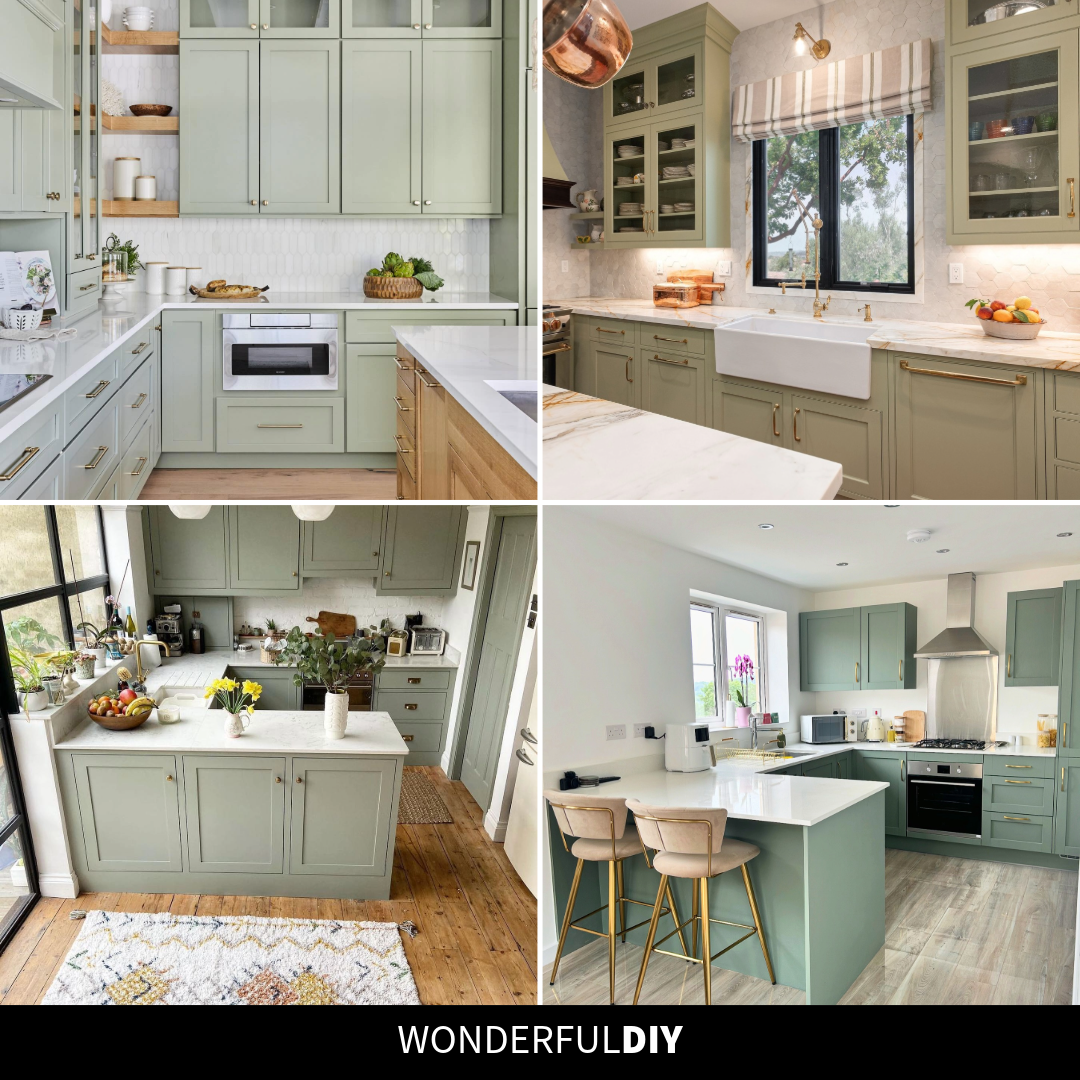
Sage Green Kitchens in Different Styles, Sizes, and Price Ranges
Sage is one of the few colors that reads calm without reading boring, which is why it keeps showing up in kitchens that look nothing alike. It plays nicely with wood, with brass, with black, and with other greens, so you’ve got a lot of room to work with before anyone would call your kitchen trendy.
The kitchens below cover a wide range on purpose: a small British galley, a sprawling family island, a modern two-tone, a traditional shaker, and a few in between. Pick the one closest to what you’re already working with and the rest of the decisions get easier.
A Softer Sage That Still Reads Confident
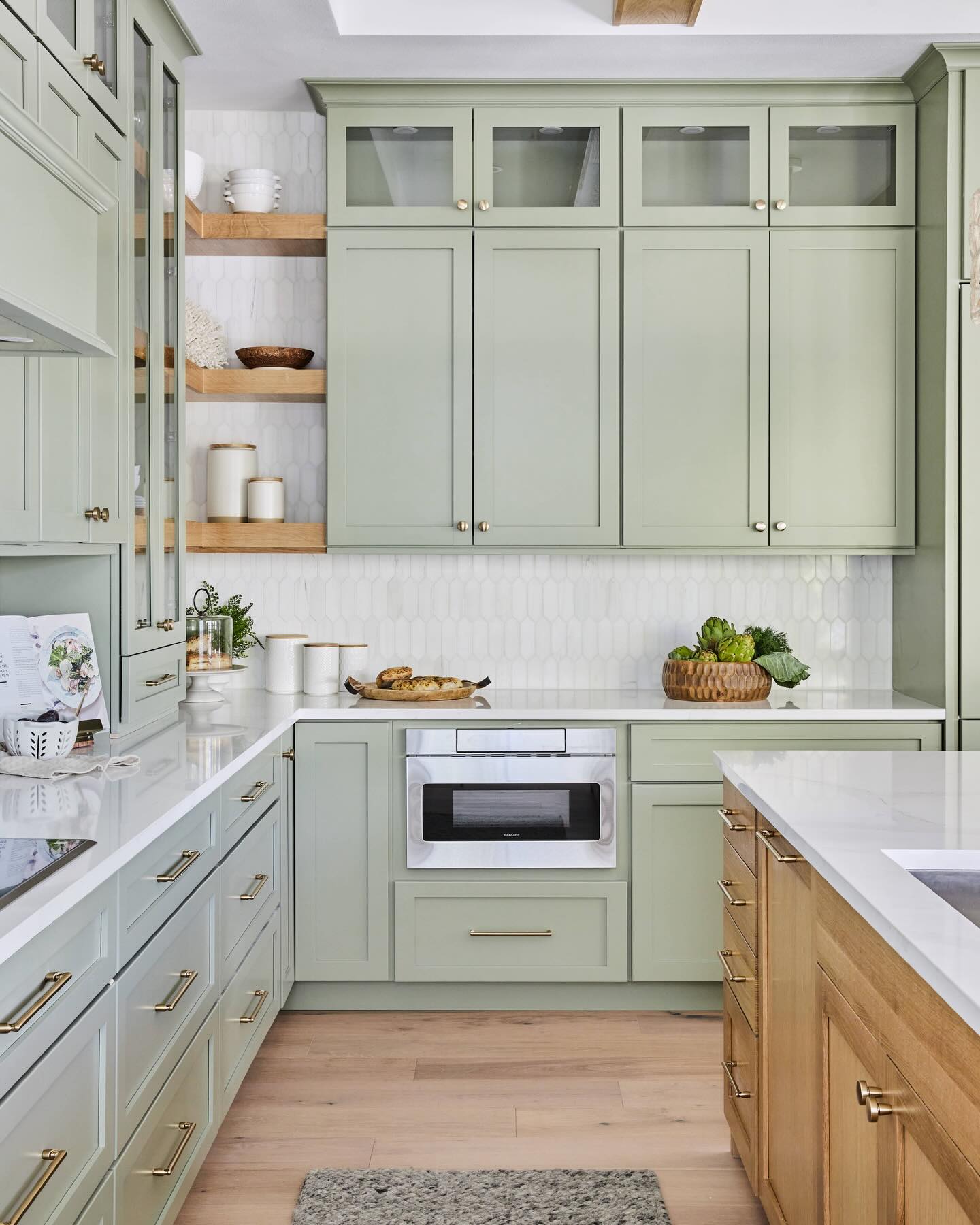
The pale wood island is doing more here than it looks. Pair sage with warm oak and the green stops reading flat, because the wood pulls out the yellow underneath the color and makes the whole thing feel sunlit even on a gray day. Gold handles seal it: brass against sage is one of those combinations that always lands, and it keeps the kitchen from feeling cold.
Why Deeper Greens Still Work in a Kitchen
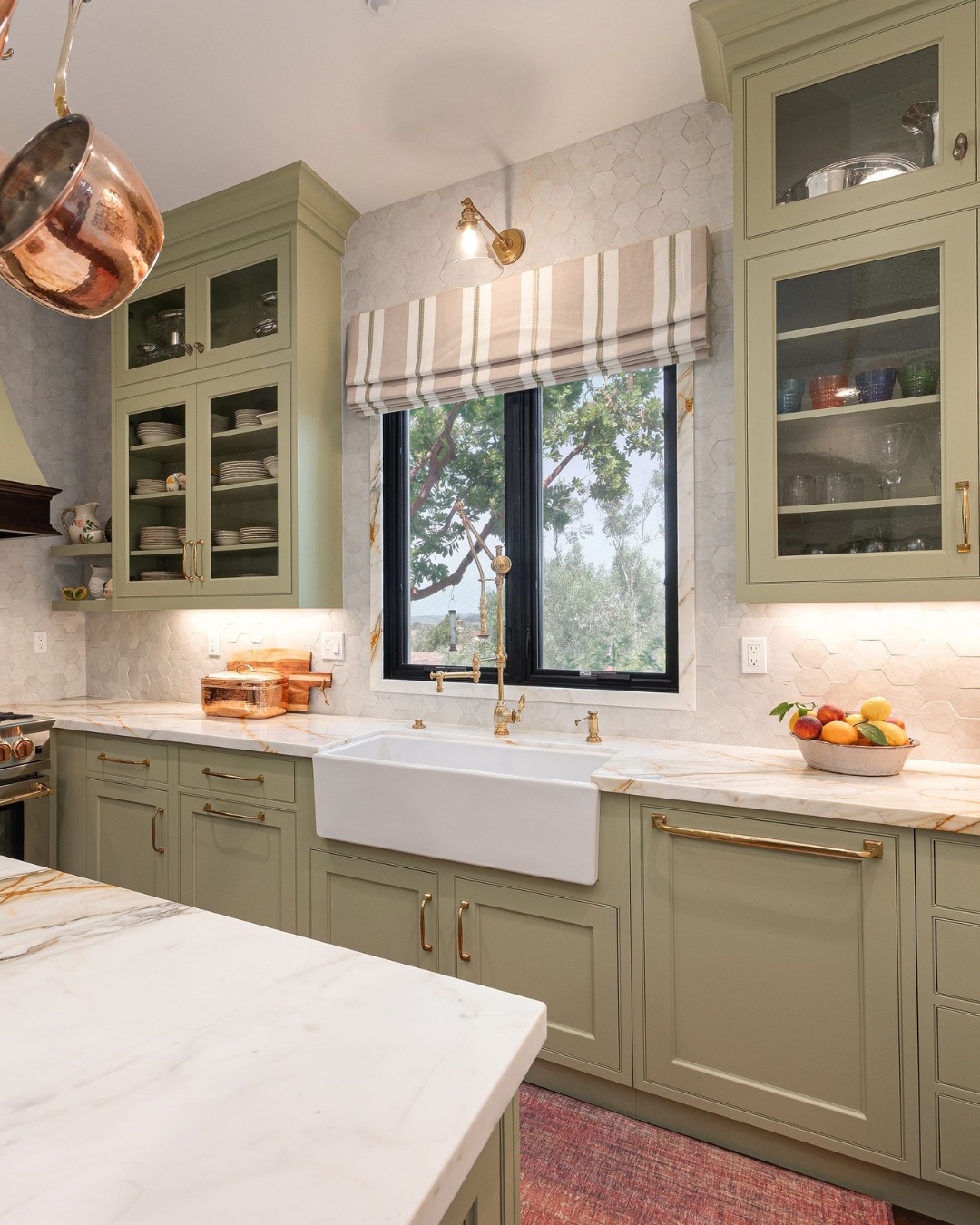
This is sage pushed almost all the way to olive, and the brass hardware is what keeps it from going murky. Darker greens need warm metals and a bit of pattern breaking them up, which is exactly what the striped Roman shade does above the sink. If you’ve got solid natural light coming in, you can get away with a much deeper green than most people assume.
Where Sage Starts Feeling Like a Garden Room
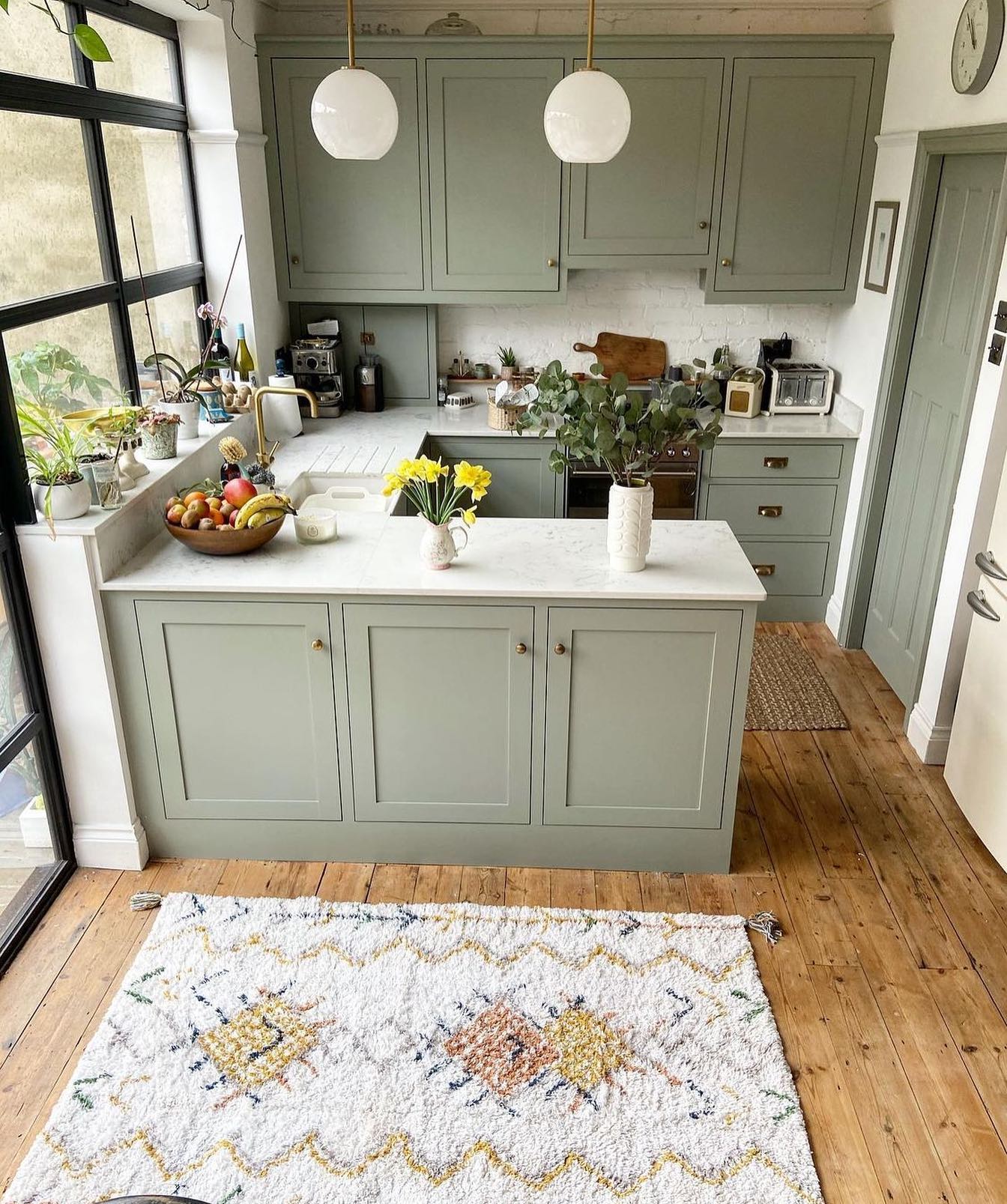
Small kitchens get written off as the ones that can’t handle color, which this one quietly disagrees with. The sage ties back to the plants by the window and the garden outside the Crittall-style doors, so the whole room reads like one connected space instead of a boxed-in corner. More small kitchens doing a lot with limited square footage go further on this idea.
The Everyday Kitchen Dressed Up Just Enough
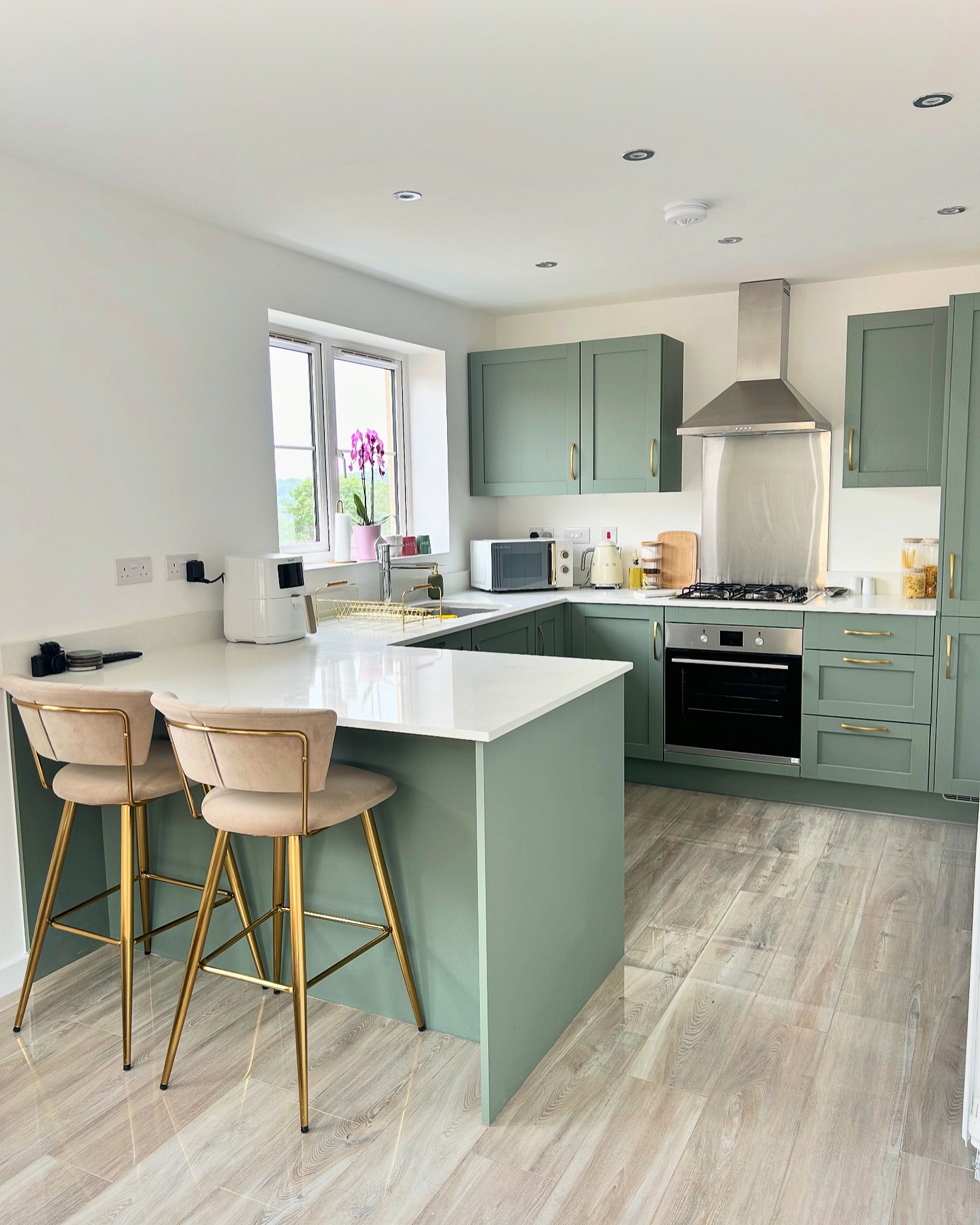
Blush barstools are the move here. Sage leans cool on its own, so if your kitchen opens onto a living room or dining area, you need something warm to pull your eye through the space. A soft pink, a terracotta, or a dusty rust in the seating does the job without clashing, and it gives the whole kitchen a reason to feel put-together instead of matchy.
A Big Kitchen Without the Hotel-Lobby Feeling
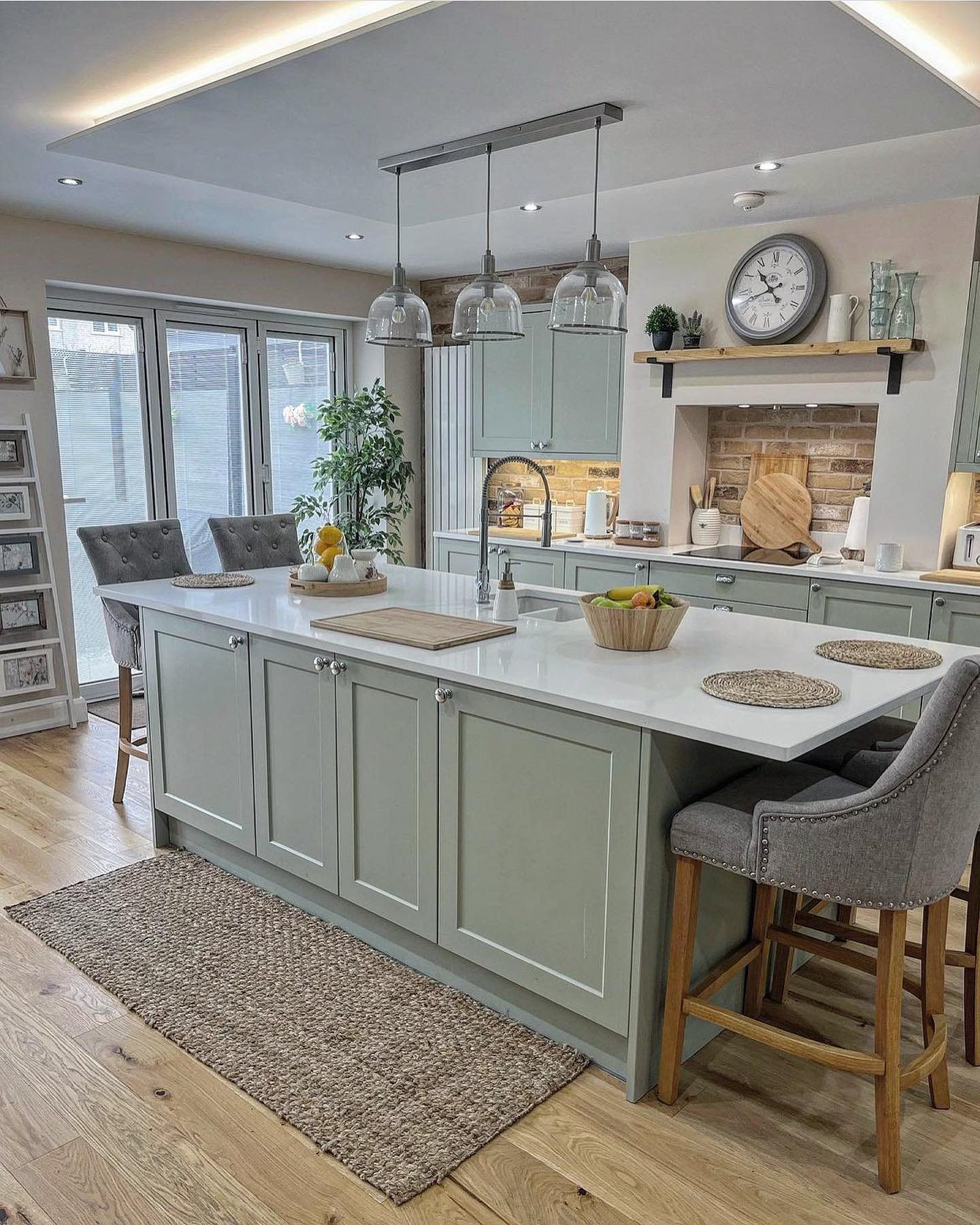
Large kitchens can start to look like showrooms when they’re all white, and this one shows the other way to do it. Sage on a long island softens all that square footage so it stops feeling corporate, and the exposed brick alcove gives your eye somewhere to land. The result reads lived-in from the first glance, not staged for a sale.
Modern Sage Without the English Cottage Vibe
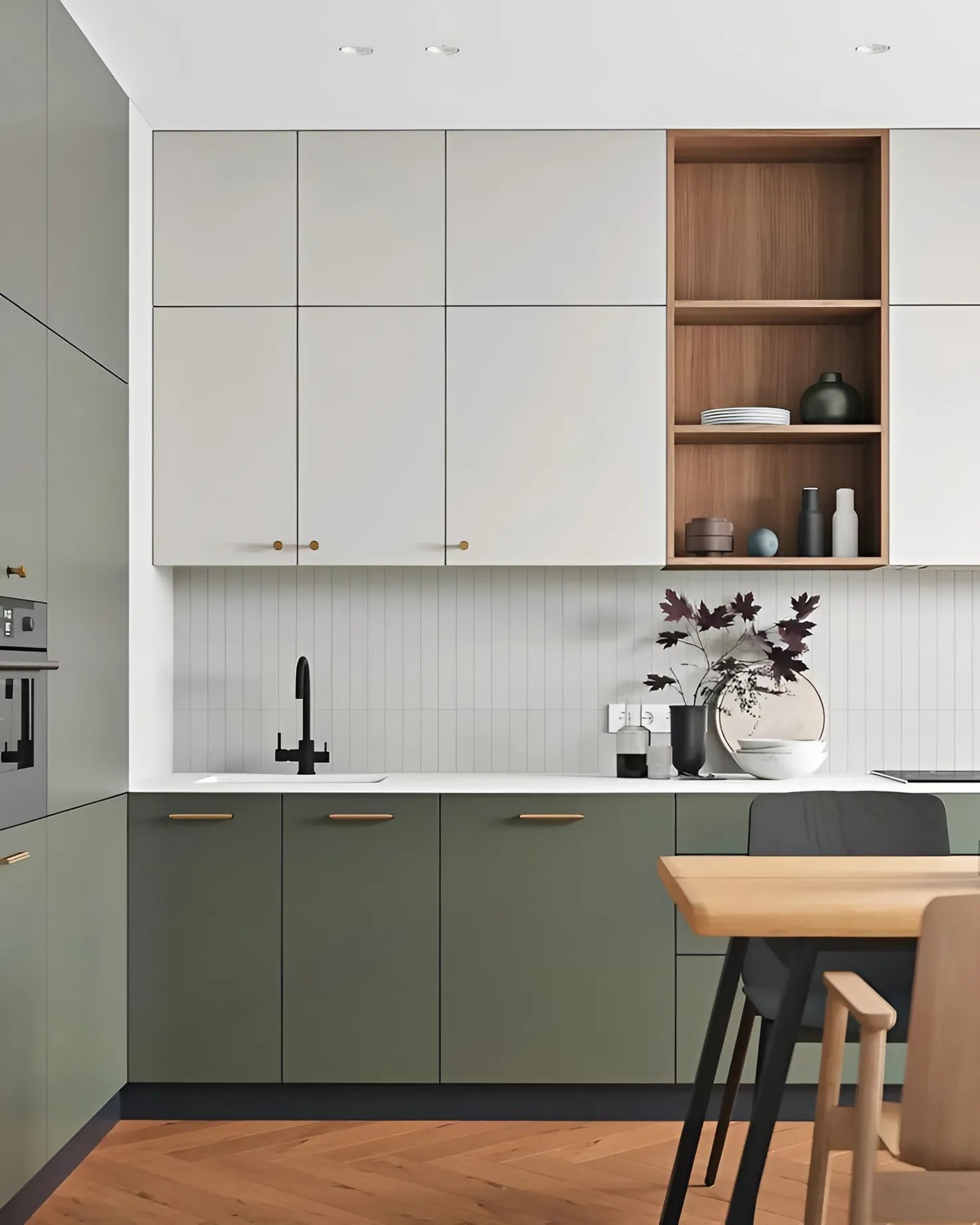
Most sage kitchens online lean cottage or farmhouse, and this one goes the opposite direction on purpose. Flat-front cabinets, no shaker detail, cream uppers over olive lowers, a black faucet instead of brass, and a herringbone wood floor doing the warming up. If you want sage without the English countryside association, this kind of modern cabinet thinking is the direction to look.
Half Sage, Half Neutral, All of It Working
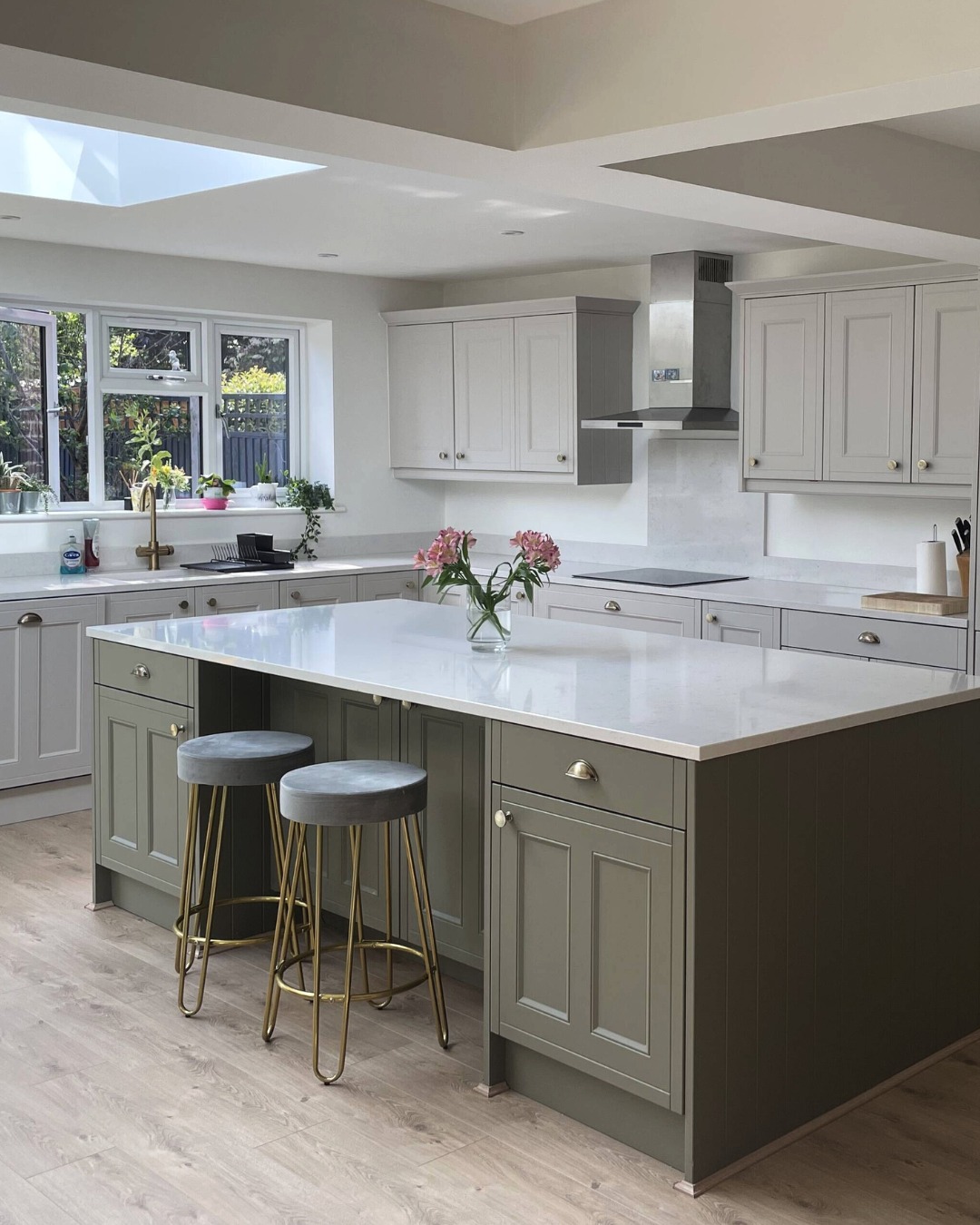
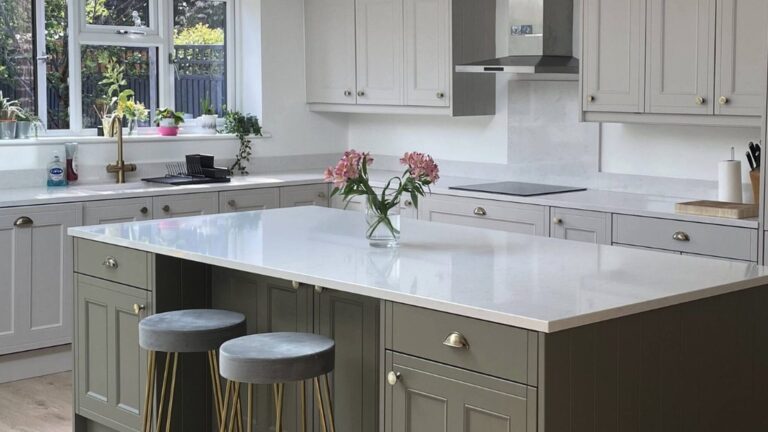
If you want sage but your partner wants gray, this is how everyone wins. Keeping the perimeter in a soft greige and painting just the island sage gives you the color without committing the whole room to it. The gold hairpin stools in gray velvet pull the whole thing together, and the look stays easy to pivot later if your taste shifts in a few years.
Which of these sage kitchens would you actually commit to in your own home?