You’ve heard both sides for years. Plastic is cleaner because it goes in the dishwasher. Wood is safer because it’s natural. So you kept the old plastic board you’ve had since your first apartment, the one with a cloudy surface and a web of knife marks you can feel with your fingertip, because at least it isn’t wood.
This is not your fault. The wood-versus-plastic debate gets most of the attention, but food safety experts are watching something else: the condition of the board, whatever it’s made of.
Why the material matters less than the grooves
The USDA’s guidance, shared by University of California Cooperative Extension, settles the material question quickly: “Consumers may choose either wood or a nonporous surface cutting board such as plastic, marble, glass, or pyroceramic.” Nonporous surfaces are easier to clean than wood, but both are acceptable.
The real trouble starts when the surface wears down. N.C. Cooperative Extension notes that the hard-to-clean grooves that develop over time can become a place where bacteria grow. NDSU Extension food and nutrition specialist Julie Garden-Robinson puts it bluntly: “When plastic cutting boards have grooves, bacteria can remain ready to contaminate your next food.” After raw meat, those grooves are exactly where bacteria can be left behind.
That’s the sign. The USDA guidance says to discard a cutting board once it is excessively worn or develops hard-to-clean grooves, no matter what it’s made of.
How to use, clean and sanitize a board safely
- Inspect it. Look for deep knife scars, grooves you can’t scrub clean and heavy wear. If the board has them, replace it.
- Split the jobs. Use one board for fresh produce and bread and a separate one for raw meat, poultry and seafood. With wooden boards, you can mark them so each one always goes to the same foods.
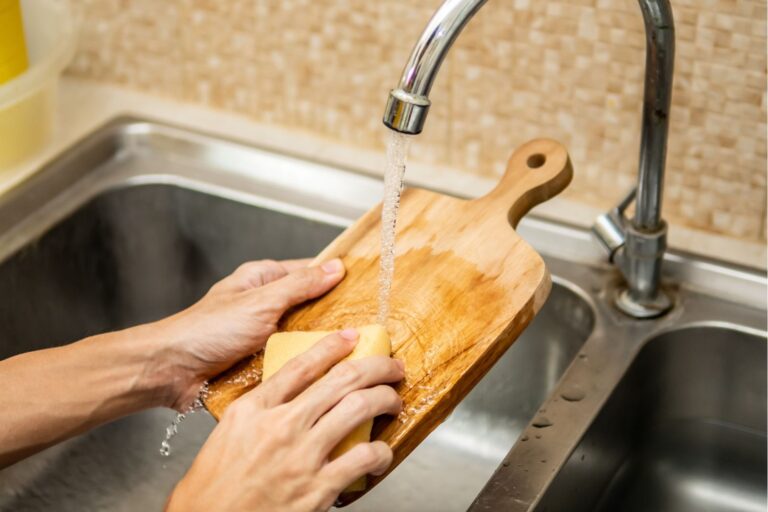
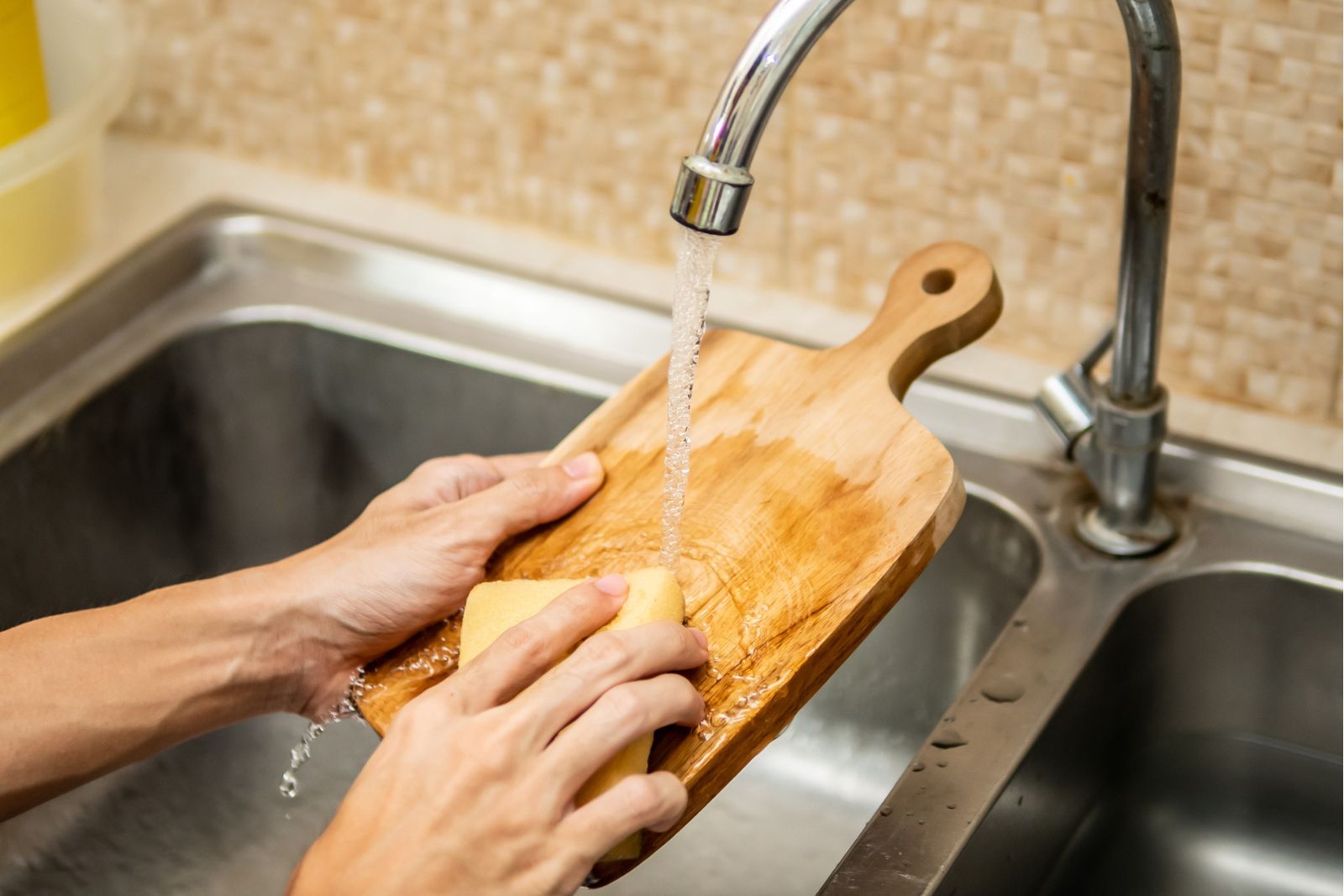
- Wash after every use. Use hot, soapy water, rinse with clear water, then air dry or pat dry with clean paper towels. After meat or poultry, NDSU recommends scrubbing with a brush before rinsing.
- Know what can go in the dishwasher. According to the USDA guidance, acrylic, plastic, glass and solid wood boards can be washed in a dishwasher, but laminated boards may crack and split. Check the care instructions for your own board.
- Sanitize when needed. Mix 1 tablespoon of unscented, liquid chlorine bleach per gallon of water. Flood the board, let it stand for several minutes, then rinse and air dry or pat dry.
Plan B for bamboo boards: N.C. Cooperative Extension suggests rubbing them with mineral oil after drying to help prevent cracking over time.
What cleaning can’t fix
Sanitizing has limits. It treats the surface, but it can’t erase grooves that are too deep to scrub, and the USDA guidance is clear that boards in that state should go.
Material choice still has trade-offs. Garden-Robinson notes that chefs find plastic boards can dull knives more quickly, while hardwood boards such as maple are less likely to. Research has given mixed recommendations over the years, but hardwood boards are considered safe when cleaned thoroughly right away.
Handle bleach with care, too: use only the unscented kind for this mix, and never combine bleach with cleaners that contain ammonia, which the EPA warns can create toxic fumes.
Two boards, hot soapy water, and a new board once the grooves won’t come clean. That’s the trick.