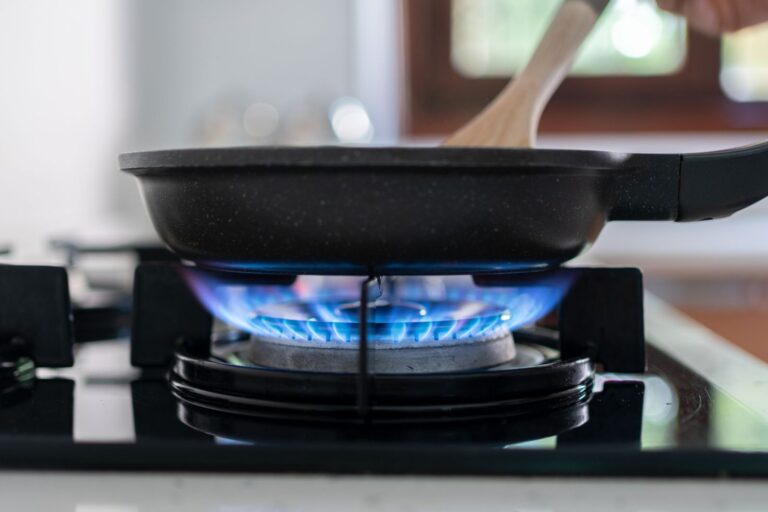
You seared chicken over high heat, washed the pan and set it on the rack to dry. Then you noticed it: a blue and gold sheen spreading across the bottom, like oil on a puddle. Dish soap did nothing. A second scrub did nothing. So out came the steel wool, or the bleach spray, and the pan started looking worse instead of better.
This is not your fault, and the pan isn’t ruined. Those colors aren’t grime sitting on the steel. They’re a change in the surface itself, which is why soap and elbow grease barely touch them. The fix is already in your pantry, and it’s the one All-Clad recommends in its own care guide.
Why the rainbow shows up
Stainless steel contains chromium. According to cookware maker Made In, chromium reacts with air to form a thin protective layer on the pan, and high heat makes that oxidized layer thicker. As it thickens, it shows up as a rainbow tint. All-Clad sums it up plainly: overheating can cause brown or blue stains.
The good news is that Made In calls rainbow staining a purely cosmetic issue that doesn’t affect how the pan cooks. The bad news is what most people do next. All-Clad tells owners not to use oven cleaners, steel wool, steel scouring pads, harsh detergents, or detergents containing bleach or peroxide, because they can damage the pan. Scrubbing harder turns a cosmetic problem into real scratches.
The fix, step by step
- Let the pan cool. Work on a pan at room temperature, not one fresh off the burner.
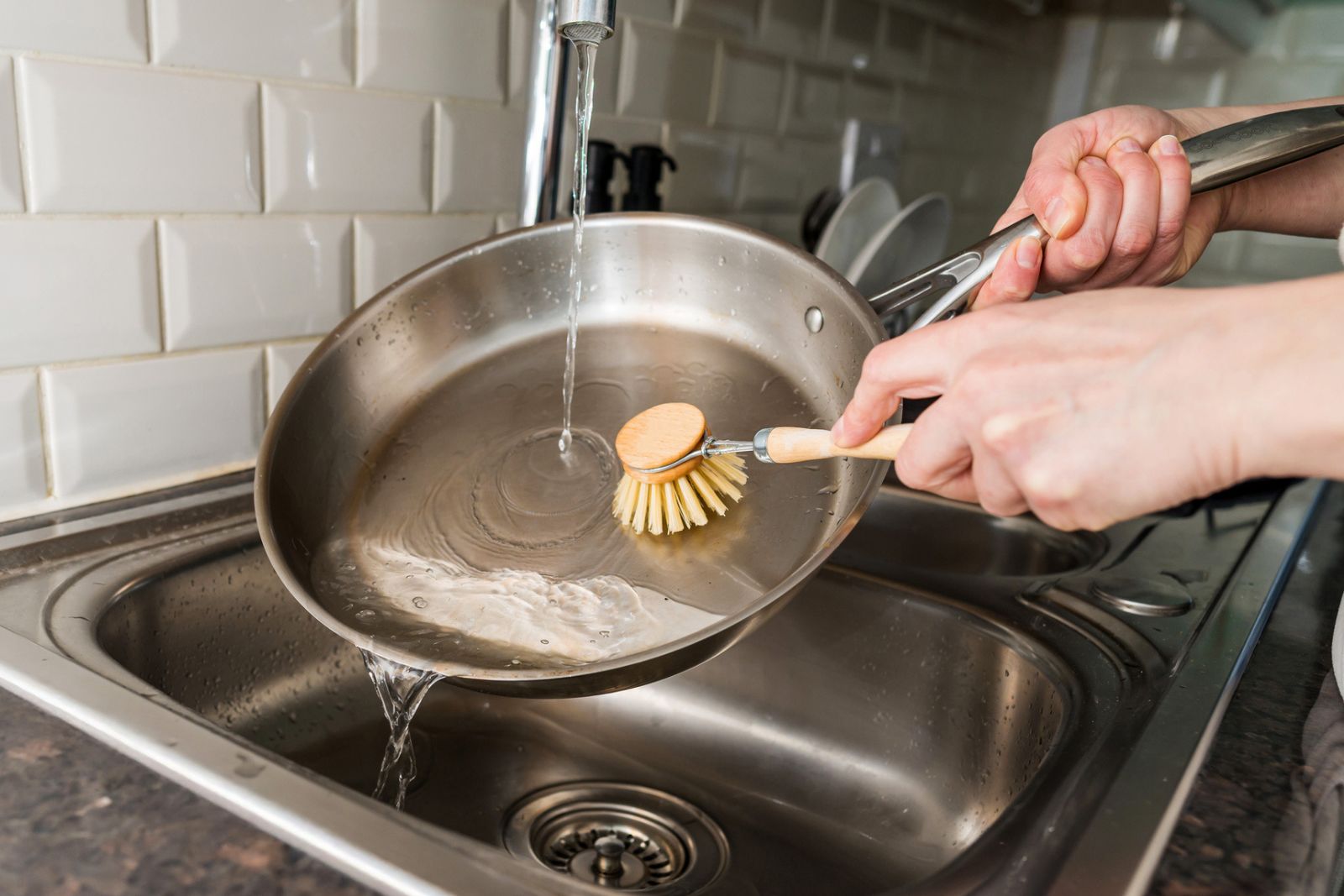
- Wipe with white vinegar. For blue or rainbow coloring, All-Clad’s care guide says to wipe the pan with a sponge or soft cloth and white vinegar. Work it over the stained area, then rinse and dry. Made In suggests repeating if some color remains.
- Boil out cloudy white spots. A chalky white film is a different problem: hard water. All-Clad’s fix is to boil a 1:1 mix of white vinegar and water in the pan.
- Plan B for stubborn stains. All-Clad recommends a nonabrasive, non-chlorine cleanser such as Bar Keepers Friend, Bon Ami or its own cookware cleaner, and says nylon scrubbing pads are fine on stainless steel surfaces. Made In suggests mixing a powdered cleanser with a little water into a paste and working it in with a non-abrasive sponge.
Stopping it next time, and what vinegar can’t fix
Prevention is mostly about heat. All-Clad tells cooks to preheat on low to moderate heat for browning and sautéing, and says boiling is the only time high heat should be used. A pan that never gets scorching hot has far less reason to change color.
Then there are the tiny white dots some pans develop on the bottom. Those are pits, and they come from salt. All-Clad’s advice is to bring liquids to a boil, or wait until food starts to cook, before adding salt. The brand says pitting doesn’t interfere with cooking performance but can diminish the beauty of the pan’s interior. Vinegar won’t wipe those dots away, so the habit change is the real fix.
A few limits are worth knowing. These steps are for plain stainless steel surfaces. If a pan has a nonstick coating inside, follow the maker’s rules for that coating; All-Clad says to cook on those over low and medium heat. And if you also own nonstick pans, keep an eye on the way you stack them, since nesting can wear down the coating over time.
A splash of vinegar, a soft cloth and a gentler flame. That’s the trick.