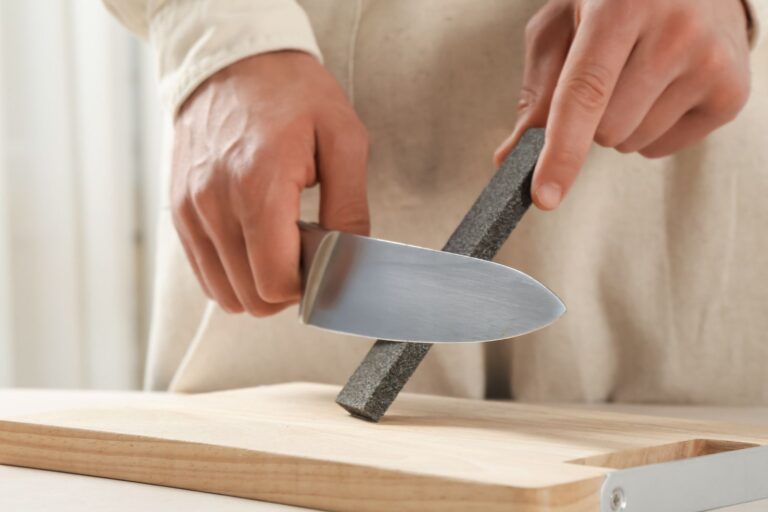
The tomato skin won’t give. You press harder, the blade skids across the surface, and the tomato squashes instead of slicing. Then the onion half rolls as the knife slips off its curve. You add “knife sharpener” to the shopping list, again, and go back to sawing.
This is not your fault, and you may not need to buy anything today. Turn over a ceramic coffee mug. That rough, bare ring on the bottom is the closest thing to a whetstone most kitchens already own.
Why the dull knife is the dangerous one
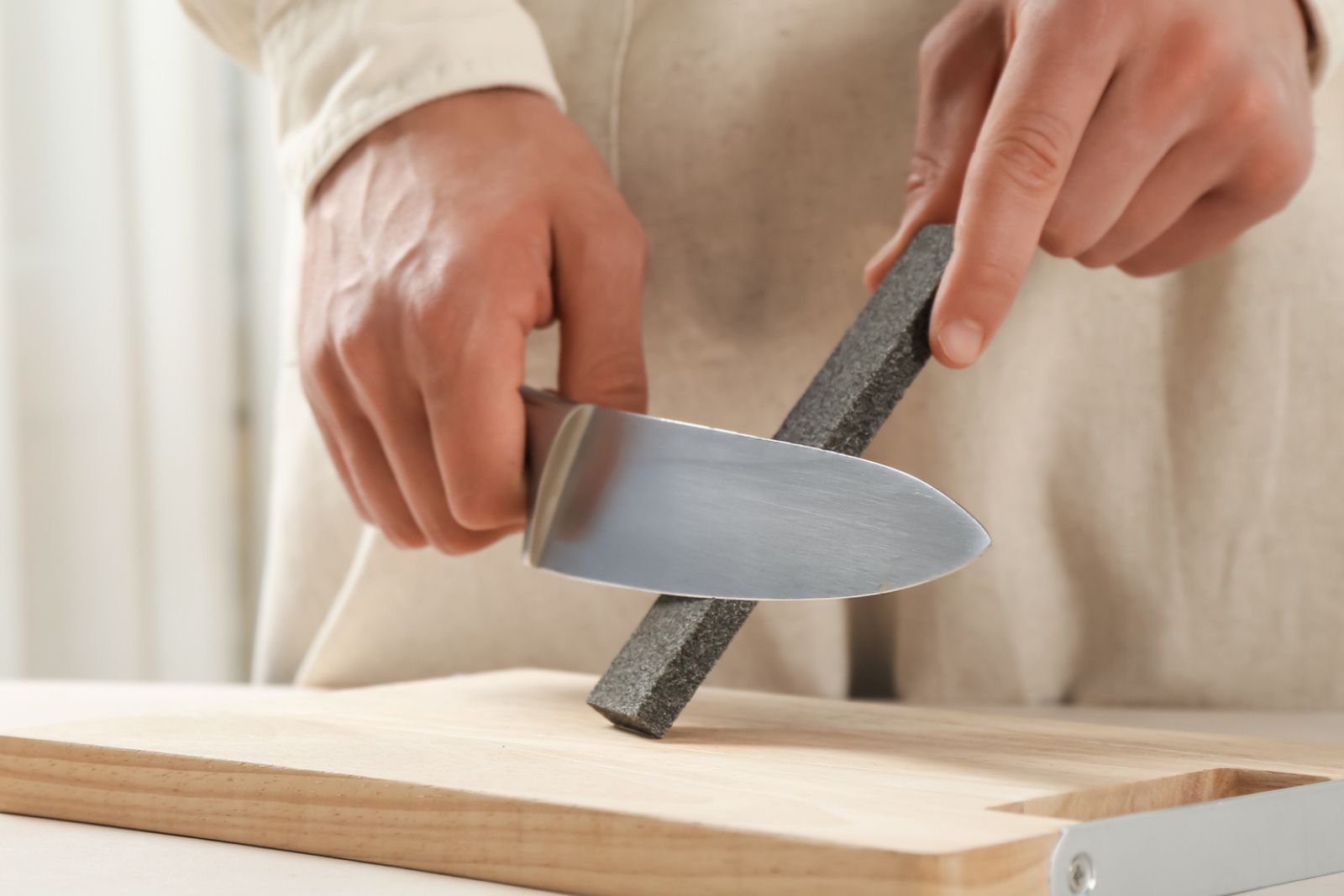
It sounds backward, but a dull blade is the riskier tool. Tasting Table, citing Cozzini Bros, notes that a dull knife is much more likely to slip than a sharp one, and that a sharp knife needs less pressure to cut through food. Extra pressure is exactly what sends a blade skidding off a tomato and toward your fingers.
So why a mug? The ring on the bottom of many ceramic mugs is left unglazed, so it stays slightly rough. According to Tasting Table, it has a sharpening effect very similar to that of a whetstone. It’s the same idea as a sharpening stone, just in a shape you didn’t expect.
How to do it
- Find the right mug. Look for a ceramic mug with a bare, unglazed ring on the bottom. Turn it upside down on a flat, steady surface.
- Set the angle. Lay the blade along the unglazed ring at an angle, ideally 25 degrees. That’s the method from YouTuber Howdini that Tasting Table describes.
- Pull toward you. Draw the knife back toward you so the edge slides along the ring and off the end. Go slowly and keep your other hand on the mug, away from the edge.
- Switch sides. Repeat on the other side of the blade, alternating, until the knife is sharp enough to use safely.
- Clean up. Wash the mug afterward, and rinse and dry the blade before it touches food.
Plan B: if a few passes on each side don’t make a difference, the edge needs more than a quick touch-up, and it’s time for a real sharpener after all.
What a mug can’t do
Tasting Table is clear about the limit: this isn’t a permanent sharpening method, just a quick solution to the problem of dull knives. Think of it as the fix for tonight’s dinner, not a replacement for proper sharpening.
A few cautions. Check the care instructions for any expensive or specialty knife before trying a hack on it. Never test the edge with your finger. Slice a piece of paper or a tomato instead. And if your knives are badly chipped, a professional sharpening service is the better route.
Small habits like this keep kitchen tools working for years, the same way drying cast iron on the stove keeps a skillet from rusting.
Flip the mug, find the angle, pull toward you. That’s the trick.