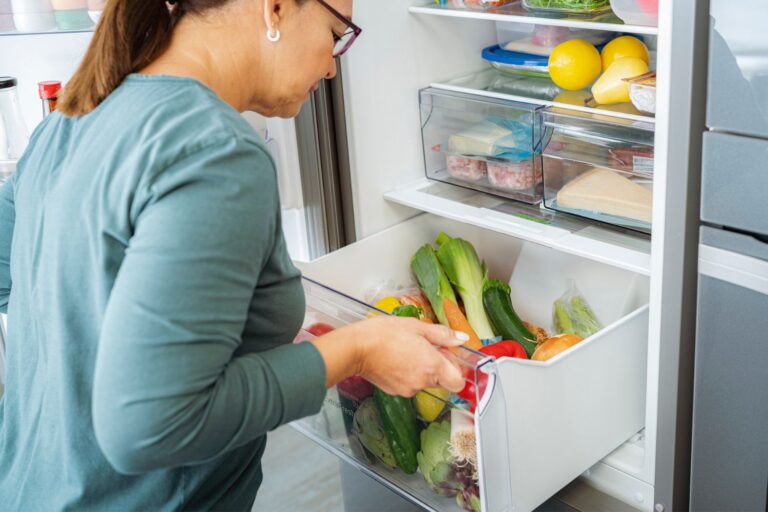
You bought romaine on Sunday. By Wednesday it’s limp and floppy, the outer leaves already going soft. In the drawer next to it, the pears you were saving for the weekend have turned mushy. You toss both, blame the store, and buy more on the next trip.
This is not your fault. The problem may be a tiny switch most people never touch: the slider on the front of the crisper drawer. It changes what each drawer does, and the wrong setting can shorten how long your produce lasts.
What that slider actually does
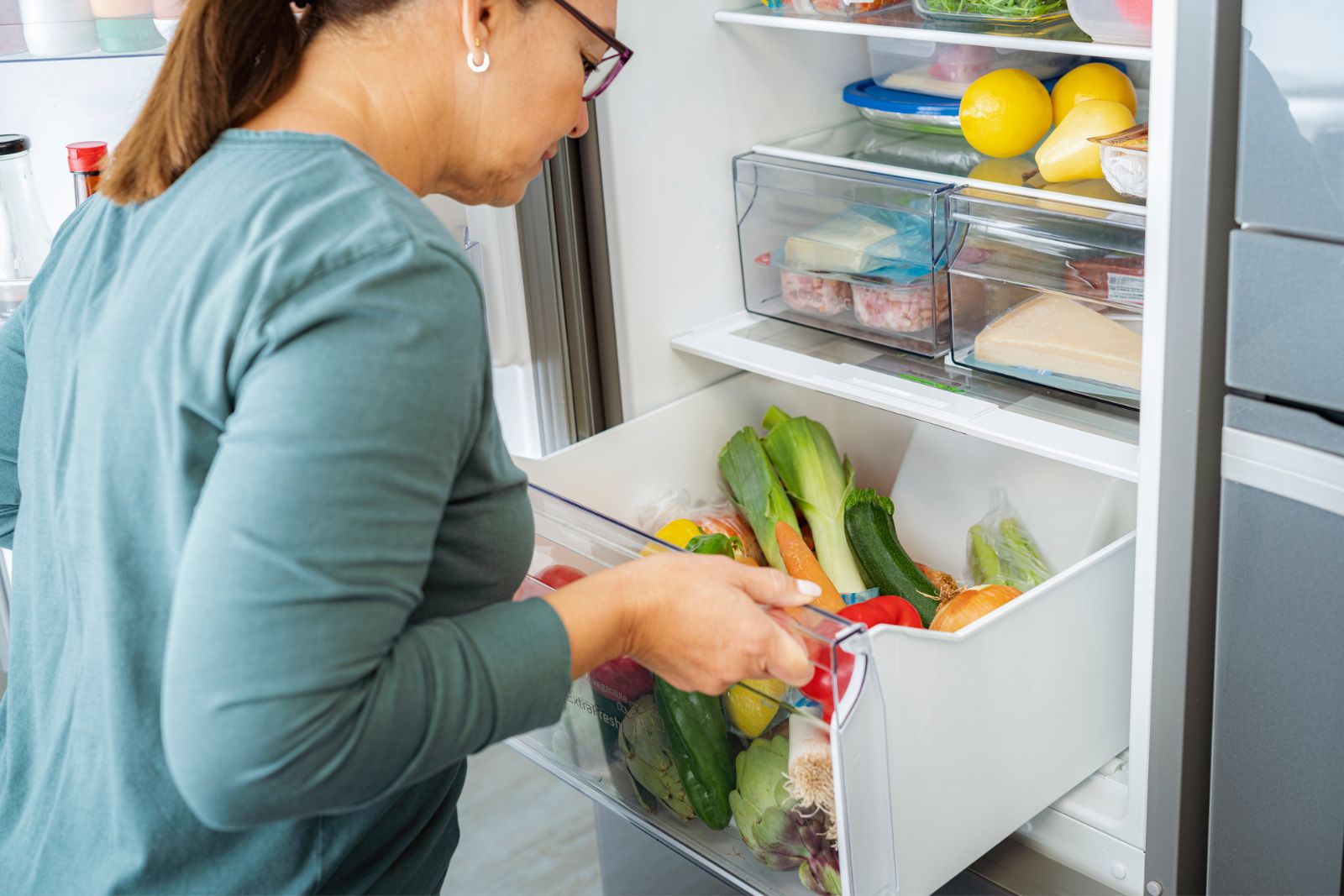
According to Whirlpool, the slider shifts the drawer between lower and higher humidity. On the high-humidity setting, airflow to the drawer is cut off, so moisture stays in. On the low setting, moisture and air escape freely through a vent in the bin. In other words, the slider decides whether the drawer works like a sealed box or a ventilated one.
That matters because produce goes bad in two different ways. Thin-skinned vegetables lose moisture and wilt, so they need the closed, humid drawer. Many fruits have the opposite problem. As they ripen, they release ethylene gas, and Whirlpool says a low-humidity setting lets those gases escape, which helps keep produce from ripening or rotting too quickly.
How to sort your produce
- High humidity: the wilters. Whirlpool puts thin-skinned vegetables that are prone to wilting here, including broccoli, cucumbers, lettuce and leafy greens, along with fresh herbs.
- Low humidity: the rotters. Produce that can easily rot goes in the low setting: apples, pears, avocados, melons and other pitted fruits.
- Mushrooms go low, too. Whirlpool notes that some vegetables, like mushrooms, stay fresher longer in a drier, low-humidity drawer.
- Leave some room. Packing a crisper too tightly can block the vents and keep air from flowing freely.
- Watch for frozen leaves. If vegetables freeze in the crisper, Whirlpool says to check the fridge’s overall temperature. If that’s set correctly, take a few items out of the bin.
Plan B if your fridge has only one crisper, or no slider at all: keep the wilt-prone vegetables in the drawer and give the ripening fruit its own spot, so the two groups aren’t sharing the same air. Some crispers even have produce labels printed on the slider, which makes the choice easier.
What the slider can’t fix
A slider slows produce down. It doesn’t reverse it. Lettuce that went in tired will still go limp, and a pear that was already soft won’t firm back up. Whirlpool also points out that some produce can be stored outside the refrigerator, so not everything belongs in the crisper in the first place. And if your fridge has a separate, colder fresh drawer, Whirlpool describes it as storing food at the lowest temperature without freezing it, which suits raw meat, poultry and fish rather than produce.
For greens that turn slimy in the bag, a second habit helps: a sheet of newspaper on the drawer floor can soak up the moisture the leaves give off.
Greens on high, fruit on low. That’s the trick.