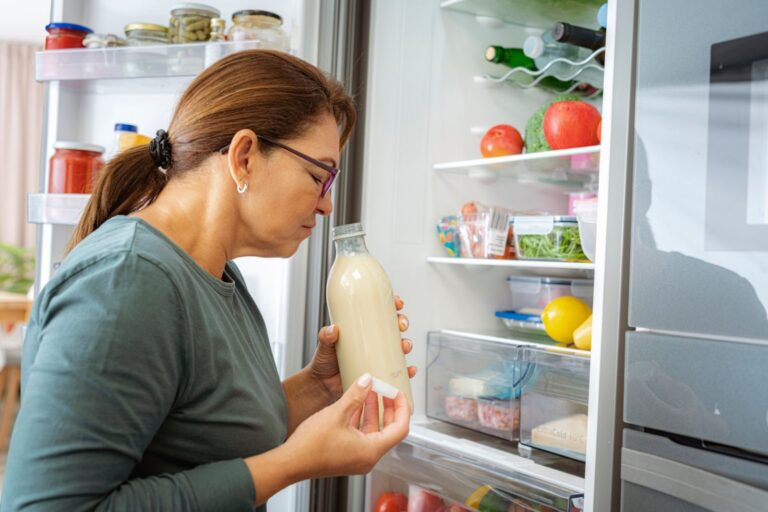
The date on the carton says you have five more days. You pour a splash into your coffee, and it hits the cup in little curds. The smell confirms it. You did nothing unusual: bought it, brought it home, put it in the fridge. And still it turned early, again.
This is not your fault. The date on the carton is an estimate, and a lot happens between the store shelf and your morning coffee. The real culprit is usually a few degrees of warmth, again and again, plus bacteria that were in the carton all along.
Why milk turns before the date
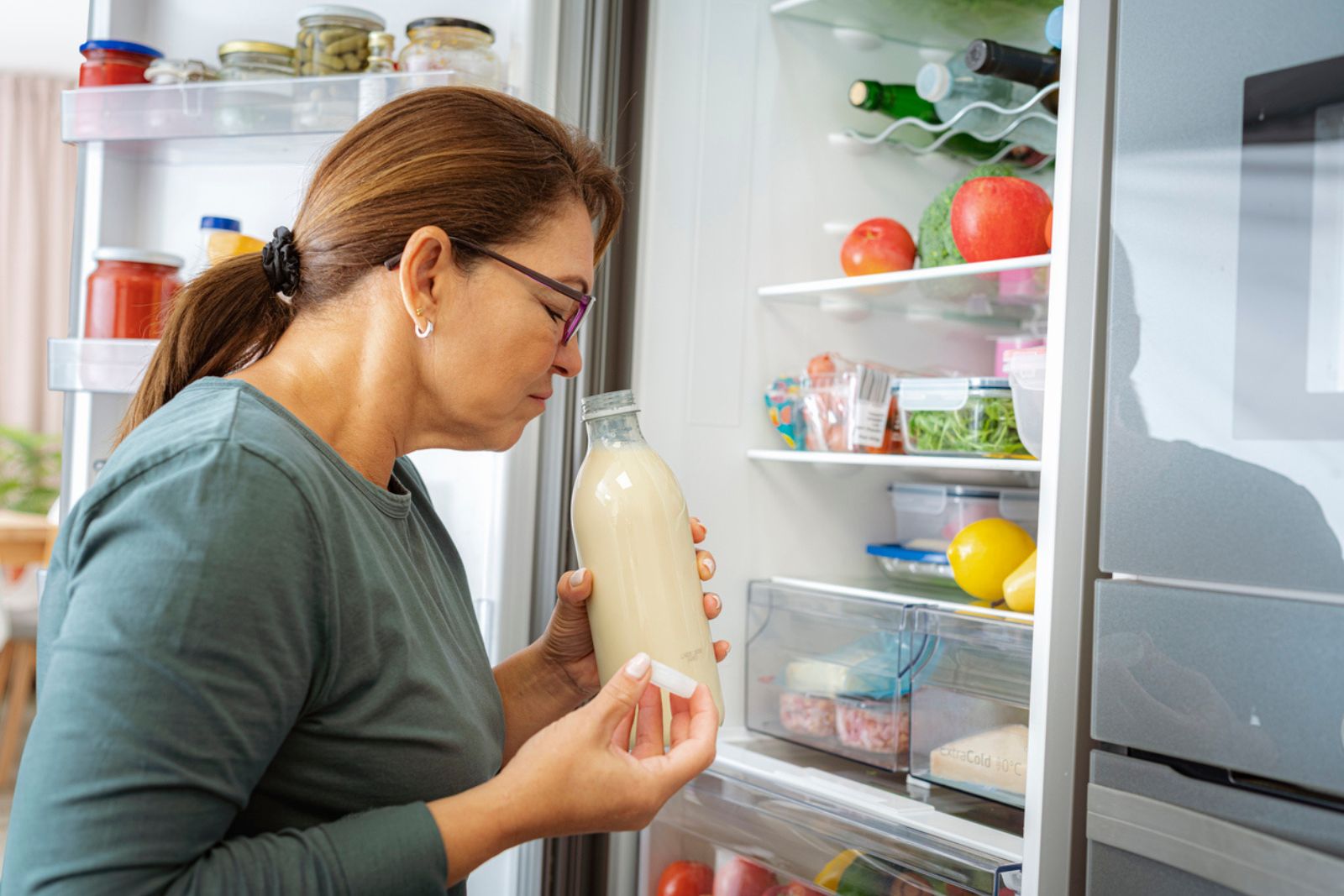
Pasteurization doesn’t make milk sterile. Researchers at Cornell University found that some spore-forming bacteria can survive even the best pasteurization and the cleanest dairy plants. Cold slows them down. Warmth lets them grow.
The same Cornell work shows how much a few degrees matter. In their testing, lowering the storage temperature from 42.8°F to 39.2°F meant only 9 percent of half gallons were spoiled after 21 days, compared with 66 percent at the warmer temperature. Cornell food safety professor Martin Wiedmann has also said that there is often little science behind the dates on cartons, which are often experience-based guesses.
That’s where the fridge door comes in. Nicole Martin, a dairy foods microbiology researcher at Cornell, has explained that storing milk in the door can make its temperature fluctuate every time you open the fridge. She also notes that a smaller container, like a quart, warms up faster than a gallon, which can let bacteria grow faster.
The fridge rule, step by step
- Set the fridge to 36 to 38°F. That’s the range recommended by Tim Stubbs of U.S. Dairy. A simple fridge thermometer lets you check.
- Move the milk to the back. Stubbs says to keep milk in the back, or the colder part, of the refrigerator. Save the door for items that hold up better, like condiments and dressings.
- Grab milk last. At the store, make it the last thing in your cart, as Stubbs suggests, and get it home and into the fridge quickly.
- Put it back right away. Don’t leave the carton on the counter while you finish breakfast. Pour, then return it to the back of the fridge.
- Don’t drink from it. Stubbs says to store milk in a container you won’t drink out of.
Plan B if your household goes through milk slowly: look at ultra-pasteurized milk. Stubbs says it’s processed at a higher temperature and may last 60 days or more if it’s refrigerated and unopened.
When to trust your nose instead
A colder spot buys time, but it can’t rescue milk that sat in a hot car or on the counter for hours. The signs Stubbs lists are a sour odor, curdling, clumping and a rancid taste. If you notice any of them, don’t drink it, whatever the date says.
The same goes for anything else in the fridge that looks off. Mold rules aren’t the same for every food, and this guide to what to toss and what to trim explains why.
Keep it cold, keep it in the back, and get it home fast. That’s the trick.