Something odd happens when you try to describe a Tuscan kitchen to someone. It’s not farmhouse, exactly. It’s not Mediterranean either, even though people throw that word around. These kitchens show what actually sets the look apart, and why it keeps winning people over.
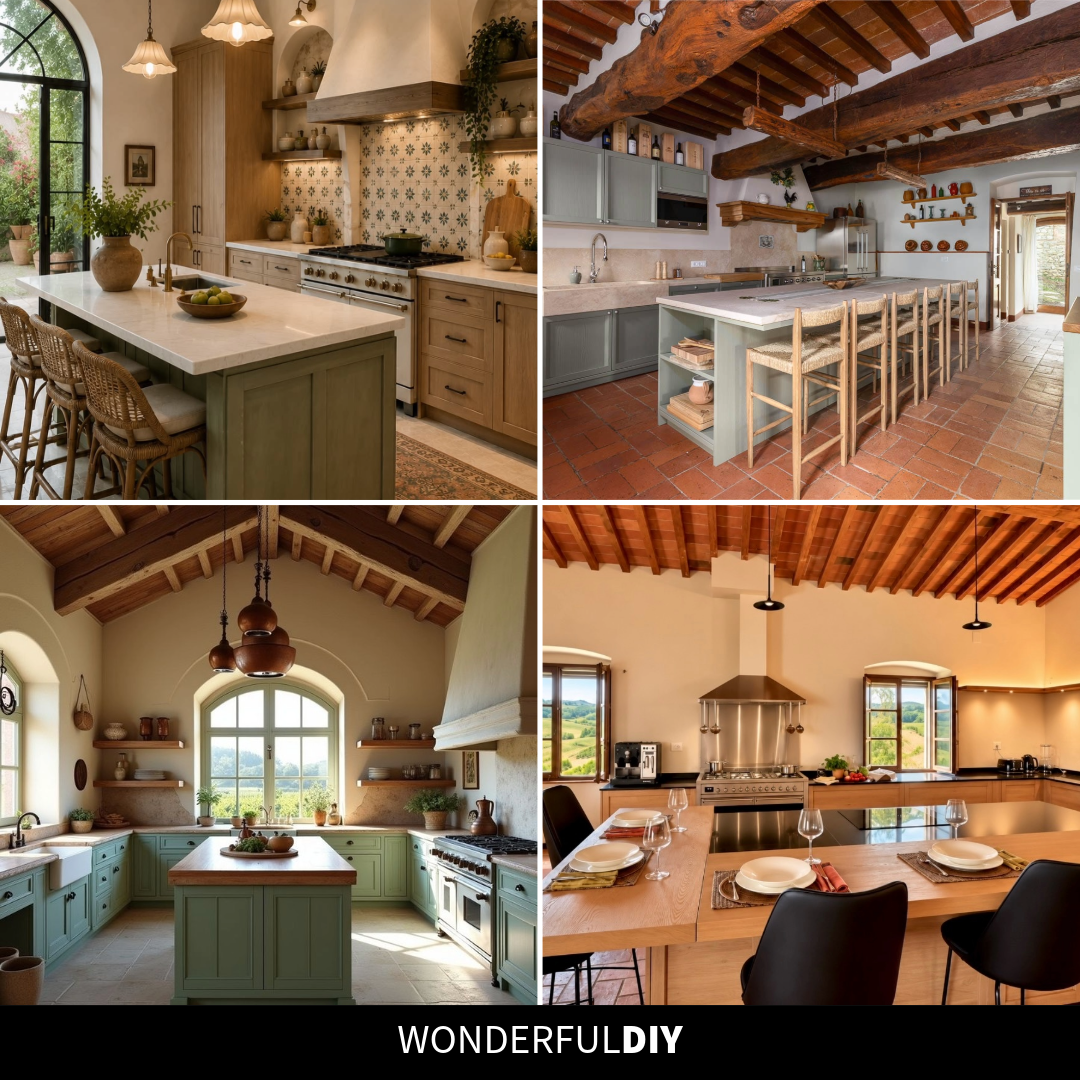
Tuscan Kitchens That Pull Off a Look Most Kitchens Can’t
The thing people miss about Tuscan kitchens is that they weren’t designed. They were built room by room, over decades, and the look came from using whatever stone, wood, and plaster was within reach. That history is what gives the real ones their weight. The modern versions have to work pretty hard to fake it, but when they do it right, the result feels older and warmer than almost any other kitchen style.
These kitchens cover the full range: a few traditional, a few modern takes, and a couple that bend the rules entirely. The common thread is how much personality each one holds without trying to shout.
The Modern Take That Still Feels Old-World
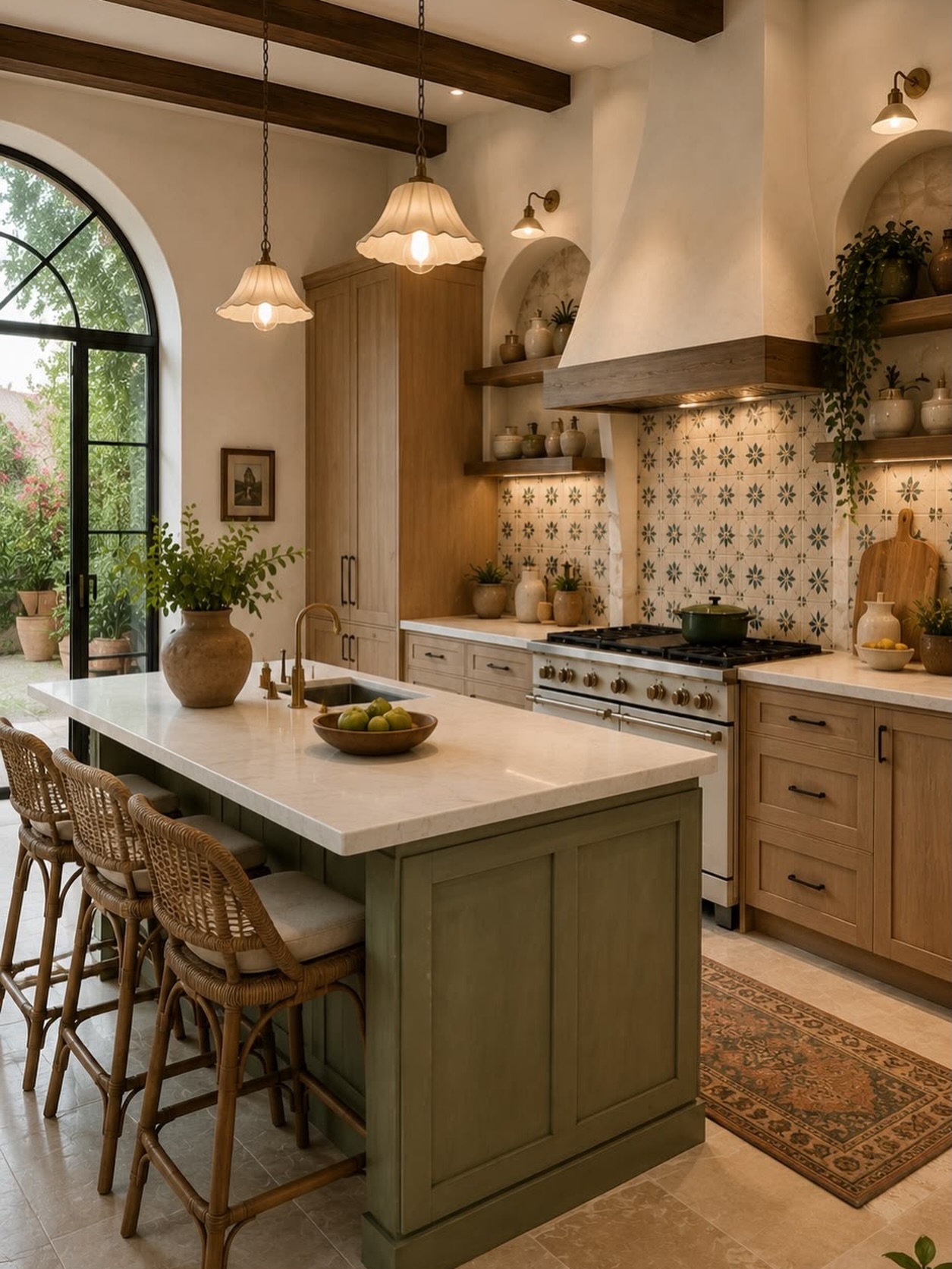
The sage island is the move here. It gives the room a cool anchor against all that warm wood and cream plaster, and the color pulls directly from the garden you can see through that arched door. The scalloped pendant lights look like something you’d find in an old villa, but they’re pulling a very current trick: softening a sharp architectural moment with something a little feminine. If this kind of warm European look pulls at you, the French kitchen roundup over here runs down the same road from a different direction.
When the Ceiling Is the Whole Point
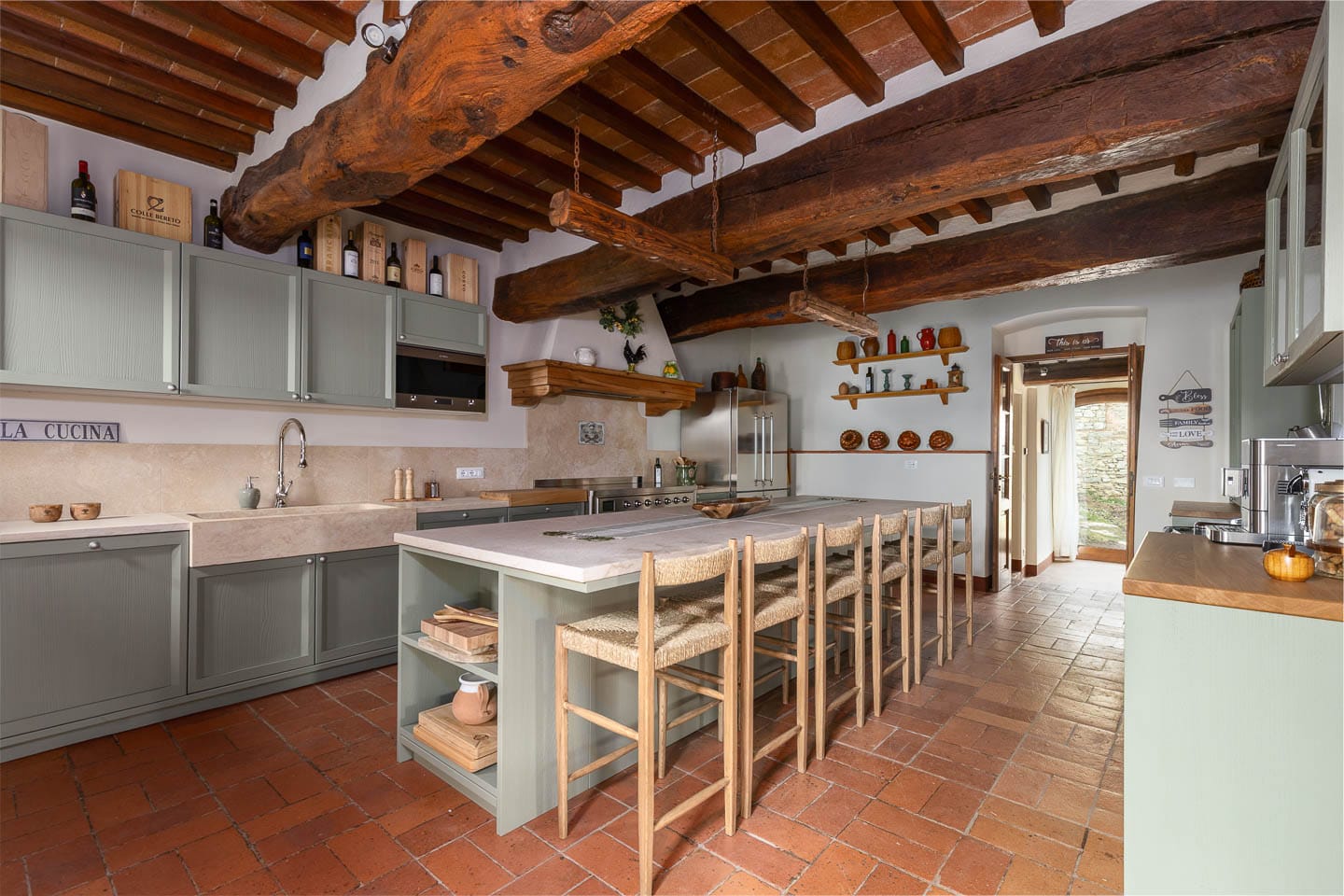
That ceiling is doing more work than any single element in the room. The beams aren’t decorative, they’re structural, and you can tell by how rough they are. Pairing them with the quietest possible cabinets, those soft sage shaker fronts, is the right call because anything busier would fight for attention. The long sage island with rush-seat stools stretches the room without crowding it, and the terracotta floor pulls everything down to earth.
The Color Nobody Else Would Try
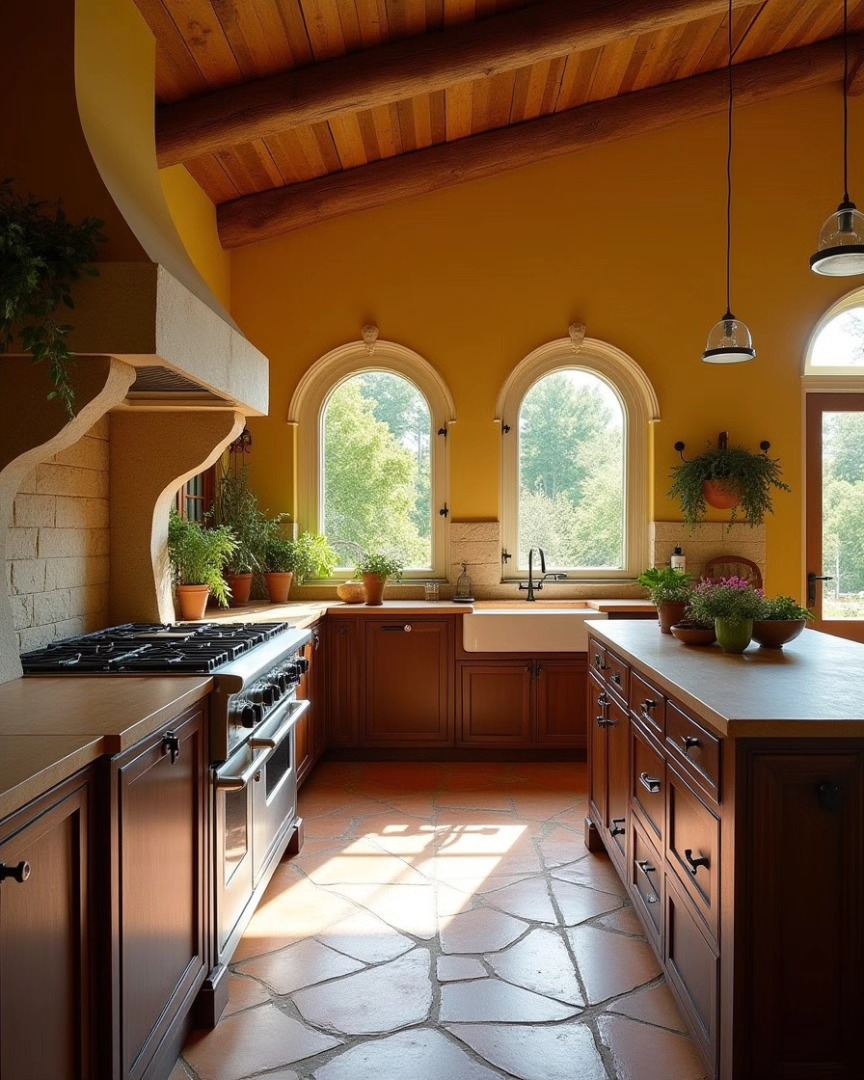
That golden yellow is the kind of color most people would talk themselves out of. On a swatch it looks like it’s going to be too much. In the room, with the dark mahogany cabinets grounding it and the irregular flagstone floor cooling it down, it reads as sunlight even on a cloudy day. The arched windows frame it like a painting. Worth remembering if your kitchen gets no real natural light: color can do what windows can’t.
Where Tuscan Meets a Proper View
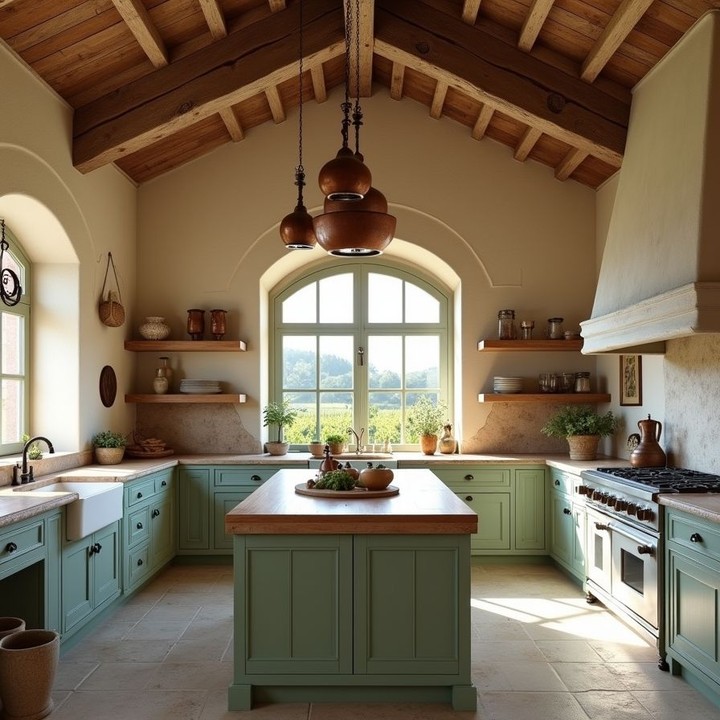
The vaulted ceiling with those rough-hewn rafters is doing most of the work, but the stacked copper gourd pendants are the piece people remember. They echo the shape of the arched window and tie the whole wall together without looking like they’re trying to. The sage cabinets and butcher-block island top stay quiet so that view and that ceiling can do what they’re meant to do. If you want more rooms built around warm wood like this, here’s what wood is doing for kitchens right now.
The Kitchen That Looks Like Someone Actually Cooks Here
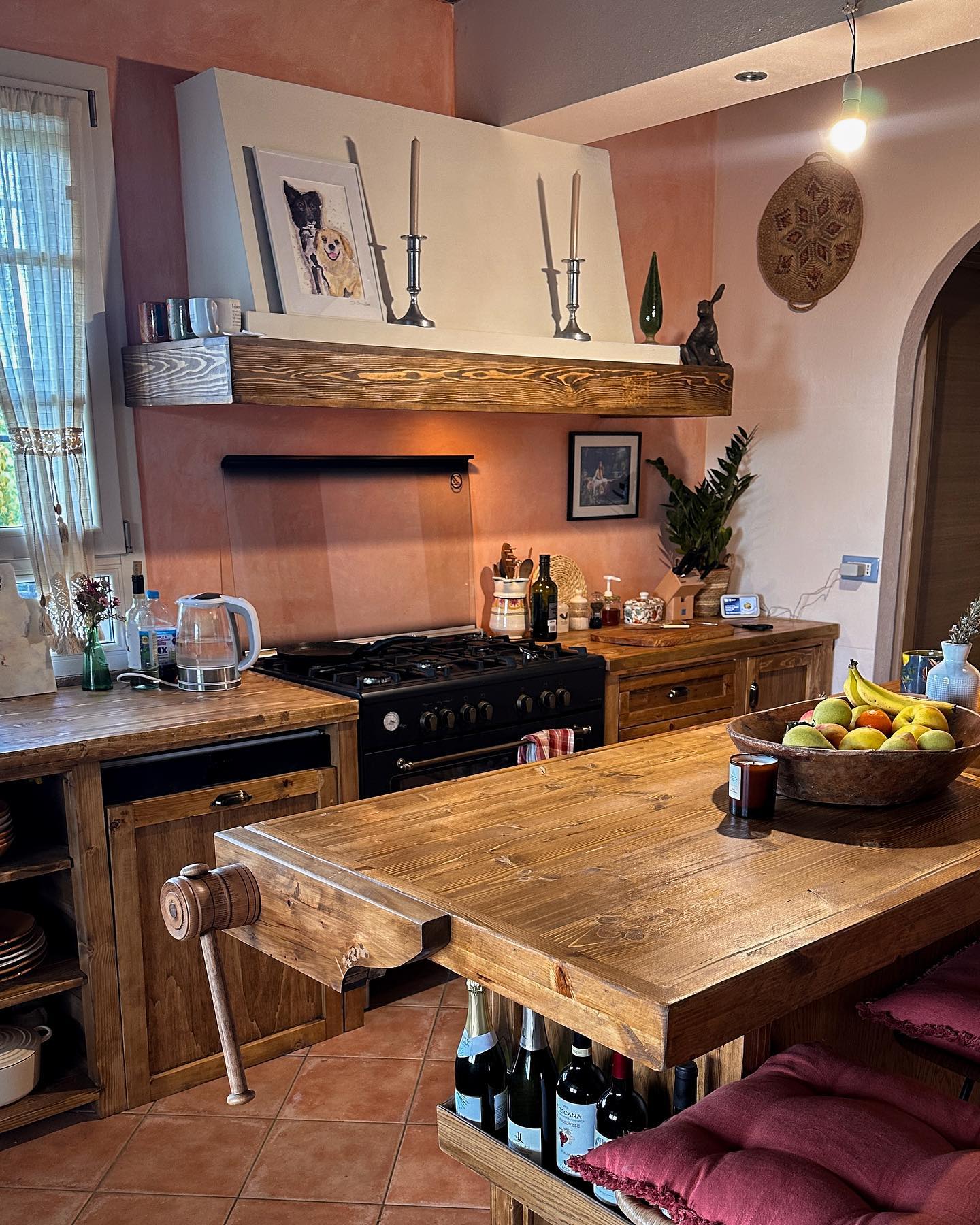
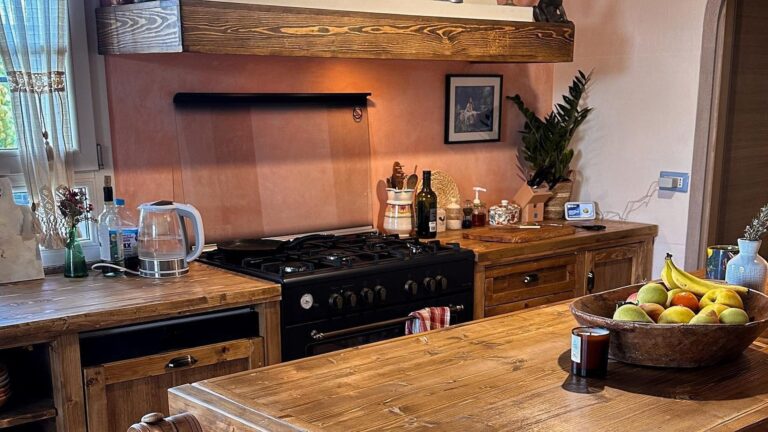
That island is a vintage carpenter’s workbench, wooden vice still attached, pressed back into service as the heart of a kitchen. Pink plaster shouldn’t work in here either. But look how calm this room is. The wood beam mantel over the range gives the eye somewhere to land, and the candlesticks and small art break up what could have been a flat wall of color. It’s a working kitchen, not a staged one, and that’s exactly why it feels so good.
Modern Lines, Old Bones
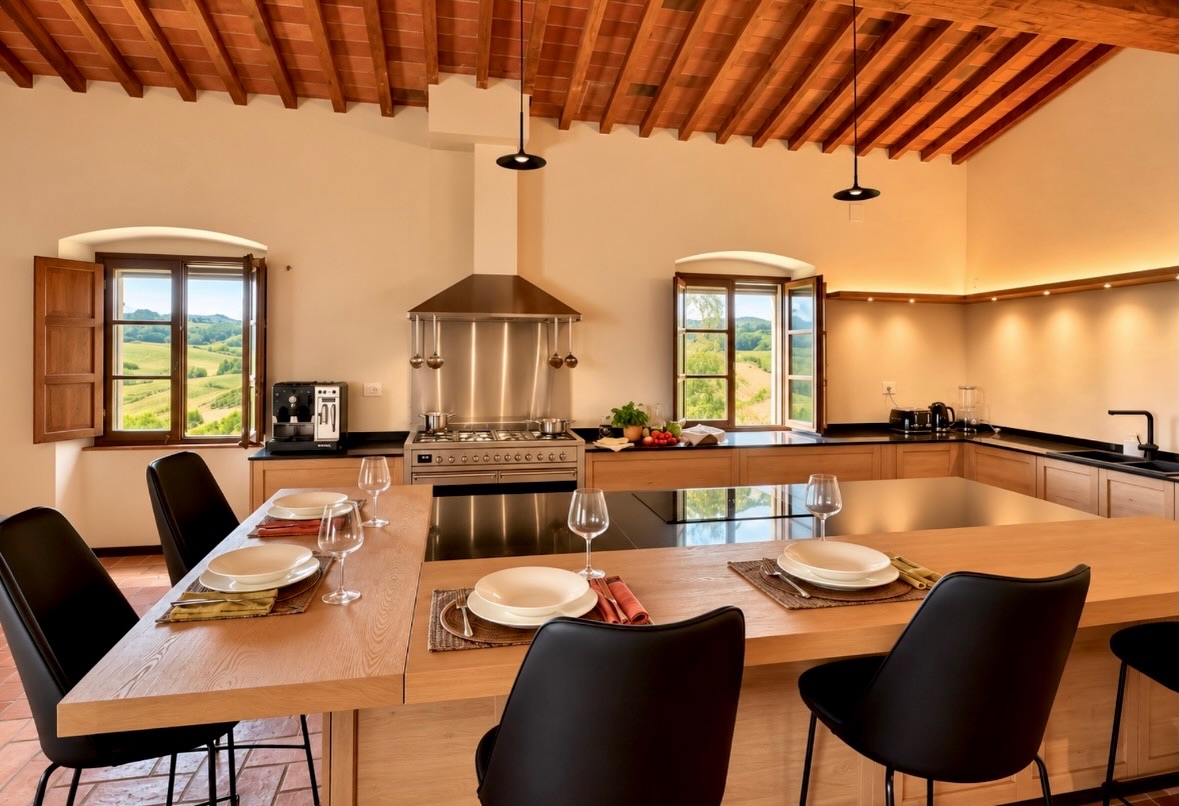
This is the Tuscan kitchen for people who don’t actually want a Tuscan kitchen. The pitched timber ceiling and the terracotta floor keep the room tied to the land, but everything else, the clean oak fronts, the black counters, the island built around the cooktop with proper chairs and an oak dining extension instead of stools, is a modern kitchen pretending otherwise. The result lets you cook and eat and work without the room looking busy, which is harder to pull off than it looks.
The American Version That Gets It Right
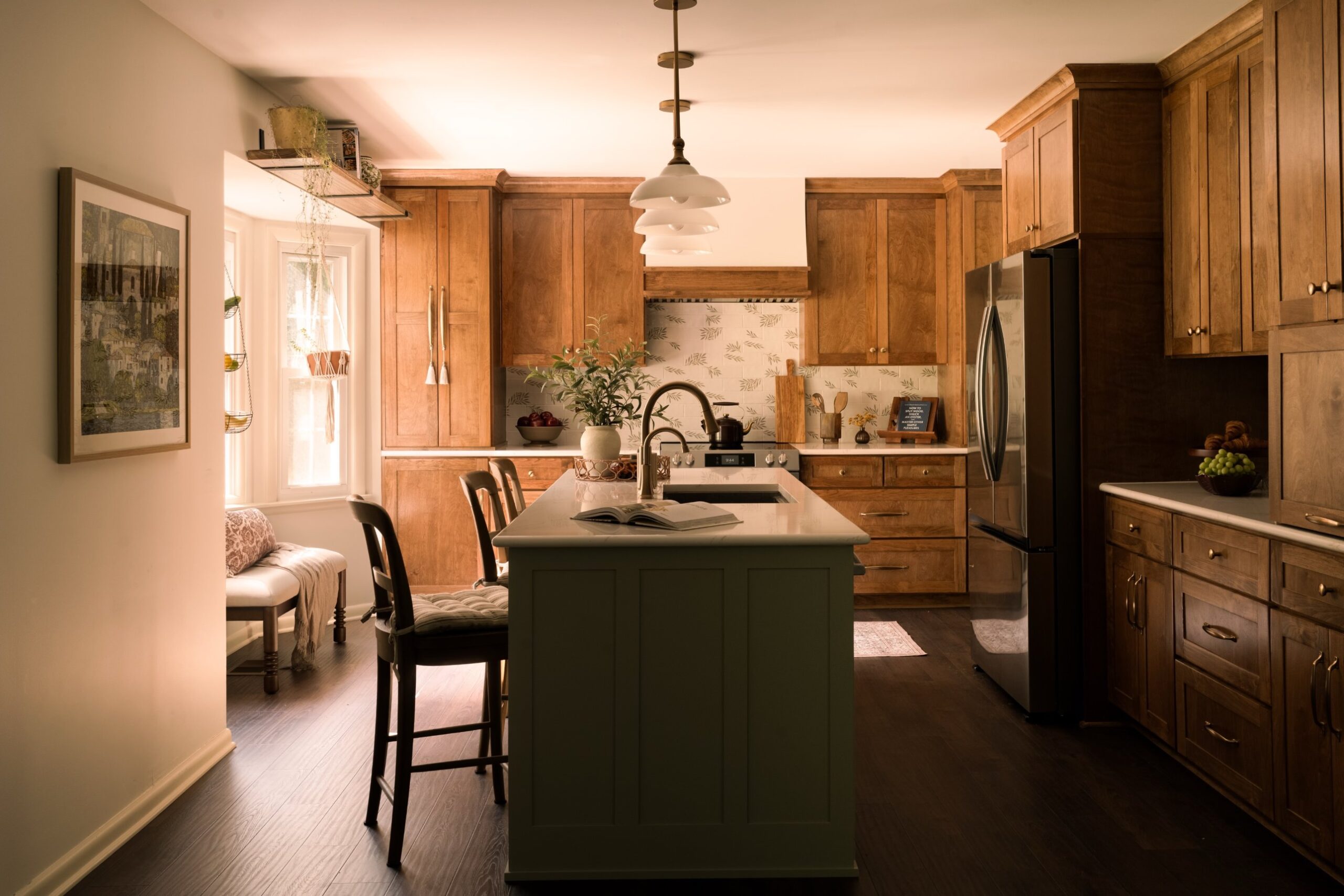
Most American takes on Tuscan end up looking like a restaurant chain. This one doesn’t, and the reason is restraint. The olive branch tile behind the stove is the one openly Italian moment in the whole room, and because it stays in that one spot, it reads as a nod instead of a theme. The sage island breaks up the warm honey oak cabinets without going fussy, and the window seat tucked in the back with that Mediterranean print makes it feel like a kitchen people linger in.
The One That Looks Like a Real Italian Villa
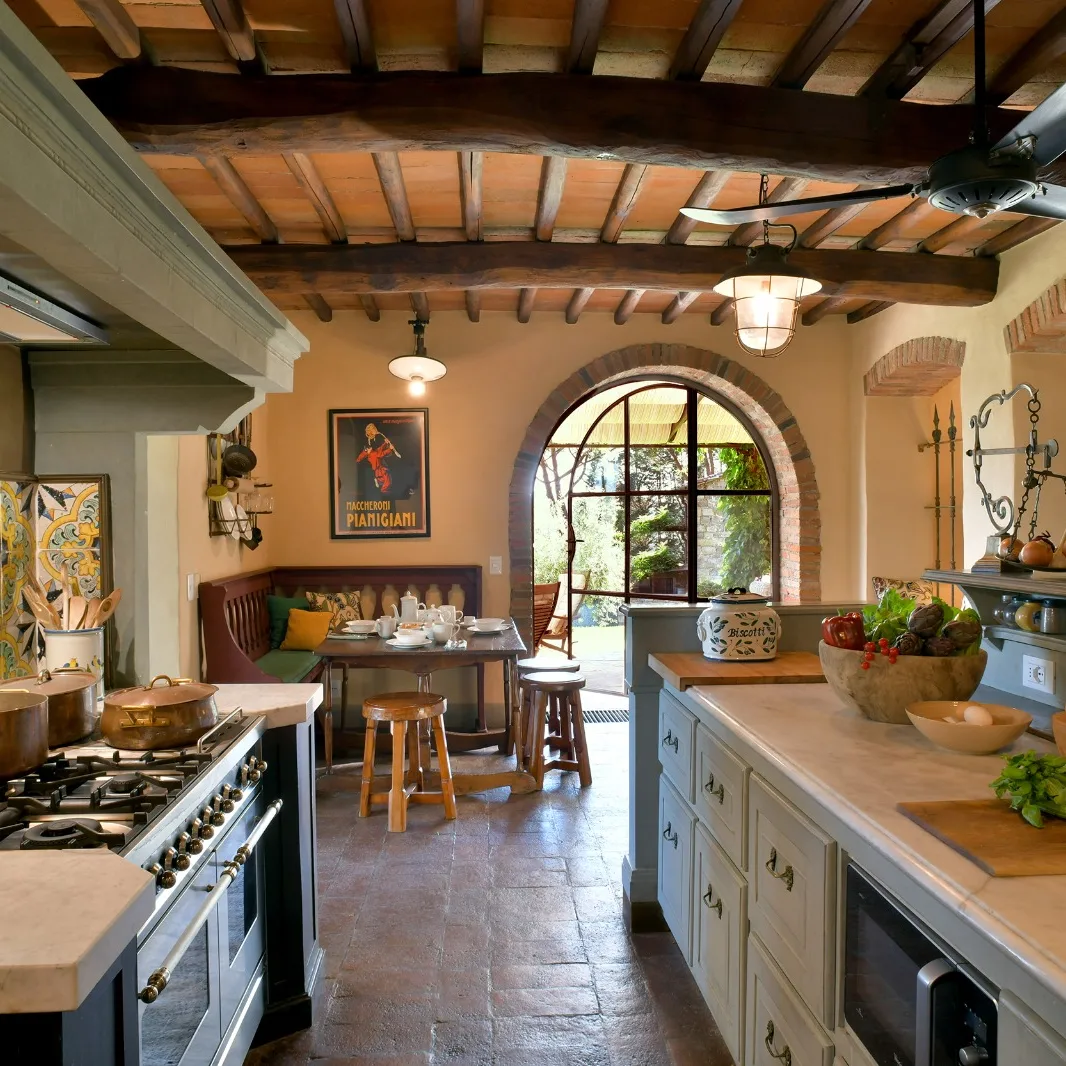
This one isn’t a style, it’s a place. The arched doorway opening onto a garden, the hand-painted tiles tucked beside the range, the vintage pasta poster above the banquette: none of it was shopped for a mood board. The copper pots are there because somebody cooks with them, and the walls behind the stove have soaked up years of that cooking. If your takeaway from a Tuscan kitchen roundup is “I want this feeling,” this is the one to study, because every detail happened on purpose and over time, not all at once.
Which one of these kitchens feels most like something you’d actually want to cook in?