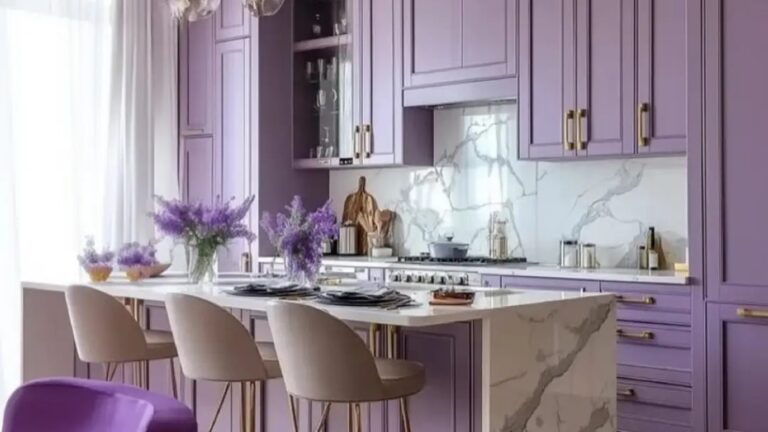
Trends come and go, but one kitchen style has been quietly winning Americans over for decades without ever shouting about it. These kitchen ideas show you exactly how that happens, and why the people who choose this look rarely regret it a few years later.
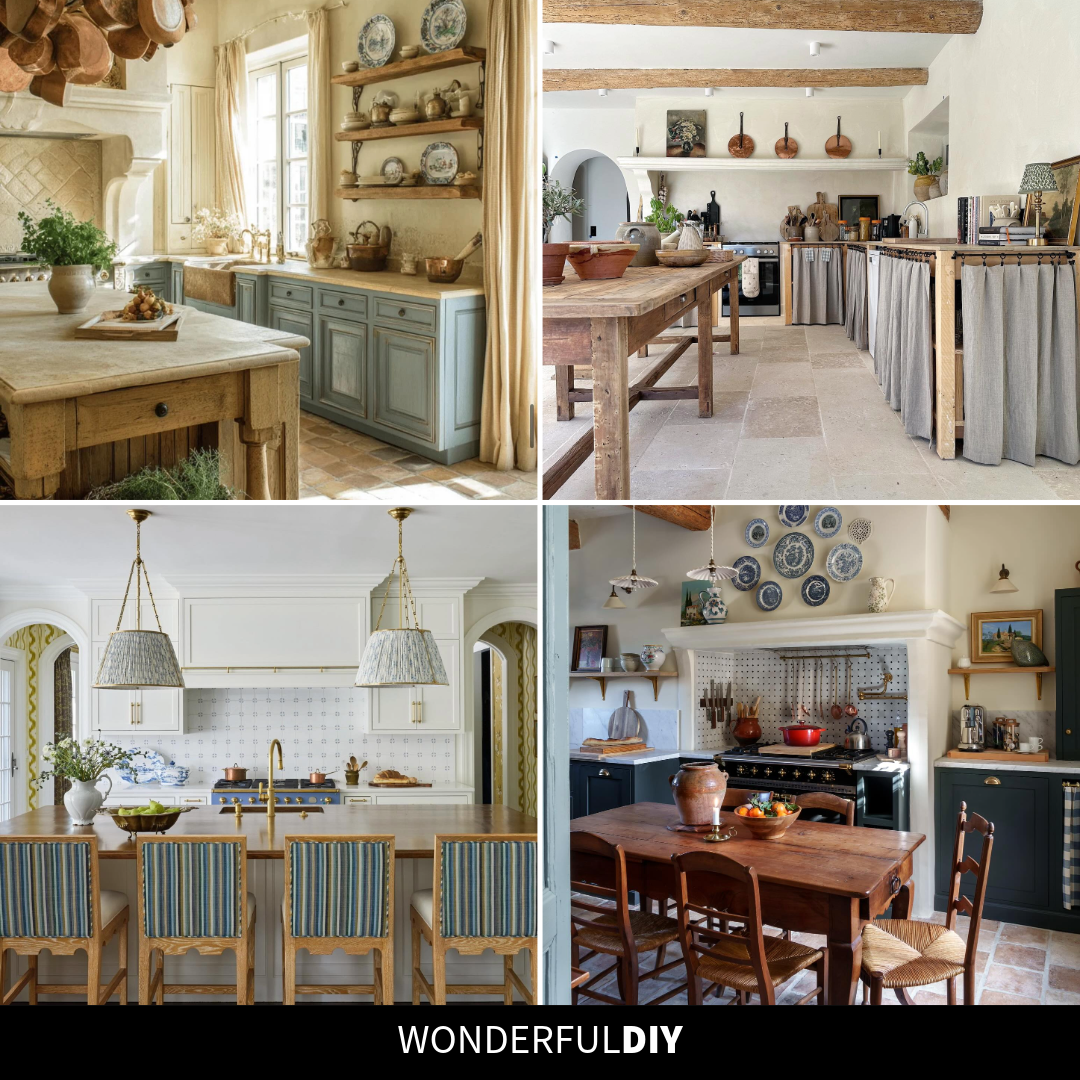
French Kitchens That Have Been Working for a Hundred Years
Most trendy kitchens look dated within five years. French kitchens somehow don’t. They borrow from old farmhouses in Provence, Paris apartments, and country houses, and they keep what works instead of chasing what’s new.
What follows is a mix of rustic and polished, country and city, dark and light. Different takes on the same idea: a kitchen built to last, used every day, and never fussy about it.
The Look That Still Feels New After a Hundred Years
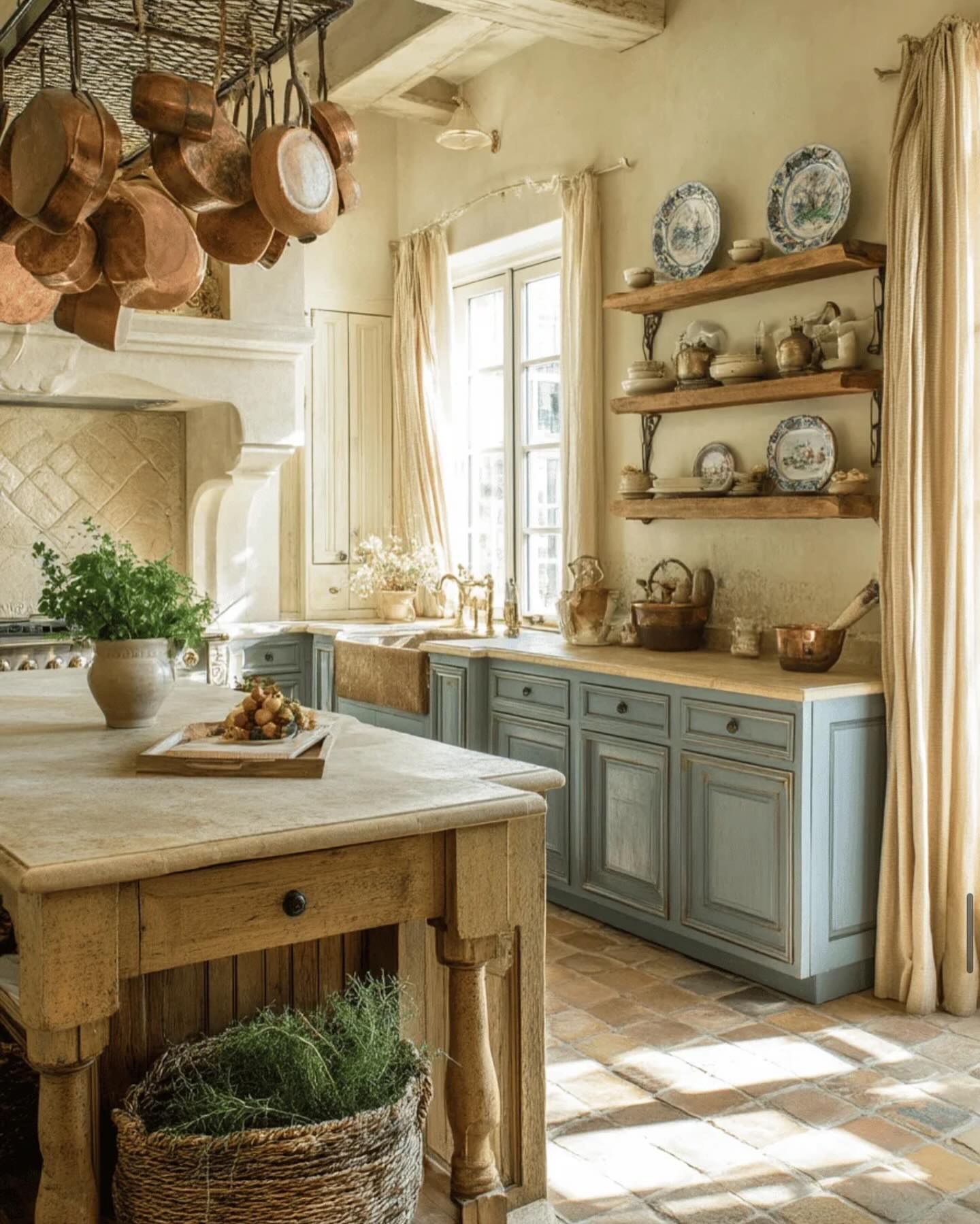
Pale blue cabinets, copper pots on the overhead rack, terracotta tile underfoot. This is French country in its purest form, and it hasn’t changed much since your grandmother’s grandmother cooked in a room just like it. The reason it still works is that every piece has a job. Copper pots are the best cookware you can buy, so they live out in the open because they get used.
The Fix for Tired Cabinets on a Tight Budget
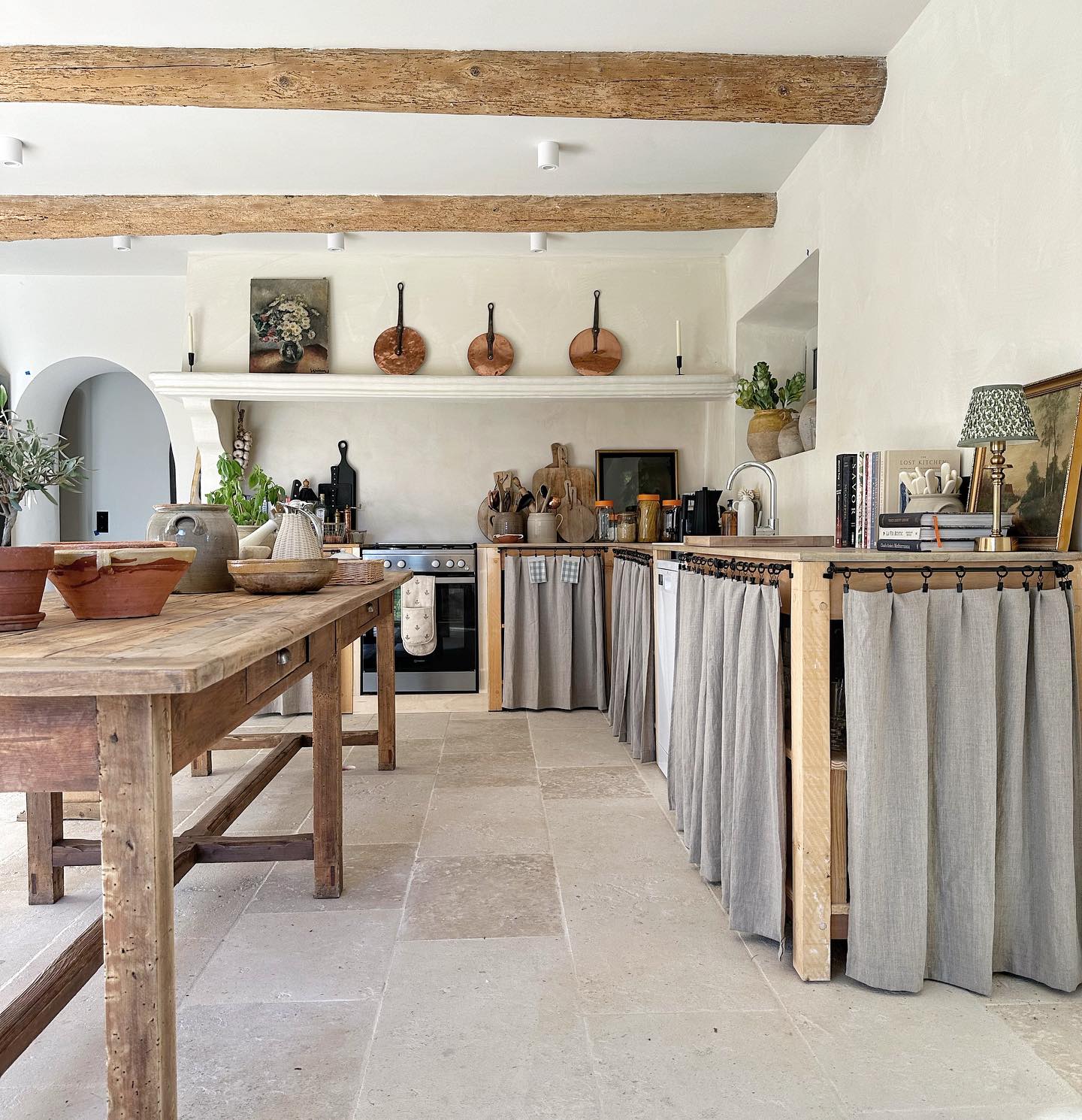
Instead of cabinet doors, this one uses simple linen curtains on a rod, a trick from old Provence kitchens where cabinetmakers were a luxury. The curtains hide everything underneath but soften the whole room in a way doors never do. Try this if your current cabinets are shot and the budget’s tight: pull the doors off, add a tension rod, hem some linen panels.
When You Want French Without the Country Baggage
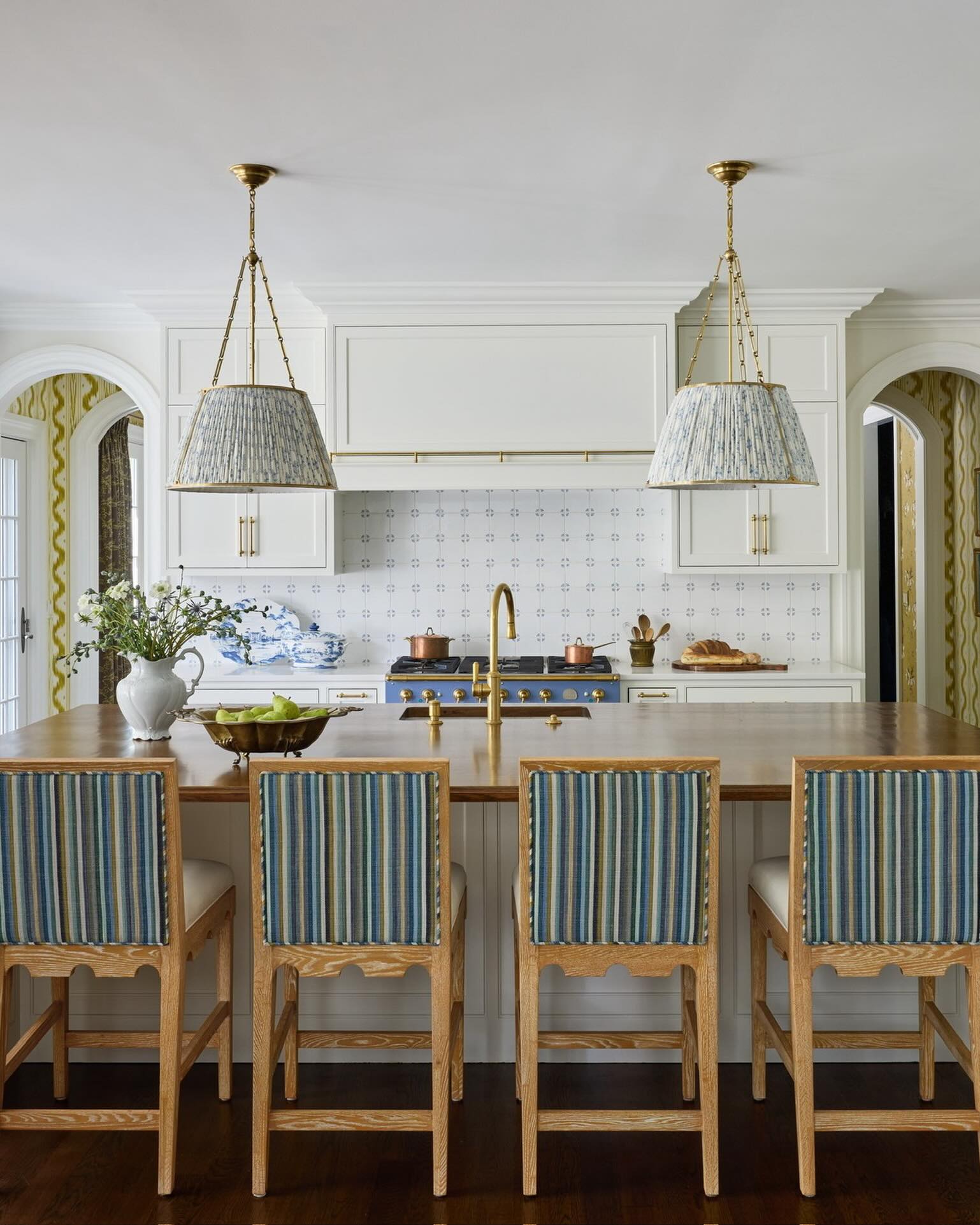
Not every French kitchen looks like a farmhouse. This one leans dressier, with a blue French range and brass trim, pleated fabric pendants, and scallop-back stools in a striped print. The French signature here isn’t rustic. It’s the mix of patterns, the brass, and the willingness to use real color on something as practical as a stove.
The Kitchen Centerpiece Worth Saving Up For
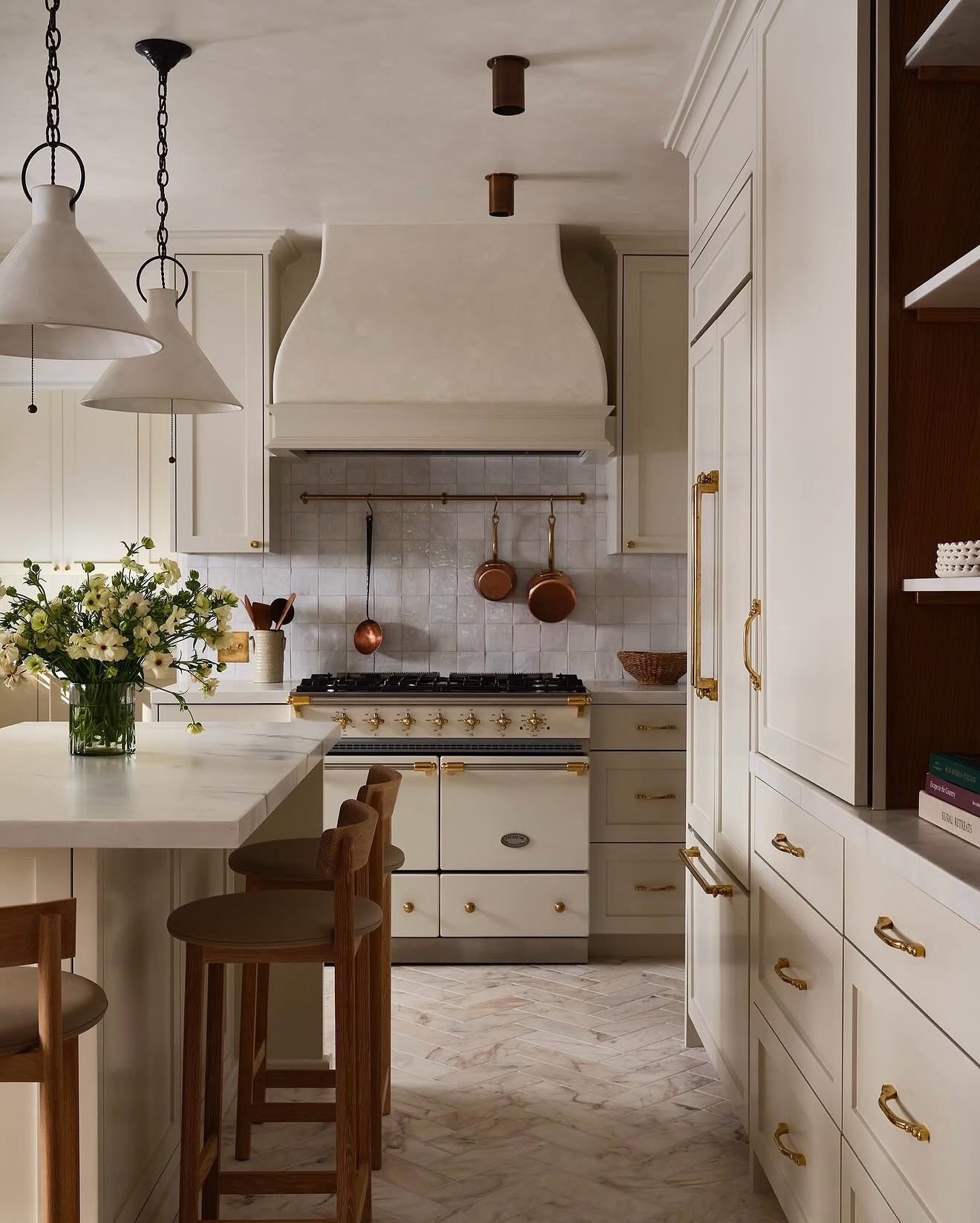
A French range in cream and brass against handmade zellige tile, those small square tiles with a glassy, uneven surface that catches light differently in every spot. The range is the splurge; everything else quiets down to let it star. If you can only invest in one piece during a renovation, this is the one that pays you back for the next forty years.
The Trick That Makes Dark Cabinets Feel Warm
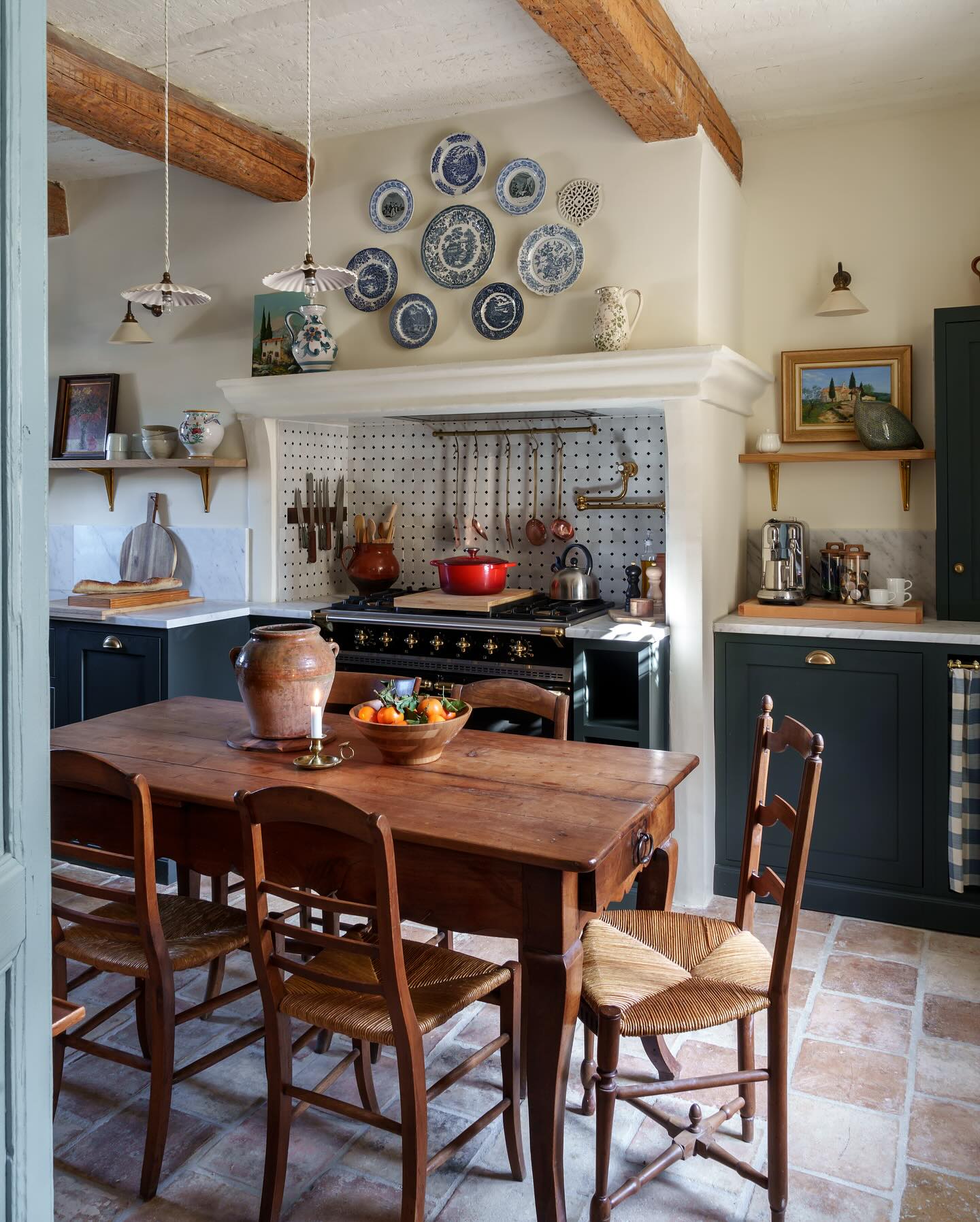
Dark green cabinets, a plaster mantel hood, and blue-and-white plates clustered on the wall above the stove. This is the kind of French kitchen that comes alive after sundown. The dark cabinets anchor everything so the plates and terracotta floor get to do the pretty work.
French Chateau Scaled Down for a Normal House
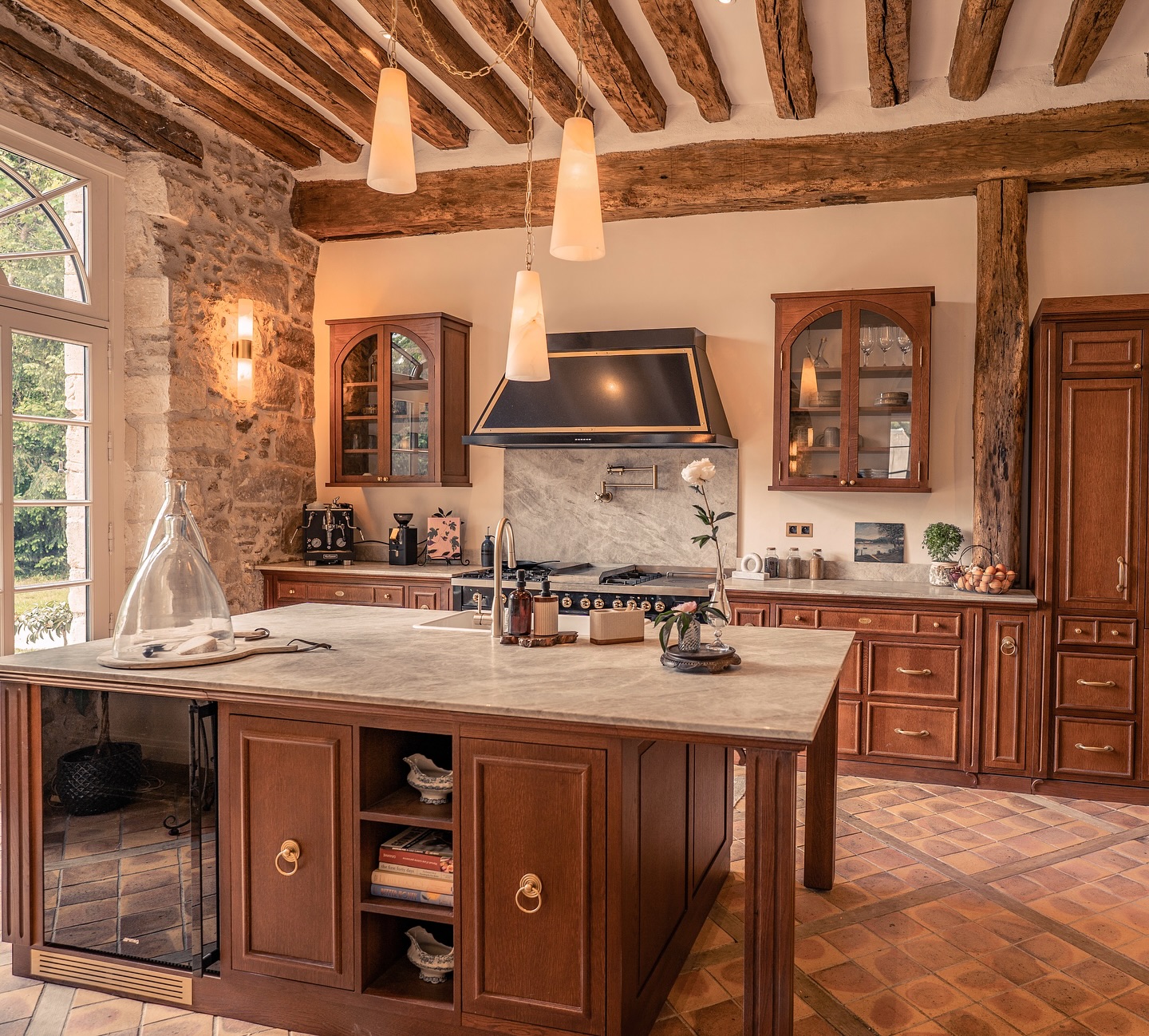
Warm wood cabinets, chunky exposed beams, a stone accent wall. This reads chateau, but the moves are copyable. You don’t need the whole stone wall. You need the wood tones to repeat across cabinets, beams, and chairs, the countertop in stone, and the hardware in aged brass. Pull those four moves and it still works in a 1,500-square-foot ranch.
The Island Move That Changes a Whole Kitchen
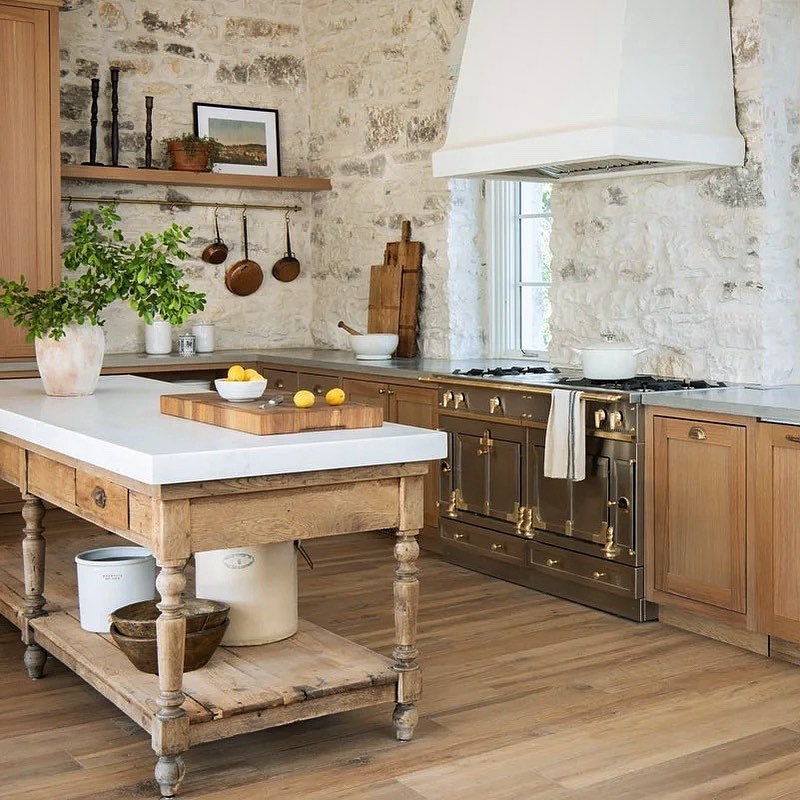
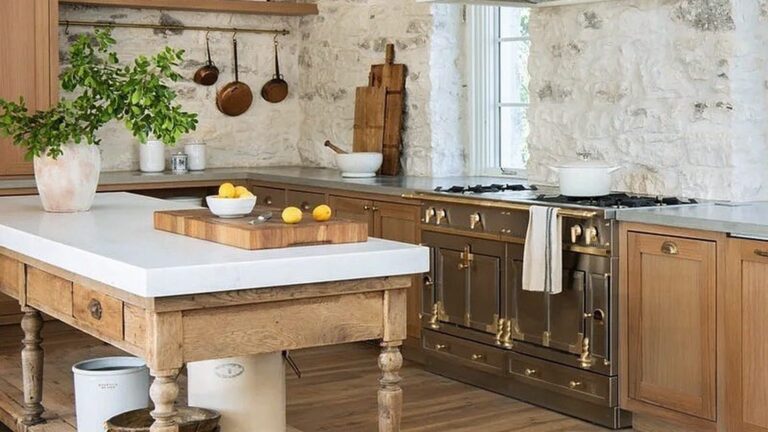
An antique wood table used as the island, a professional range tucked against a stone wall, copper pots on a brass rail. This is French country for people who actually cook. The island is the key move: freestanding instead of built-in, with a top you can beat up and legs that let you see the floor behind it. These cabin kitchens pull off a similar warmth if the stone part feels out of reach.
Which one of these French kitchens would you actually copy in your own home?