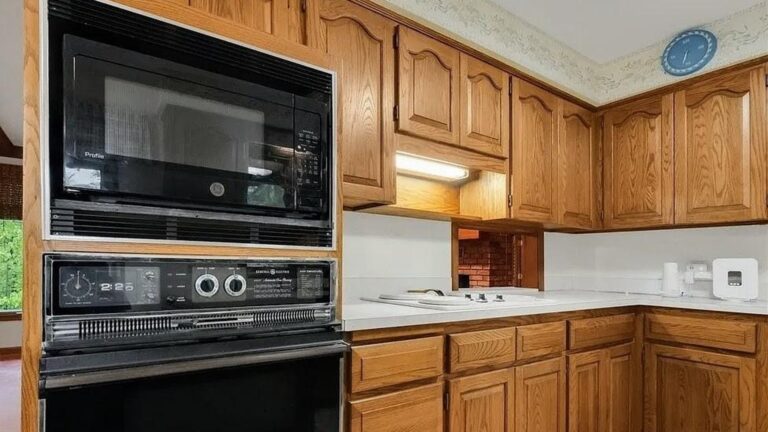
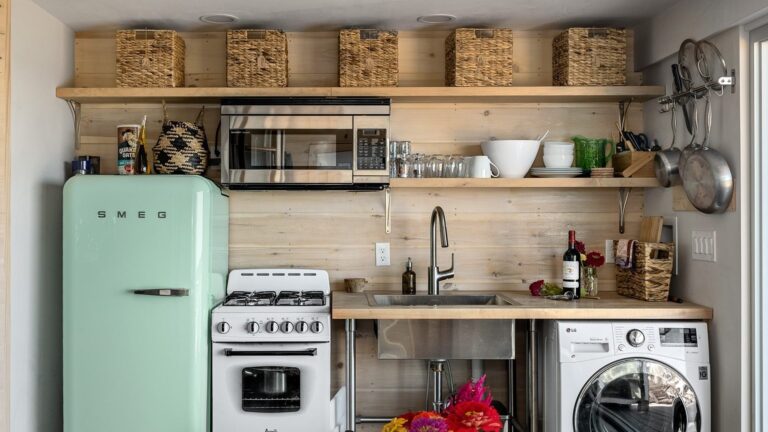
You’ve done everything. You took the trash out twice. You bleached the disposal. You wiped down the counters, checked the dish rag, sniffed the drain, and even pulled the bag out of the recycle bin just in case.
The smell is still there. Faint, sour, kind of stale. It hits you when you walk in from outside and it hangs around your kitchen like it lives there.
That’s because it does.
The spot almost nobody thinks to check isn’t in the trash, the sink, or even inside the fridge. It’s underneath your fridge, and it’s been quietly getting worse for months, maybe years. Once you see it, you’ll understand instantly why nothing you’ve tried so far has worked.

First, is this even a real thing?
Short answer: yes, and it’s been studied by actual food scientists, not just people writing blog posts.
A study published in the journal Food Service Technology by researcher A. J. Michaels grew slimy bacterial colonies on plastic refrigerator trays using nothing more than everyday kitchen scraps. The researchers then ID’d the bugs by name: Pseudomonas putida, Sphingobacterium multivorum, Citrobacter freundii, and Proteus vulgaris. Those are spoilage bacteria, the same kind that make food smell “off” when it’s gone bad. They grew to about a billion cells per test area on plain fridge plastic, which is a wild amount of life for a piece of your appliance you’ve never once looked at.
A 2023 review in the journal Food Microbiology backed the same point in plain language: even at fridge-cold temperatures, plenty of microbes survive, multiply, and form biofilms on the plastic surfaces inside and around your refrigerator. A biofilm is that slippery gunk you feel when you touch the inside of a flower vase after the water’s been sitting for a week. It’s alive, it’s stuck to the surface, and one quick wipe won’t take it off.

Why this happens in your kitchen, of all places
There’s a part of your fridge nobody explains when you buy it.
Every automatic-defrost refrigerator, which is basically every fridge sold in the last 30 years, runs a small thawing cycle every few hours. It has to, or ice would slowly bury the cooling coils and choke the whole thing. That thaw makes water. And the water has to go somewhere.
According to guidance from GE Appliances, that water flows through a small drain hole at the back of the freezer, runs down a hidden tube, and lands in a shallow plastic tray sitting at the very bottom of the appliance. On some fridges the tray hides behind the vented panel at the very bottom front. On others, it’s tucked at the back, right up against the compressor (the black cylinder that hums when the fridge is running).
The compressor gets warm. It’s supposed to. That warmth is meant to slowly evaporate the water in the tray so it never overflows.
But warm plus wet plus a slow trickle of tiny food bits that also make it down that drain equals exactly what the Michaels study described: a buffet for bacteria. Over months, then years, that hidden tray builds up a slick coating of stuck-on residue that no evaporation can lift. Even after the water dries, the colony stays. And every time the fridge runs another defrost cycle, warm air from the compressor carries a whiff of it up and out into your kitchen.
That tray has a name. It’s called the condensate drain pan, and it’s where your mystery smell has been coming from.
Why nothing you’ve tried has worked
Wiping the shelves doesn’t touch it. Baking soda in the fridge doesn’t touch it. Bleaching the disposal doesn’t touch it. Taking out the trash doesn’t touch it.
The reason is simple. The pan sits outside the fridge, in a spot you never look. Whirlpool’s own owner guidance and appliance-repair write-ups both point out the same thing: most homeowners don’t know the pan is there at all, so it never gets cleaned, ever.
If your smell has been going on for weeks or months and nothing in the visible parts of your kitchen has fixed it, this pan is almost always where it’s coming from.
What to actually do about it
You need about 20 minutes, a screwdriver (maybe), a bowl, and dish soap. That’s it. No special product, no service call, no cost.

Do this:
- Unplug the fridge first. You’ll be reaching near electrical parts, so don’t skip this.
- Check for a vented panel at the very bottom front. Most pop off by hand with a gentle tilt and pull. Some have two small screws. If your pan is behind it, you’ll see a shallow tray sitting just inside. Slide it straight out.
- No pan up front? Then it’s at the back. Roll the fridge forward a couple of feet (grab a helper if it’s heavy). On side-by-side and French door models the pan is bolted near the compressor. A few newer models have pans that can’t be removed at all. If yours is one of those, clean it in place with a wet rag.
- Wash the pan with hot water and dish soap. Dump any standing water in the sink first. Scrub the inside and every corner. For stubborn crud, soak the pan for 10 minutes in a 50/50 mix of white vinegar and hot water, then scrub again. Don’t use bleach on it. Whirlpool warns that bleach can damage the plastic.
- Flush the drain tube while you’re back there. This is the step almost everyone skips, and it’s what keeps the smell from coming back next month. GE Appliances gives an exact recipe: mix 1 tablespoon of baking soda (about 15 ml) into 2 cups of hot, not boiling, water (about 475 ml). Use a turkey baster to squirt it into the small drain hole at the back of the freezer floor, inside the freezer itself. You’ll hear it trickle down into the pan when the tube is clear.
- Dry the pan, slide it back in, replace the panel or push the fridge back into place, and plug it in.
That’s the whole job.
What happens next
The smell won’t disappear the second you’re done. Odor molecules soak into nearby cabinet wood and drawer liners, and those need a day or so to fade on their own. But the source is out. Within a day, usually sooner, your kitchen just smells like a kitchen again.
To keep it that way, GE suggests flushing the defrost drain with the same baking soda mix once or twice a year, and giving the pan a quick wash about four times a year. Ten minutes each time. Zero dollars.
Sources: (1) GE Appliances, Side-by-Side Refrigerator, Water on Floor, Repairing a Clogged Defrost Drain; (2) Wiley Online Library, Michaels et al., Inactivation of refrigerator biofilm bacteria for application in the food service environment, Food Service Technology; (3) ScienceDirect, Bacterial composition of refrigerators in households, Food Microbiology (2023); (4) Refrigerators Reviewed, How To Clean A Whirlpool Refrigerator (no bleach guidance)