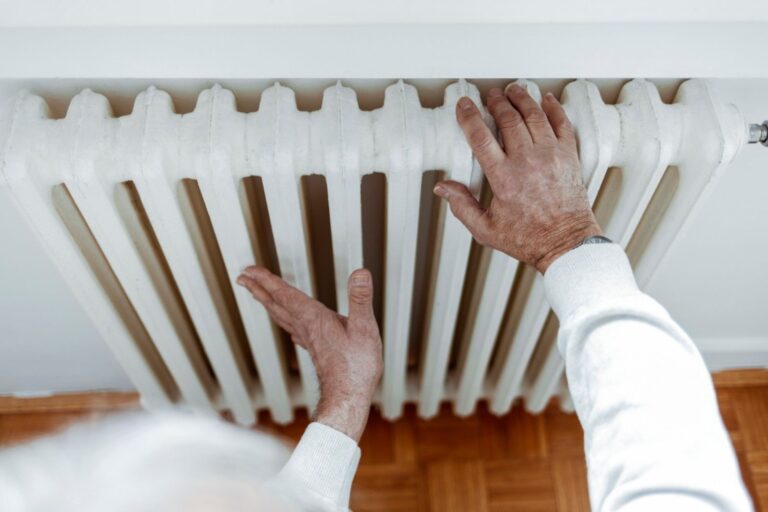
It starts as a faint gray shadow low on the wall, usually behind the dresser or in the corner of the bedroom. You scrub it with bleach, let it dry, roll on a fresh coat of paint. Three weeks later the shadow is back, a little darker, with that musty smell you can’t place.
This is not your fault, and it is not bad paint. A damp patch can come from two opposite places, and they look exactly the same on drywall. Bleach and paint treat neither one. That’s why architects quoted in Spanish-language home sections, including Máximo Caballero in La Vanguardia, recommend taping a piece of aluminum foil over the spot for a couple of days: where the droplets show up tells you where the water comes from.

Why the same stain can have two causes
The first cause is condensation. The EPA explains that it forms when warm, humid air touches a cold surface, and that mold often turns up in cold corners behind furniture. In winter, an exterior wall hidden behind a dresser is exactly that: cold, with no air moving past it, while showers and cooking load the air with moisture.
The second cause is water coming through the wall itself. Mold expert Michael Rubino of HomeCleanse told Tom’s Guide it can be a leaking pipe inside the wall or water entering through the foundation, and that both can happen at once.
The foil separates the two. Rubino explains that it barely lets water vapor through, “because it’s a non-porous surface”. Moisture from the room collects on the outside. Moisture from the wall gets trapped behind it.
How to run the foil test
- Wipe the damp patch dry with a towel.
- Cut a square of foil large enough to cover the patch. The ASTM D4263 plastic-sheet check that coating pros run on concrete uses a sheet of about 18 by 18 inches.
- Tape all four edges tight with painter’s tape. The ASTM method insists on sealed edges so outside air can’t sneak underneath.
- Leave it alone for a day or two. The ASTM version calls for at least 16 hours; the experts Tom’s Guide spoke with check within about 48 hours.
- Read both sides. Droplets on the room side mean condensation. A wet wall or damp underside means the water is coming from inside the wall. Wet on both sides means you have both problems.
Plan B: if the foil keeps peeling off a rough or crumbling surface, tape a clear plastic sheet instead, the way the ASTM check does.
What to fix after each result, and the limits
Room side wet: the fix is drier air, not a contractor. The EPA recommends keeping indoor humidity below 60 percent, ideally between 30 and 50. A cheap hygrometer tells you where you stand, and the same habits that stop windows that drip every morning work here: bathroom fan, range hood, dryer vented outside. Then pull the furniture away from that cold wall so air can reach it.
Wall side wet: look outside before you call anyone. The University of Minnesota Extension says to fix gutters, downspouts and grading first, since that may solve the problem. Downspout extensions should discharge at least 4 feet from the wall, and the ground should slope away at least 1 inch per foot for at least 6 feet. If the patch sits along a pipe or behind a shower, call a plumber.
Know what the foil can’t do. It doesn’t detect mold, and a dry square doesn’t prove the wall is fine. Don’t paint over the spot until it’s solved: the EPA says not to paint or caulk moldy surfaces, wants wet areas dried within 24 to 48 hours, does not recommend bleach-type biocides as routine cleanup, and points to its larger guidance once mold covers more than about 10 square feet.
A square of foil, a strip of tape and two days of patience tell you whether you need drier air or a downspout extension. That’s the trick.