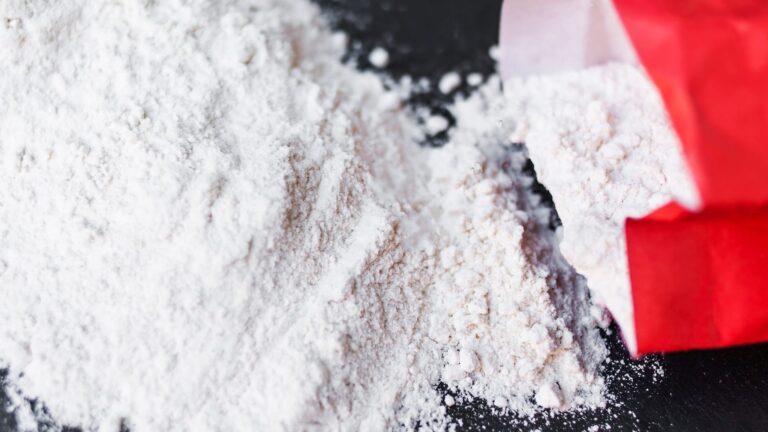
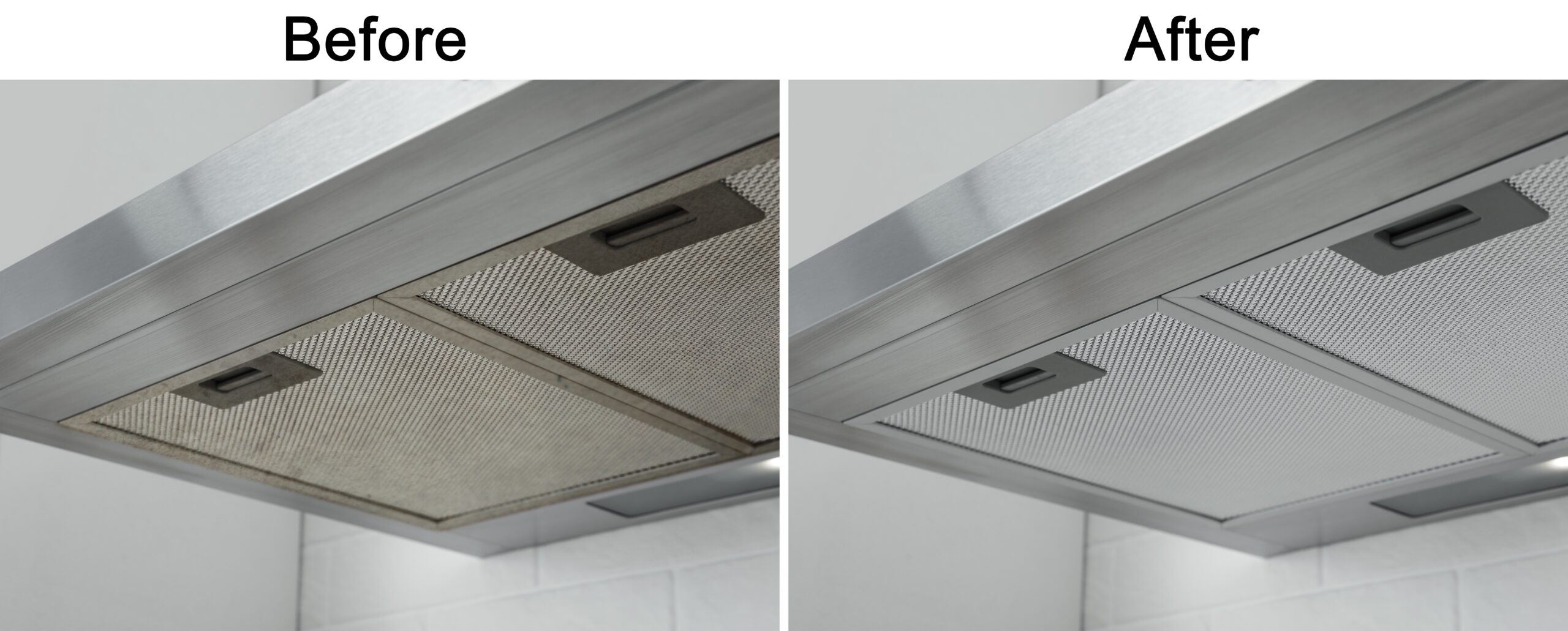
Scroll cleaning TikTok for ten minutes with the words “range hood” and you’ll see the same satisfying video on repeat. A gloved hand pulls a greasy aluminum filter out of a kitchen hood, lays it flat in the sink, dumps a snowfall of white powder across it, pours boiling water on top, and lifts it out looking brand new ninety seconds later. The caption almost always says the same two words: baking powder.
A lot of people try it that weekend. Some get a filter that looks brand new. A lot don’t. The grease stays streaky, the mesh stays dim, and the hood still smells faintly like last week’s dinner every time they flip it on.
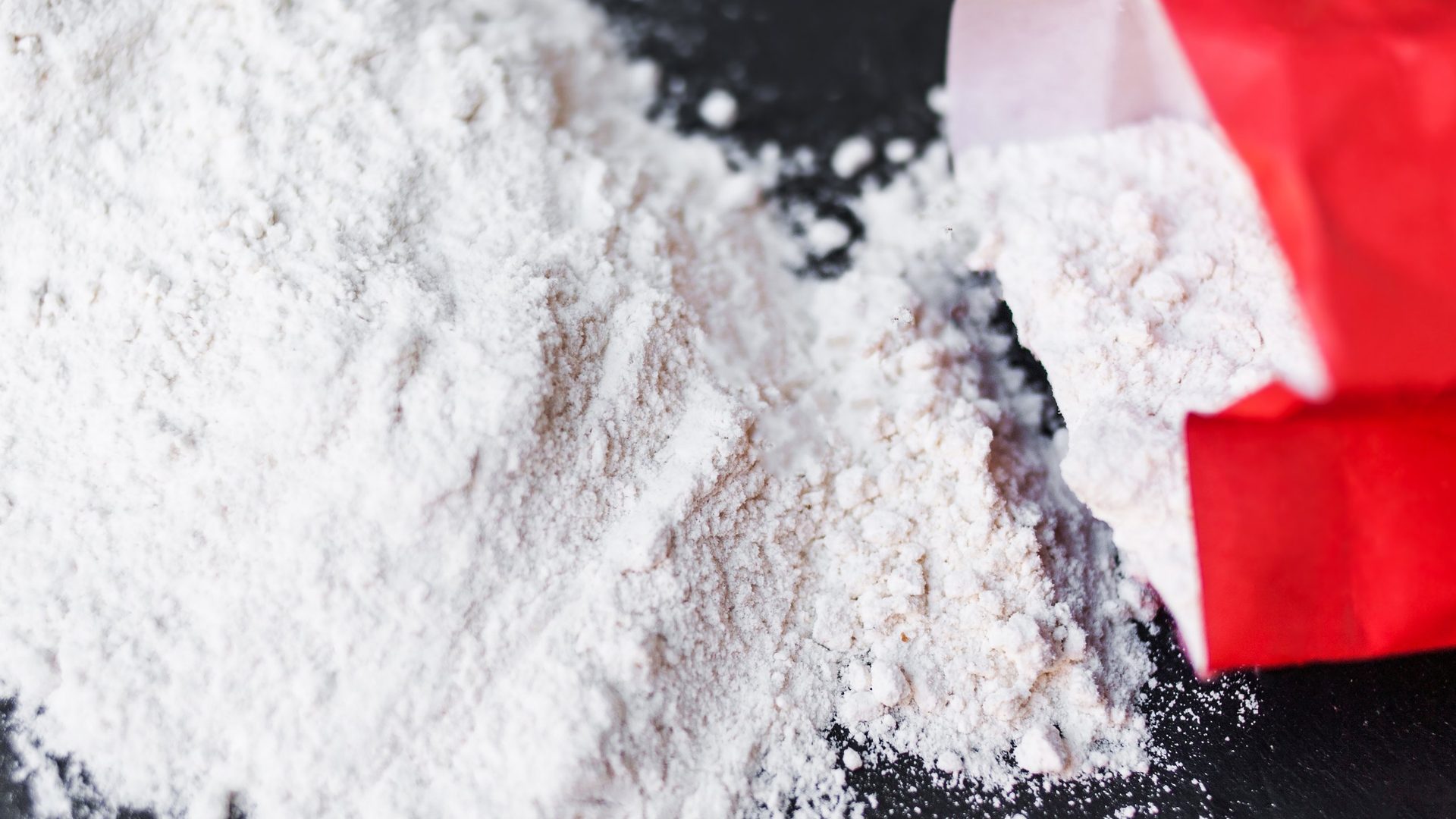
The reason the trick works for some kitchens and quietly fails for others has nothing to do with how much you use, how hot your water is, or how hard you scrub. It comes down to which white box on the pantry shelf you actually grabbed.
Why your filter gets this bad in the first place
Your range hood filter is the metal mesh screen directly over your burners. It catches the tiny droplets of oil flung off every pan you fry, sear, or roast in. According to Mr. Appliance, a national appliance repair chain, a clogged filter chokes airflow, makes the fan motor work harder, and lets grease slip past into the duct behind it, where it hardens into something no spray cleaner can touch. Reader’s Digest calls the filter “the part of your kitchen you should probably start cleaning more” and says to wash it every month.
Why the obvious fixes don’t work
If you’ve tried the normal moves, you know how it goes. Spray degreaser from under the sink barely dents a baked-on layer; it beads up and runs right off. Hunker warns that aluminum filters can come out of a dishwasher looking dull and darker, because the heat and strong detergent react with the metal. Even a long soak in hot soapy water quietly gives up, because the water cools fast and plain soap can’t eat through hardened grease on its own.
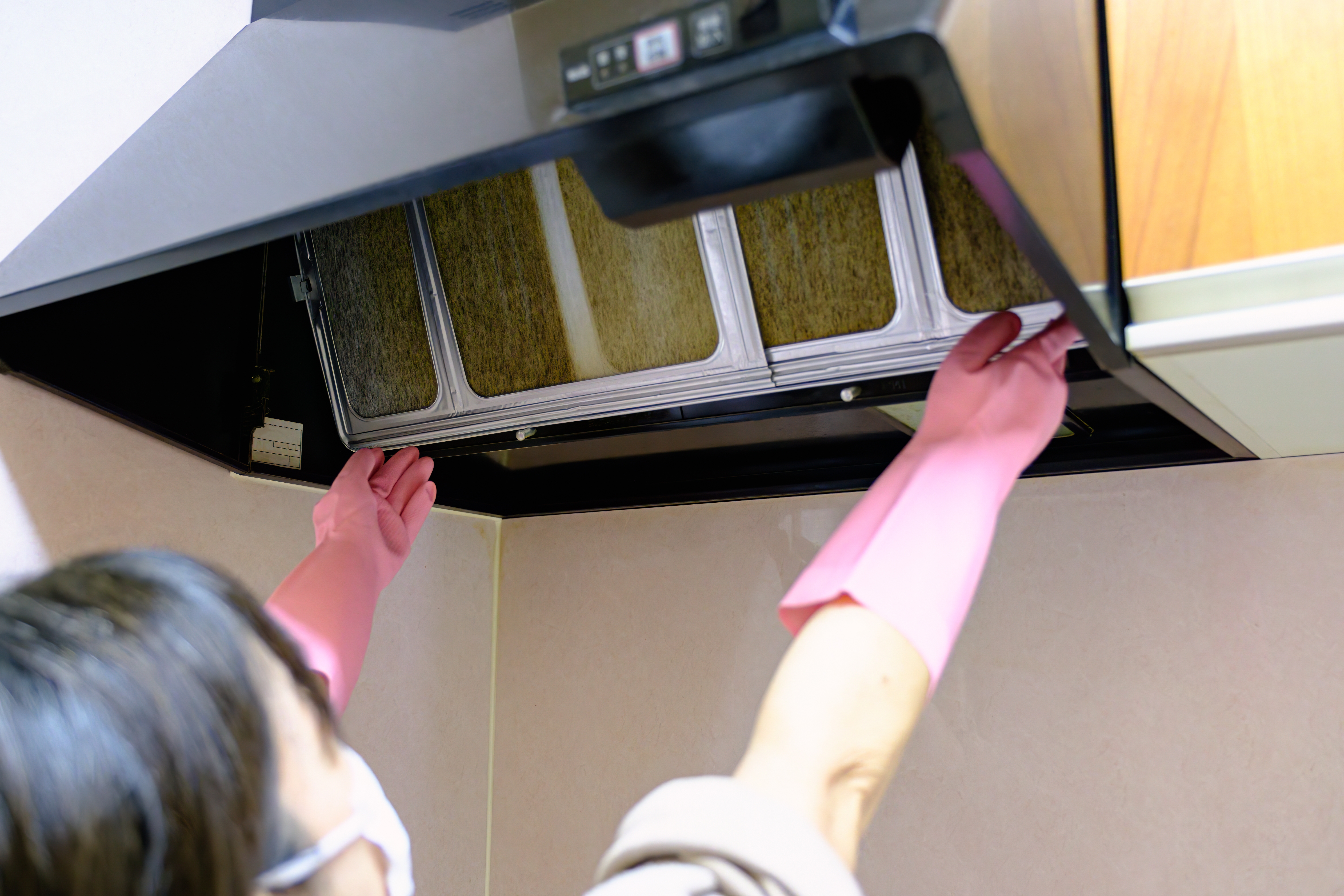
So people keep coming back to the pantry trick. It works differently from everything else: instead of trying to wipe grease off, it goes after whatever makes grease stick to the mesh in the first place.
But watch twenty of these videos in a row and you’ll notice something. Half the comments say it changed their life. The other half tried it and nothing happened. That split isn’t random. They’re all making the same tiny mistake, over and over.
The piece every short video leaves out
So what’s the catch?
Baking powder and baking soda aren’t the same thing. Same shelf, same look, same price. Only one of them actually cuts kitchen grease.
The American Society of Baking spells it out: baking powder is a mix with a built-in acid and cornstarch. That acid cancels the cleaning power the moment water hits it (the fizz you see is the cleaning power getting used up). Food Republic puts it bluntly: baking powder “isn’t an effective cleaning alternative” for grease.
So the trick works for anyone who grabbed baking soda, and fails for anyone who grabbed baking powder.
The method that actually works
The version Tasting Table, Reader’s Digest, and Hunker all back. Takes about ten minutes.
What you need: baking soda (the box labeled just soda, not powder, usually in the baking aisle), a squirt of grease-cutting dish soap like Dawn, a kettle of boiling water, and a soft-bristle brush.
The steps:
- Pull the filter out of the hood (most push up and slide out).
- Lay it flat in a clean sink.
- Sprinkle 1/4 cup (about 60g) of baking soda evenly across the mesh.
- Add a squeeze of dish soap on top.
- Pour the boiling water slowly over it until covered. It’ll fizz; that’s fine.
- Let it sit 10 minutes. Don’t walk off and leave it longer. Tasting Table warns that long contact between baking soda and aluminum can dull the metal.
- Scrub lightly along the mesh with the brush (no steel wool, which will scratch), then rinse both sides under the hottest tap water until the water runs clear.
- Pat it dry and slide it back in.
Sources: (1) Food Republic, How To Clean Your Kitchen’s Greasy Exhaust Fan With Baking Soda; (2) Mr. Appliance, How to Clean Range Hood Grease; (3) Reader’s Digest, How to Clean a Range Hood That’s All Greasy and Dusty; (4) Tasting Table, How To Clean Your Range Hood’s Filter And Get Rid Of All That Grease Buildup; (5) American Society of Baking, Baking Powder; (6) Tasting Table, Take Caution When Using Baking Soda To Clean Aluminum Pans; (7) Hunker, How To Clean A Range Hood Filter.