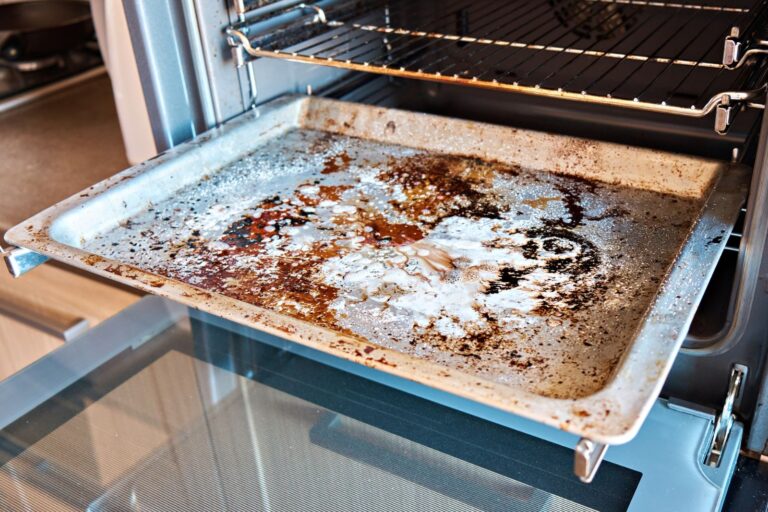
You pull the sheet pans out of the cabinet to plan the holiday baking, and there it is: that amber-brown film creeping in from the corners, darker where the roasted vegetables always sit. You scrubbed them with dish soap after every use. They still look decades old, and with Thanksgiving on November 26, a new set is starting to sound tempting.
This is not your fault, and the pans usually aren’t ruined. Dish soap was never designed for that brown layer. It needs a different approach, and it takes about 20 minutes.
Why dish soap can’t touch the brown layer
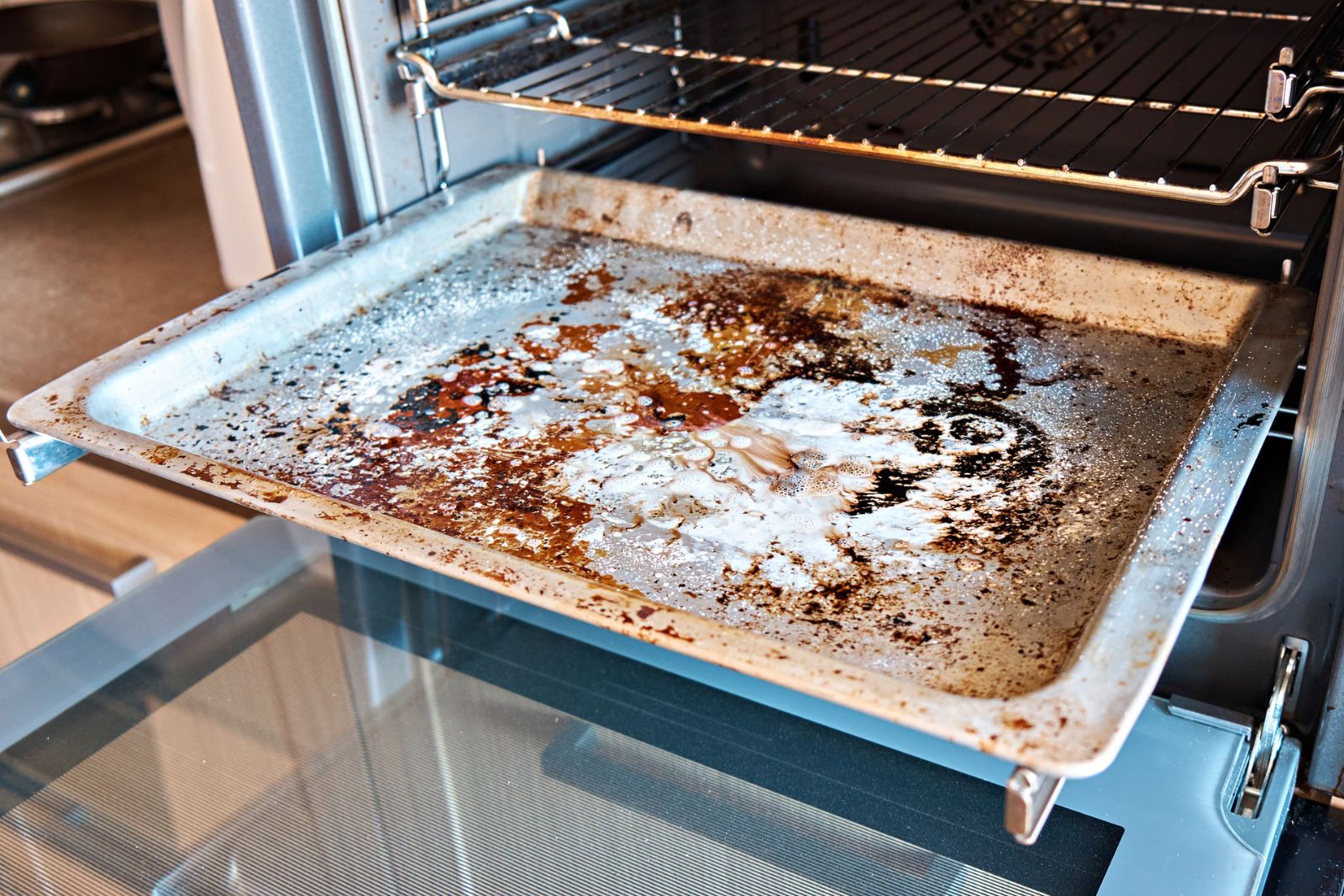
As Tom’s Guide explains, “That tough, brown layer on your sheet pans is not just dry oil, it is polymerized fat.” Each time the pan goes into a hot oven, heat bonds leftover oil into a hard, varnish-like coating. Soap only lifts fresh oil from the surface, so it slides right over the baked-on layer underneath.
That’s why scrubbing harder feels like the next step. But abrasive metal scrubbers that scrape off small patches also leave micro-scratches in the pan, which is the opposite of what you want before a busy baking season.
The 20-minute paste, step by step
- Check what your pan is made of. This paste is for uncoated aluminum or stainless steel sheets. Nonstick pans get a gentler version, below.
- Mix the paste. Stir together ½ cup of baking soda and 2 to 3 tablespoons of hydrogen peroxide until it forms a paste. The everyday bottle sold in drugstores and supermarkets is 3% hydrogen peroxide.
- Spread and wait. Cover the brown spots evenly and let the paste sit undisturbed for up to 20 minutes. On aluminum, keep a close eye on the surface, since Tom’s Guide warns about discoloration. When in doubt, start with a small corner.
- Scrub gently. Use a non-scratch scrub sponge on the stained areas.
- Rinse and wash. Rinse off all the paste, wash the pan with warm, soapy water, and dry it completely.
Plan B for nonstick sheets or lighter buildup: mix baking soda with a little dish soap and a few drops of warm water, let it sit for 20 minutes, then wipe with a non-abrasive sponge. If the brown layer is thick, a second round may be needed.
Where the paste has its limits
Skip metal scrubbers like steel wool, and skip harsh oven sprays. Tom’s Guide steers readers away from both, since metal scrubbers leave micro-scratches in the pan.
Hydrogen peroxide is mild at drugstore strength, but it still deserves care. According to Poison Control, small exposures to household 3% hydrogen peroxide usually cause only mild irritation, while higher concentrations can cause burns. If some splashes in your eyes, rinse with plenty of running water for 15 to 20 minutes. Keep it in its original opaque bottle, out of children’s reach, and know that an opened bottle starts to break down and lasts only 1 to 6 months.
Two more rules from Hunker’s cleaning guide: wear gloves to protect your skin, and never combine hydrogen peroxide with vinegar, which creates a hazardous reaction. One cleaner at a time.
Paste on, wait 20 minutes, soft sponge, no steel wool. That’s the trick.