You wash them. You rinse them. You dry the outside with a dish towel. You snap the lids on so they nest neatly, and you slide the whole stack into the cabinet.
A week later, you pop one open to pack a lunch and the smell hits you. Sour, stale, old-garlic. You scrub it with soap. You run it through the dishwasher on the hottest setting. It comes out clean, and it still stinks. You start to wonder if it’s time to toss it and buy new ones.
It isn’t. And your friend whose containers somehow never smell isn’t buying fancier plastic than you. She’s doing one small thing after every wash that you’re skipping, and that one small thing is the whole difference between plastic that stays fresh for years and plastic that goes sour in a month.

The routine almost everyone runs
Nearly every American kitchen runs the same one. Same clear-bottom containers. Same colored lids. Same cabinet. Wash, rinse, quick towel-dry, snap the lids on so they don’t wander off, stack them up, done.
That routine is where the smell is coming from. Not the food you stored last week. Not cheap plastic. What you do the second the container comes out of the sink.
Most people never think about that step because it feels harmless. It doesn’t feel like you’re doing anything at all. You’re just putting a clean container away.
Why “clean” doesn’t mean smell-free
Most food storage containers, the kind almost every home owns, are made from a food-safe plastic with a #5 stamped on the bottom. It looks smooth to your eye. Under a microscope, it isn’t. The surface is full of tiny pits and channels, and the plastic quietly soaks things up into its own walls, the way a sponge soaks up water.
What it soaks up best is oil, and the smells that ride along with oil. The garlic, the curry, the tomato sauce, the tuna. Soap lifts the visible grease off the surface. It can’t reach the smells that have already crept inside the wall.
So the container looks clean. It is clean, in the sense that soap did its job on what you could see.
Now the strange part. That soaking up doesn’t happen much while the food is in there. Fridges are cold. The container is sealed. Everything sits still.
The damage happens after. Between the wash and the next use, when the container is sitting quiet in the cabinet and you’re not even in the kitchen. That’s when your plastic goes from clean to sour.
Think about that for a second. The container is empty. Washed. So what could be making it worse in there?
The answer is something you do in the last ten seconds before you shut the cabinet door. A step so small you’d never think to blame it. Your grandmother did it. Your mom does it. You do it. It looks like nothing at all.
The step that ruins them
That step is snapping the lids on.
Sounds harmless. It isn’t. Not when there’s still a trace of water inside.
Ask a nurse who studies germs, and the answer isn’t fun. Shanina C. Knighton, a research professor of nursing at Case Western Reserve University and a nurse trained in infection control, told Chowhound that leftover water from washing is a real problem. Her point: a dishwasher gets a container clean, but it doesn’t kill everything. Snap the lid on while there’s a film of water inside, and next time you put food in, you’re setting it right on top of whatever the water was carrying.
That’s the food-safety side. The smell side is the same story.
That thin film of water you can barely see turns your cabinet into a row of tiny sealed steam boxes. Warm, damp, closed air is the exact setup that pushes food smells deeper into the plastic wall. Add trapped water to a plastic that already acts like a sponge for oily smells, and the whole thing speeds up.
Then those smells have nowhere to go. A sealed container in a dark cabinet can’t air itself out. So every wash-and-seal-wet round pushes another layer of stink into a plastic that’s already holding whatever it soaked up last time. Give it six months and the container smells stale even fresh out of the dishwasher, because the smell isn’t sitting on the surface anymore. It’s stuck deep in the plastic.
Stack a bunch of damp containers on top of each other and, Knighton adds, it gets worse. Water is trapped between the bases too.
So what’s the one thing she does that you don’t
If you read all of that and thought that’s basically my routine, you’re not alone. That’s the default habit in most kitchens.
The swap:
She dries the inside all the way, then puts the containers away with the lids off.
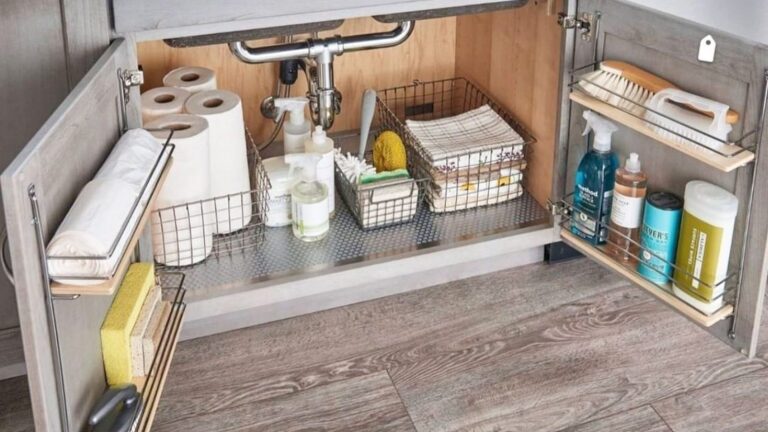
That’s it. Bases nested in one spot. Lids stored on their own, standing upright in a small drawer organizer or a wire rack. Nothing sealed shut. Nothing damp shut inside anything.
Air can now move through the containers between uses. Any last bit of water dries out instead of soaking in. The plastic can even release a little of what it soaked up before, because it finally has somewhere to release it to. The containers stay neutral.
The full fix, step by step
Do this after every wash:

- Dry the inside all the way with a clean dish towel, or leave the containers upside down on a drying rack overnight. Don’t skip this because you’re rushing. The whole problem starts right here.
- Nest the bases together in the cabinet. Bases with bases, one shape at a time. No lids sitting on top of them.
- Store the lids on their own, standing upright in a shallow drawer organizer or a wire lid rack. Any home store sells one for under $15 (about €14 / £12). A cardboard box with dividers works fine too.
- Never stack damp containers, even for an hour. If they’re wet, they go on the rack, not in the cabinet.
For containers that already smell, rescue them like this:
- Mix a thick paste of baking soda and warm water, coat the whole inside of the container (including the rubber seal on the lid if it has one), leave it overnight, then rinse and dry. As the University of Wisconsin-Madison Extension explains, baking soda works because it cancels out both kinds of smells, sour and bitter. Michigan State University Extension backs the same fix: hot water with baking soda, then sprinkle two to three tablespoons inside, let it sit at least an hour, wash as usual.
- Set the empty container in direct sunlight for a full day after the soak. Sunlight breaks down leftover smells and kills bacteria. Most people never try this. It works.
- For stubborn smells, stuff the container with crumpled-up newspaper, put the lid on, and leave it two or three days. Newsprint pulls smells right out of the plastic.
- Know when to give up. If a container is cloudy, warped, deeply scratched inside, or still smells after the baking soda plus sunlight treatment, the smell has soaked in too deep. Recycle it. For things you cook often (curry, tomato sauce, fish), glass or stainless steel is the smarter long-term buy, because neither one soaks up smells at all.
Sources: (1) University of Illinois Extension, Plastic Containers; (2) Chowhound interview with Shanina C. Knighton, PhD, RN, Case Western Reserve University; (3) University of Wisconsin-Madison Extension via Wisconsin Clip Sheet; (4) Michigan State University Extension.