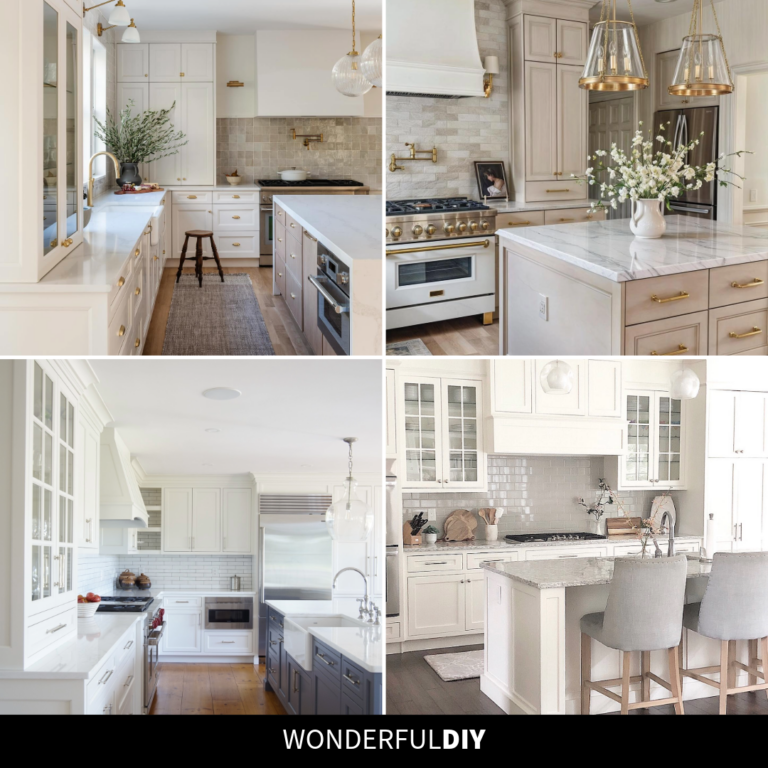
A kitchen can be clean, carefully maintained, and expensive to fit out, yet still feel older than it should. That is particularly frustrating when the cupboards work, the counters are sound, and nothing obviously needs replacing. Adding another decorative piece can make the room busier, while the thought of repainting every door turns a question of appearance into a much bigger project.
Before committing to that work, look at how the room’s finishes read together. A choice made to create a polished, coordinated kitchen can become the detail that fixes it in a particular period, even while the materials remain in good condition.
Why navy and brass can make a kitchen feel dated

The combination is navy blue cabinetry with brass hardware. Anne Puukko, founder of Finnish kitchen company Arkken, associates the pairing with roughly 2015–2022. Its familiarity can make a kitchen recall that period before anyone notices the quality of the cupboards, particularly when the handles, faucet, and pendant lights repeat the same gold-toned finish.
Kitchen specialist Ntola Obazee of Kutchenhaus makes a useful distinction: several recognizable trends used together can date a room more strongly than one color or material alone. Navy and brass can still belong in a kitchen you enjoy. The opportunity is to loosen the matching scheme, keeping the elements that work while changing the ones that make it feel predictable.
Change the finish before changing the cabinets
If the cabinet doors and their paintwork are in good condition, start with the handles. Brushed steel, gunmetal, or matte black are alternatives to try against navy. Choose samples in a similar shape so the comparison shows what the finish changes, rather than confusing that effect with a completely different handle design.
- Compare samples in the room. Hold each option against a cabinet door with the countertop and backsplash visible. Step back to the doorway as well as looking close up. A finish that looks appealing on its own needs to work with the surfaces that will remain.
- Match the existing holes. Remove one pull and measure the existing screw spacing, from the center of one mounting hole to the center of the other. Hardware manufacturer Top Knobs identifies this center-to-center distance as the measurement replacement pulls must match. Overall handle length is different; use the product’s mounting dimensions when ordering.
- Check the fit beyond the spacing. Inspect the area beneath the old hardware for marks or exposed holes that a smaller base might reveal. Compare the new handle’s projection and grip space. Follow its instructions for screw length, since cabinet doors and drawer fronts can have different thicknesses.
- Fit one before buying the full set. Test the handle on a frequently used door or drawer. Check that it feels comfortable and clears nearby fronts when opened. Look at the sample in daylight and with the kitchen lights on before committing to the remaining pieces.
A brass faucet can stay while cabinet handles take a different finish. Treat the handles as one consistent group, rather than assigning a new metal to every drawer. This gives the change a clear purpose and avoids turning a limited update into a roomful of unrelated purchases.
Check the light before choosing another color
If the room still feels heavy, examine when that impression is strongest. A kitchen that looks balanced in daylight but gloomy after sunset has a different problem from one whose finishes simply feel too coordinated. Changing handles will not correct inadequate lighting. Assess the room with its usual task and ceiling lights operating before deciding the cabinet color needs to go.

For a paint change, test samples beside the surfaces you are keeping. Benjamin Moore’s color guidance recommends observing samples over several days because natural and artificial light change how a shade appears. Compare them near the countertop, flooring, and backsplash; a color chosen from an isolated swatch can look different once those neighboring finishes enter the picture.
Keep the decision focused on the part of the kitchen that bothers you. If the cabinets still suit the room, try a wall color sample before planning a full repaint. If the existing palette already feels right, there is no need to replace useful fittings simply because a once-popular combination is being reconsidered.
Before ordering, count every knob and pull separately and record each mounting size. Include any delivery charges in the total, then compare that figure with the improvement your fitted sample makes. Use that trial to set the scope of the update.