Once a year, like clockwork, the itch shows up.
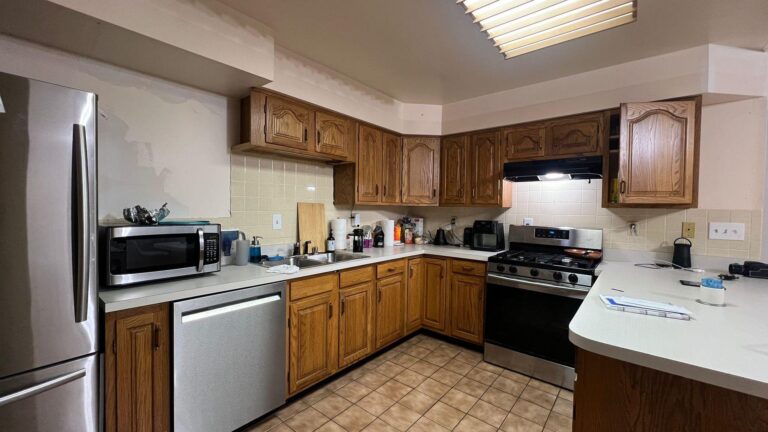
You’re standing in your kitchen with your morning coffee, looking at the same brown wood cabinets you’ve been looking at for years. And you think, this is the year I finally paint them white.
Every Pinterest board tells you to. Every before-and-after photo tells you to. Every friend who did it swears it was the best thing she ever did. White cabinets feel safe. White cabinets feel clean. White cabinets are what “new and fresh” looks like.
So you save some photos. You look up how much paint costs. You watch DIY videos late at night. And then, most of the time, you back off, because spending a whole weekend taping, sanding, and painting every single door and drawer is a lot to sign up for.
Vicky Wasik, who works at Apartment Therapy, went through this same loop for years. She loves warm, bold colors. She works around people painting their kitchens bright colors every day. Every year, she almost talked herself into it.
This year, she didn’t. And her kitchen still looks completely different.

The kitchen almost anyone would have “fixed” the same way
She was working with a long, skinny galley kitchen. Brown wood cabinets on the top and bottom. Busy, speckled brown-and-black granite counters, the kind almost every rental and starter home had put in around 2005. No tile behind the sink at all, just a painted wall. A blue accent wall on one side. Plain white outlet covers. Basic ceiling can lights.
Hand those cabinets to ten different DIY accounts, and nine of them would grab the same can of plain white paint and swear it was going to change your life.
Why she almost joined them
Vicky loves rich color. Every year, she’d browse bright painted kitchens, price out supplies, watch tutorials, and get right up to the edge of doing it. Some years she even had the paint chips taped to her cabinet doors, sitting there for weeks while she made up her mind.
The pull toward painting is strong for a reason. It feels like the one big move that would fix everything at once. One weekend, one color, done.
But the more time she spent staring at those chips, the more she realized something was off about the whole plan.
What made her pause
She kept coming back to the trend reports. Warm wood cabinets, the very thing she was about to cover up, were quietly coming back into style in new kitchens. Designers were talking about them. New builds were showing them. If she painted her cabinets white, she wouldn’t be making her kitchen look newer. She’d be making it look dated, just on a slower timeline.
That gave her pause. But it wasn’t enough to stop her on its own. Trends come and go. Plenty of people paint over wood cabinets anyway and love the result.
What actually stopped her was something much smaller.
Before she committed, she tested everything
Instead of buying paint, she opened Photoshop and started playing with pictures of her own kitchen. She kept the brown cabinets exactly as they were, and swapped in different counters, different tiles for behind the sink, different wall colors. She used the free design tools on the Home Depot and Wayfair websites to try out real tile samples on the walls in her mockups.
She spent a lot of time doing this. More than she’d planned. And the longer she played with it, the more she noticed a pattern.
Every mockup where she painted the cabinets looked fine. Every mockup where she kept the cabinets and changed everything else looked better.
The one question that stopped her
Somewhere in the middle of all that mocking up, she asked herself something small that changed the whole project:
“Do I really hate my cabinets, or do I just hate what’s around them?”
That question is the whole story. The cabinets weren’t the problem. The busy granite was the problem. The bare wall behind the sink was the problem. The cold blue paint was the problem. The plain white plastic outlet covers were the problem. The flat overhead lights were the problem.
The brown wood was actually the warmest, most interesting thing in the room. It just didn’t have anything worthy sitting next to it.
So she left the cabinets alone. And she went after everything sitting around them.
What she changed (in the order that mattered)
- The granite went first. She ordered simple white quartz counters through Home Depot’s website, and picked a slab with no veins or lines running through it, just a clean white surface. Nothing busy, nothing fighting for attention. If you live on a higher floor with no elevator like she does, she says to ask about carry-up charges upfront, because they add up fast. She also paid a little extra for the crew to haul away the old granite, and said it was worth every dollar. The moment the new counters went in, the whole room felt lighter.
- Then she added tile where there had never been any. Dark green Moroccan-style porcelain tiles from Wayfair, running across both walls of the galley. Her dad helped her, and it took them about three days. Two smart tricks worth stealing: they took the upper cabinets down and raised them about half an inch (about 1.3 cm) so they wouldn’t have to cut a whole top row of tiles to fit, and she picked a dark charcoal-gray grout instead of a matching one, so the green tiles pop instead of blurring together.
- Then the walls. She matched a Benjamin Moore paint color called Dollar Bill Green as close as she could to the tile, so the two surfaces read as one smooth flow of color instead of two greens fighting each other. She didn’t stop there. She hung a moody floral wallpaper on the other wall (Schumacher’s Blomsterhav) to break up all that green. She thought she was buying the peel-and-stick kind and accidentally got the real paste-on kind, so she taught herself to hang real wallpaper on the fly. She says a laser level, which shoots a straight line of light across the wall to guide you, was the difference between a clean job and a crooked one.
- Then small gold touches, everywhere. A cheap gold-colored pot rack from Amazon on the wall. A vintage brass-and-glass shelf she picked up at a flea market. Gold outlet covers instead of plain white ones. That warm gold is doing quiet work behind the scenes. It’s the bridge between the warm brown cabinets and the cool green walls, which is the whole reason the mix doesn’t clash.
- Last, the lighting and the little stuff. She used a small kit from Wayfair to turn her ceiling can lights into hanging glass pendant lights, so the light feels softer and warmer at night. She painted her heating vent the exact same green as the wall so it disappears. She added woven wood window shades and a washable rug made of jute (a natural plant fiber) to bring in more warm, natural texture that plays nicely with the wood.
The lesson hiding in a kitchen full of green tile
Look at her before and after photos side by side. Same brown cabinets. Same shape of room. Same window. Everything else is different, and the cabinets that used to look like the obvious problem now look like the warmest, most on-purpose thing in the whole room.
She didn’t fix her cabinets. She fixed what they were sitting next to.
Before you spend a weekend taping off doors and picking out the right shade of white paint, try Vicky’s question first: do you really hate your cabinets, or do you just hate what’s sitting around them?
You might be one countertop, one backsplash, and one wall color away from a kitchen you love, with the wood cabinets you already own.