She started paying more for olive oil about a year ago. The good stuff. Dark green bottle, real harvest date on the back, the kind of oil that’s supposed to taste peppery and grassy and make a plain slice of bread feel like dinner.
For a few weeks, it did.
Then it stopped. Not all at once. Just a slow slide toward flat. Toward that faintly sour, waxy taste that makes you check the date twice and shrug because it hasn’t even expired. She blamed the brand. Switched. Same result. Blamed the store. Same thing. She even bought bottles twice the price. Every one started strong. Every one went dull within a month or two.
The oil wasn’t the problem. Neither was the bottle, or the store. What was quietly ruining every one was a choice she’d already made before walking in. A choice so normal, so obvious, so baked into how kitchens are built, that almost nobody ever thinks of it as a choice at all.

What’s actually killing your oil
Food scientists don’t really argue about what breaks olive oil down. Three things do it: heat, light, and oxygen. They team up in a slow chemical reaction called oxidation, which is a fancy word for the process that turns fresh, peppery oil into that stale, sour, waxy-tasting oil you keep ending up with.
Of the three, heat is the one almost nobody thinks about, and the one that speeds everything else up. Research in the food-science journal Foods points to a rule chemists have known a long time: every 18°F (10°C) rise in storage temperature roughly doubles the rate at which olive oil breaks down. Warm oil doesn’t just spoil a little faster. It spoils about twice as fast for every 18°F (10°C) hotter it sits.
The temperature olive oil actually likes? A steady 57 to 70°F (about 14 to 21°C), basically basement cool or a shaded pantry away from appliances. That’s what the North American Olive Oil Association recommends, and specialty sellers like Georgetown Olive Oil Co. echo the same range.

Which is where the mystery gets interesting. Most homes have a cool, dark corner somewhere that fits that description. And most people don’t store their olive oil in it. They store it, without ever thinking twice, in the exact spot in the kitchen that breaks the rule the worst, in the spot the kitchen itself seems to have been designed for.
The spot almost everyone gets wrong
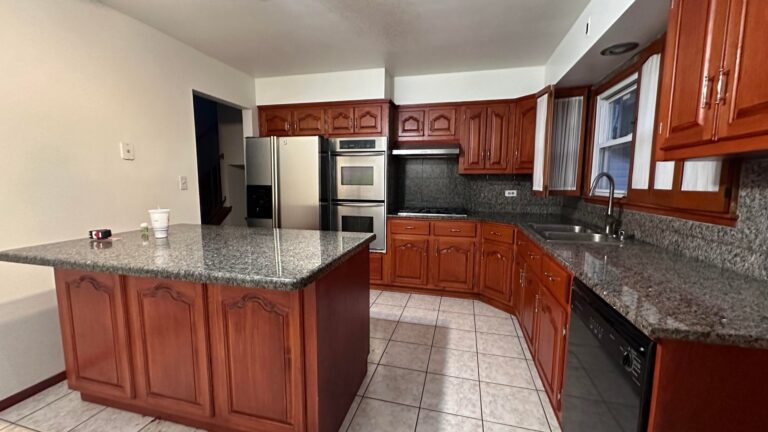
Look around your kitchen. Odds are strong your olive oil is within arm’s reach of the stove. On the counter next to the burners. On a little shelf. Or most often, tucked into the upper cabinet directly above the cooktop, right next to the salt, pepper, and spices you grab mid-recipe.
It feels like the smart spot. You cook with oil, you cook at the stove, keeping oil there saves a step. Kitchens are literally designed this way, with a cabinet placed right above the heat as if inviting you to fill it with the things you reach for most.
That cabinet is the worst place in your entire kitchen to store olive oil. Not one of the worse spots. The worst. And it’s not close.
While you cook a normal dinner, that closed-in cabinet traps rising heat like a small warming oven. Popular kitchen references estimate the inside can climb to 80 to 100°F (about 27 to 38°C) during cooking, and it stays warmer than the rest of your cabinets for hours after the burners are off. Even a jump from a 65°F (18°C) pantry to an 85°F (29°C) cabinet is enough, under the doubling rule, to age your oil at roughly twice the speed it should.
And it’s not just the oil paying the price. Dried spices go dull the exact same way, only quieter. They don’t really “spoil”; they lose their aroma oils, the delicate compounds that give paprika its punch and cumin its warmth. As the spice retailer SpiceJungle puts it, heat, humidity, air, and light all break those compounds down, and once they’re gone, they don’t come back. Cardboard and paper packaging soak up steam every time you boil a pot below, so pasta, rice, and cereal slowly take on moisture too. Vinegars, wines, chocolate chips, nuts, and seeds fall into the same trap.
One honest note before the fix. If your stove has a strong overhead vent hood pulling heat and steam up and out of the kitchen, or an over-the-range microwave that vents outdoors, the cabinet above stays much cooler. Most American kitchens don’t have either. Quick test: after 20 minutes of cooking, put your hand flat on the underside of the cabinet above the stove. If it feels warm, your oil is cooking too.
The fix: three minutes, zero dollars
If any of that sounded like your kitchen, you’re in the majority. Do this tonight, before you cook again:
- Move all cooking oils out of the above-stove cabinet. Olive oil, vegetable oil, avocado oil, sesame oil, any bottle of fat. New home: a lower cabinet, an inside pantry cabinet, or a drawer, on a wall away from both the stove and the dishwasher (which also throws heat).
- Move all dried spices and herbs out too. Same destination. If you want a few in reach while cooking, use a small drawer near the stove instead of the cabinet above it. Drawers run cooler because heat rises.
- Move vinegars, wines, chocolate, nuts, seeds, and anything in cardboard or paper away from that cabinet as well.
- Keep oil in its dark bottle. If it came in clear glass, wrap it in foil or pour it into a dark container. Light is the second enemy on that list of three.
- Buy smaller bottles more often instead of one giant jug. Every time you open the bottle, oxygen gets in and the clock speeds up.
What goes back in the cabinet? Cast iron pans, baking sheets, cooling racks, trivets, empty jars, rarely-used serveware. Anything metal, ceramic, or empty. Heat has nothing to ruin in those.
The proof shows up in about a month
Buy your next bottle of the same oil you always buy. Store it the new way. About 30 days in, taste it next to a bottle sitting above the stove.
You won’t need anyone to tell you which is which. That peppery bite you paid for and thought had gone missing? It’ll be right there in the bottle you stored right. It was in every bottle you bought. It just kept getting cooked out before you ever tasted the second pour.
The oil was never the problem. The cabinet was.
Sources: (1) Temperature Dependence of Oxidation Kinetics of Extra Virgin Olive Oil (EVOO) and Shelf-Life Prediction, journal Foods, PubMed Central; (2) Georgetown Olive Oil Co., How to Store Olive Oil; (3) Fabuwood Cabinetry, Top 13 Items to Store in The Cabinet Above Your Stove; (4) SpiceJungle, How to Properly Store Spices; (5) Recent Advances in Analytical Methods for the Detection of Olive Oil Oxidation Status during Storage, PubMed Central.