A full kitchen rebuild usually starts with a dumpster in the driveway. This one skipped that step. Instagram creator @danielitolindo kept every cabinet box in place, sprayed the orange oak a dark navy that reads almost black, and swapped the counters, backsplash, and hardware around it.
The result reads like a custom kitchen somebody paid a cabinet shop to build.

Nothing structural changed. The same island sits in the same spot, the same uppers line the same walls, and the window above the sink is the window that was always there. Only the finishes moved.
The Oak Was Doing Too Much
The first kitchen had a storage and layout problem that nobody actually had. What it had was a color problem.
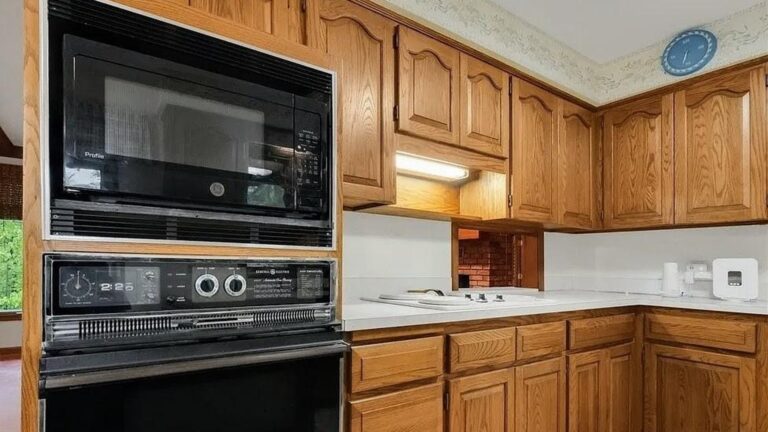
Orange oak ran across every wall and wrapped the island, so wood ended up being the loudest voice in the room. The dark speckled granite doubled that weight, and the cream diamond tile behind it kept the whole scene stuck in a 2000s builder catalog.
A good footprint was hiding under a dated finish story.
One Color Did Most of the Work

The sprayed cabinets are the move the whole redo rides on.
A navy this deep leans toward charcoal in low light and shows its blue when the sun comes through the window, so the room never settles into one flat color. It also quiets the oak grain enough to kill the dated read while leaving the raised-panel profile intact. Doors that looked builder-grade in orange suddenly look architectural in navy.
Spray gun work matters here too. A brush would have left stroke marks that give the paint job away in a second.
The Garage Became a Paint Booth for a Weekend
Spraying cabinet doors inside the kitchen was never going to work.
A temporary paint tent in the garage solved that. Doors came off their hinges, drawer fronts came off the boxes, and the whole batch moved out to a controlled space where the sprayer could lay down an even coat without overspray landing on the counters or the floor. Working in a tent also kept dust off the wet paint, which is the detail that separates a factory-smooth finish from a gritty one.
The face frames and end panels on the cabinet boxes stayed in the kitchen and got sprayed in place, taped off carefully to protect everything around them.
Brass Knobs Carry the Warmth

Dark cabinets without warm hardware feel like a bank vault.
Brushed brass knurled knobs fix that in one swap. The texture catches the light, the warm tone softens the paint around it, and every door and drawer picks up a small point of jewelry that reads custom from across the room. Old oil-rubbed bronze pulls on freshly painted cabinets would have landed the whole project back in 2008.
Hardware is cheap and it is not optional.
Quartz Counters Reset the Whole Light

The old granite was absorbing light. The new quartz reflects it.
A broad white surface above the dark lowers keeps the room open and bright, so the paint never closes anything in. The soft gold veining running through the stone is doing quieter work, picking up the brass knobs and threading one warm line through every cabinet front it meets.
Without that veining, the brass would feel stranded. With it, every finish belongs to the same room.
A Softer Backsplash to Hold It All Together

Most cabinet repaints stop at the counters. This one went up the wall too.
An elongated picket tile in soft off-white gives the eye a gentle pattern between the counters and the uppers, so the wall never reads blank. The warm LED strip tucked under the cabinets washes the tile with a honey glow at night and keeps the finish from feeling cold during the day.
Skipping the backsplash is what makes a lot of DIY cabinet jobs look halfway done. Replacing it is what makes this one look finished.
Clear Globes Anchor the Island

The pendants are the last thing your eye lands on and the first thing a visitor sees.
Clear glass globes keep the sightline open across the room, so the island reads as a gathering spot without blocking the view out the back window. Two of them hung close together add weight above the counter without adding bulk, which is exactly what a dark lower kitchen needs up top.
Smaller fixtures would have gotten lost. Opaque shades would have cut the room in half.
The Whole Thing Reads Custom Because Every Piece Agrees

No boxes were replaced, no walls were moved, and no contractor set foot in the room with a hammer.
What changed is a short list of finishes that happen to pull in the same direction. The navy sets the mood, the brass warms it up, the quartz brightens it, the picket tile softens it, and the pendants finish it off. One of those changes alone would have looked like a weekend project. All five together look like a remodel.
Would you have painted the oak, or would you have gutted the kitchen and started from scratch?