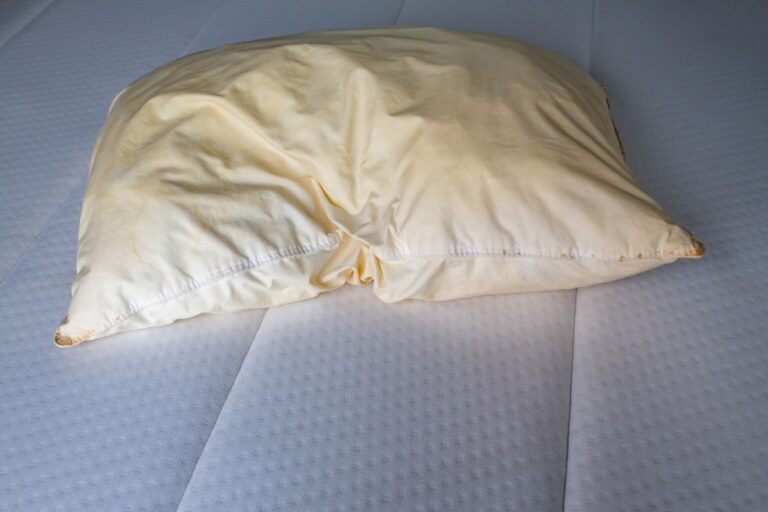
The pillowcase came out of the dryer bright white. Then you pulled it off to change the bedding and saw what was underneath: the pillow itself, splotched with yellow patches, darker in the middle where your head rests. You wash your sheets every week. So where is all that color coming from?
This is not your fault. A pillowcase is thin fabric, and a lot of what your body leaves behind at night passes right through it. Some of the habits that feed those stains feel perfectly harmless, starting with going to bed with damp hair.
Where the yellow comes from
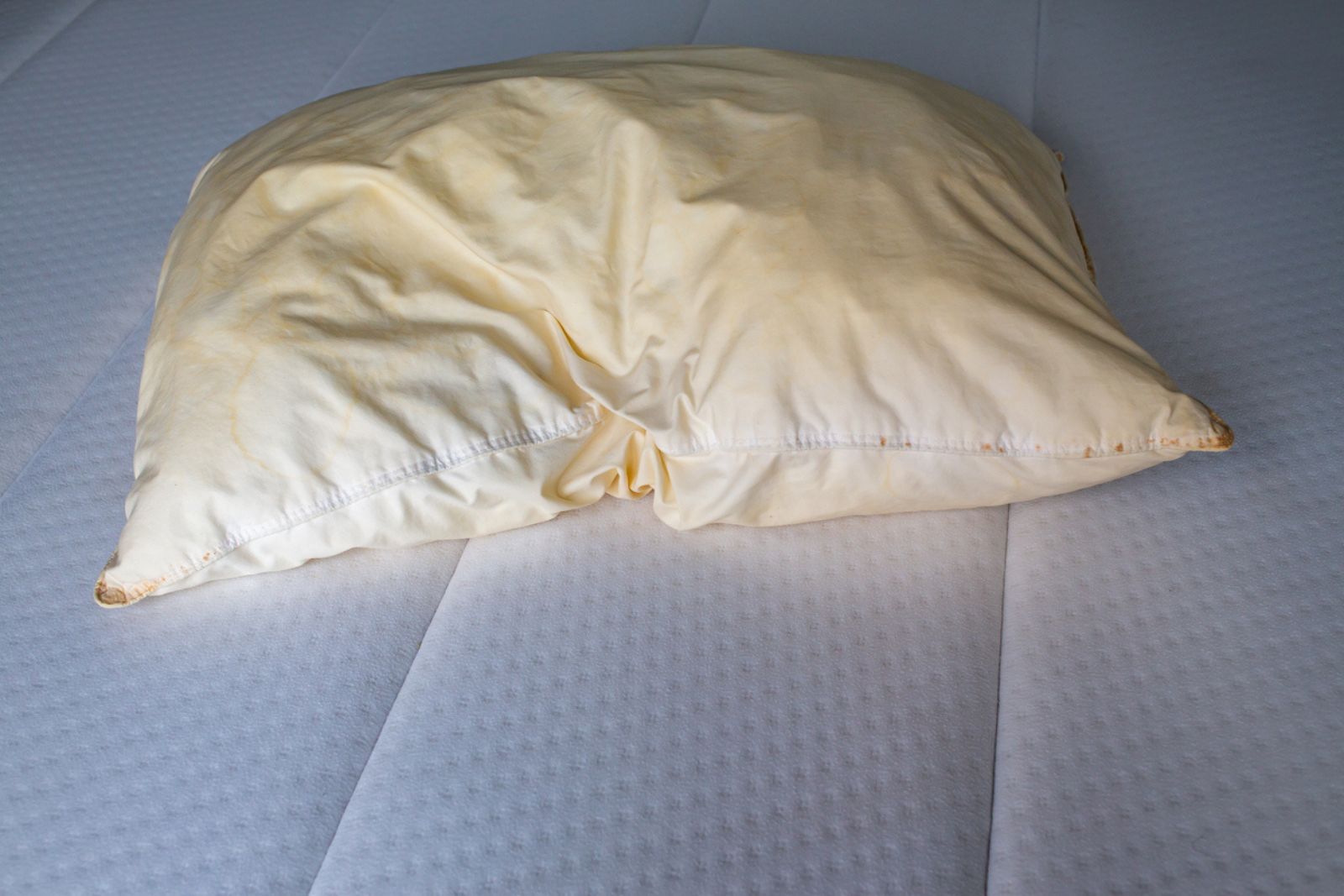
According to the Sleep Foundation, pillows turn yellow from a mix of sweat, wet hair, drool, the natural oils on your skin and hair, and lotions and beauty products. Night after night, moisture soaks through the case and into the pillow, carrying those oils with it.
Wet hair is an easy one to miss. Water from a late shower goes straight through the pillowcase. The same goes for skincare: the Sleep Foundation notes that products applied right before bed may not fully absorb and can seep into the pillow.
It isn’t only cosmetic. The Sleep Foundation says that over time, dust mites, mildew and other allergens can build up in a pillow, and that pillows can also be a source of bacterial buildup.
How to keep the stains away
- Add a pillow protector. The Sleep Foundation describes it as a sealed layer of fabric that goes between your pillowcase and your pillow. It’s the extra barrier a pillowcase alone can’t provide.
- Give your hair time to dry. The organization suggests showering in the morning, or leaving enough time between your shower and bedtime.
- Apply skincare earlier. Put on lotions and night creams a little before you lie down, so they have time to absorb instead of ending up on the pillow.
- Read the care label before cleaning. The Sleep Foundation says to know the manufacturer’s care instructions before trying to remove yellow stains.
- Treat the stain itself. Spot-cleaning means carefully applying soap or another cleaning agent to the stained area. The Sleep Foundation adds that soaking a yellow stain in bleach before washing can help, so only do this if your pillow’s care label allows bleach.
Plan B if the stains won’t budge: it may simply be time for a new pillow. The Sleep Foundation recommends replacing pillows every one to two years, or sooner if they show signs of excessive discoloration.
What washing can’t fix
Be realistic about an older pillow. Even with good habits, the Sleep Foundation notes that no product lasts forever and that, over time, even the best pillow can turn yellow. A deep stain on a pillow that’s several years old is usually a sign to replace it rather than scrub it again.
Be careful with bleach, too. It isn’t right for every pillow, which is why the care label comes first. If you have allergies and your pillow is old, replacing it is the simpler fix.
If you do machine-wash a pillow, make sure the washer itself is clean first. A front-loader that smells even after a cleaning cycle often has a dirty pocket in the door seal that can pass odors on to your bedding.
A protector underneath, dry hair on top, and a new pillow every year or two. That’s the trick.