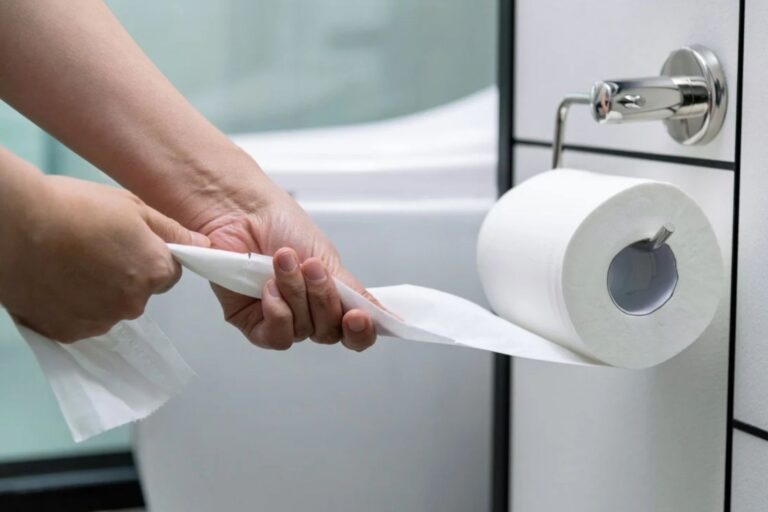
You put a fresh roll on the holder in the guest bathroom, the loose end hanging neatly down the front. By the next morning, someone has flipped it. You flip it back. Two days later it’s turned around again, and now it has become a small, silent standoff over a roll of paper.
This is not your fault, and neither side is being stubborn for nothing. There has never been an official rule. But there is a drawing, and it comes from the man who patented the roll itself.
What the 1891 patent drawing actually shows
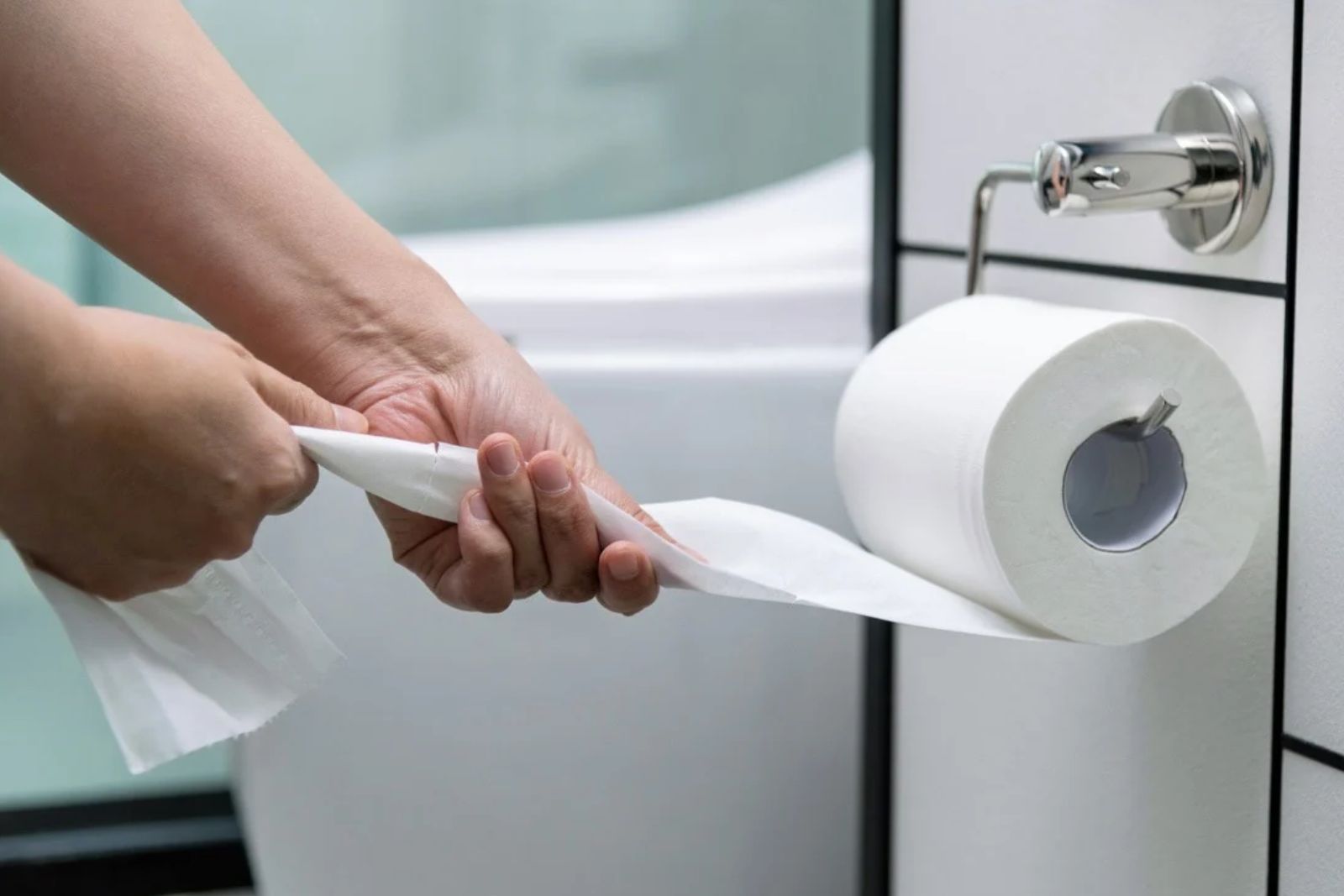
Seth Wheeler’s Albany Perforated Wrapping Paper Company first patented perforated toilet paper in 1871. In 1891, Wheeler patented an improved version in roll form, US 459516, filed in June and issued on September 15. In its illustration, the roll is shown with the sheet hanging over the front, in what Snopes describes as a clearly outward-facing manner.
The drawing resurfaced in March 2015, when tech writer Owen Williams posted it online and wrote, “The patent for toilet paper should settle the over vs under debate.” Many “over” fans have treated it as proof ever since.
The patent wasn’t about orientation, though. It was about how the sheets are joined, offset so that “a pull upon the free end of the web will not be transmitted in a direct line” through a series of sheets, and Wheeler wrote that his roll “may be used on the simplest holders.” Critics also pointed out that the drawing gives no indication of where the holder sits in relation to the roll. And as Snopes notes, some argue that “the image merely represented the least obstructed view of the perforations involved,” rather than Wheeler’s preference.
How to choose for your own home
- Start with over. It matches the patent drawing, and in a Cottonelle survey of 1,000 U.S. adults, ease of grabbing and habit were the main reasons people gave for hanging the roll one way or the other.
- Switch to under if you have a cat. Snopes points out that homes with cats or small children have good reason to hang the roll under. The idea is simple: a paw batting at the roll finds no loose end hanging in front.
- Do the same for small children. The same logic applies: with the end tucked against the wall, there’s no flap in front to grab and pull.
- Keep knuckles in mind. One Inc. columnist, Geoffrey James, argued that with “under,” fingers can brush the wall while reaching for paper. It’s a theory, not a study, but it’s a hygiene argument “over” fans like to cite.
- Agree on a house rule. Pick one orientation per bathroom so nobody keeps flipping it back.
Plan B if the cat wins every time: hang the roll under in that bathroom only, and keep over everywhere else.
Why the debate isn’t officially settled
No standard or authority decides how a roll should hang, and the patent only shows one picture. What exists instead are polls. In the Cottonelle survey, half of those polled said they care which way the toilet paper is hanging, and 19% admitted to changing it even at someone else’s home. Among “overs,” that share rose to 27%. The brand’s survey of 1,000 adults hit a nerve, in its own words, but it didn’t crown a winner.
Informal online votes lean toward over. A Facebook poll by the site Simplemost drew 4,600 votes for over and 1,000 for under, but a social media poll only shows who chose to vote, not what most households do.
So the drawing points to over, the patent never says it has to be over, and the rest is up to your household. Hang it over by default, under if the cat keeps winning. That’s the trick.