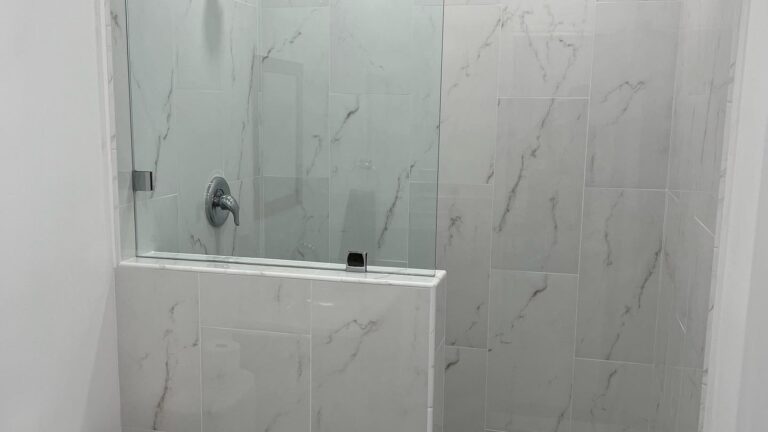
You spent a whole Sunday on that shower. Scrubbed the glass till your arm hurt. The chrome tap looked brand new. Three days later, that cloudy film is back and the tap has a chalky ring around the base again.
You Google it, and every result says the same thing: get a water softener. The cheap ones start at a few hundred bucks. The whole-house setup runs a few thousand plus plumbing. For a bathroom that just looks foggy.
Before you spend a dime on that, there’s something worth knowing. The reason your glass keeps going white isn’t really about your water. And it isn’t your cleaner giving up. It’s a tiny window of time you probably never think about, and one thing almost nobody does inside it.

Your cleaner isn’t the problem
Most people blame the spray. They switch brands. They try vinegar. They try baking soda. They try a “hard water” formula. The spots keep coming back.
So they blame the water and start pricing out softeners.
But watch what actually happens. You clean on Sunday. Glass looks amazing. You shower Monday, then Tuesday. By Wednesday night, you can see the haze creeping back in the corners. By Friday, the tap has that white ring again.
That’s not the cleaner failing. The cleaner did its job Sunday. Something new keeps landing on the glass every day after that, and it stacks up fast.
The strange part is you can watch it happen and still not see it. It looks like water. It runs down the glass. You dry off and leave. Nothing looks wrong.
Come back an hour later. The glass is dry. And there’s already a new layer on it.
Why “just get a softener” isn’t the full answer
The softener advice isn’t wrong. It’s just not the whole story, and it costs a fortune.
A softener trades out the calcium and magnesium in your water for a small amount of sodium. That lowers the mineral load hitting your fixtures. Real benefit. But three things get left out of most sales pages.
- Softeners don’t touch silica. Silica is a different mineral in a lot of American water. It’s the one most tied to real etching, meaning permanent damage to the glass itself, not a film on top. According to water testing lab Tap Score, silica problems on glass tend to start showing up around 20 parts per million, and a softener won’t remove it.
- Softened water still leaves a bit of residue. Sodium can leave its own faint film as water dries. You still have to deal with the droplets physically.
- And if you let that mineral layer sit long enough, it stops being a cleaning problem and turns into a damage problem. Ryan Knoll, founder of the cleaning company Tidy Casa, told Southern Living: “Letting soap scum and mineral buildup sit on glass is like letting red wine sit on a white shirt. It just gets worse the longer you ignore it. Regular maintenance keeps that buildup from etching the glass and turning what could’ve been a simple wipe-down into a full-on restoration project.”
Kosmos Cleaning, a professional restoration company, describes it plainly: mineral deposits “bond to the silica in the glass, layer by layer, creating a crystalline film. Over time, this buildup literally eats away at the glass surface, causing permanent pitting and cloudiness.” Once that pitting shows up, no cleaner and no softener will bring the glass back. You’re looking at replacement.
So the real question isn’t should I buy a softener. It’s this: what is actually landing on your glass in the hours after you shower, and why won’t any cleaner keep up with it?
The window you’re missing
Every expert on this problem lands on the same idea. Minerals can’t dry onto a surface if the water isn’t left there to dry.
That’s the whole game.
The mistake isn’t what you clean with. It’s what happens in the sixty seconds after you step out of the shower and reach for a towel. In that minute, thousands of tiny mineral-loaded droplets are sitting on the glass and the chrome, starting to evaporate. Walk away and let them, and you’ve just laid down tomorrow’s white film. Do that daily for a week, and no spray on earth will keep up.
If that sounds like your bathroom every morning, you’re not alone. Almost nobody does anything in that sixty-second window. That’s the whole reason the film keeps coming back.
Fix that one minute, and the whole problem falls apart. The tool that does it is small, cheap, and probably already familiar.
The 60-second habit that stops the film cold
Get the water off before it can dry. That’s it. No chemicals, no scrubbing. The tool costs less than lunch and lives inside the shower.
Do this after every shower, before you leave the bathroom:
- Keep a small suction-cup squeegee stuck to the inside wall of your shower. A basic silicone-blade one runs $3 to $8 (about €3 to €8) at any hardware store. Glass Doctor president Jeramy Sibley told Southern Living that a squeegee after a shower “can go a long way in preventing hard water to build up and layer, which could lead to costly repairs down the line.”
- Pull top to bottom in overlapping strokes. Wipe the blade between passes so you’re not just moving mineral water around. Takes 20 to 30 seconds.
- Grab a dry microfiber cloth and run it over the tap, the handle, the spout, and the shower head. This is the step almost everyone skips, and it’s what keeps chrome mirror-bright. Cleaning expert Edwin Nino Delgado told Homes & Gardens that a dry microfiber pass on the tap “not only stops water spots from appearing but also makes the chrome shine even more.” A 2025 industry guide from Horow says a simple daily dry-wipe can prevent about 95% of water spots on faucets.
- Run the exhaust fan for 10 minutes, or leave the bathroom door cracked open. Trapped steam re-wets the surfaces you just dried. Airflow finishes the job.
- Once a week, spray the glass with a 50/50 mix of white vinegar and water. Wipe it off with the microfiber. That catches any faint film that slipped past you during the week before it can bond.
Sixty seconds after each shower. Five minutes once a week. No softener quote.

What happens if you keep skipping it
A few weeks of skipping looks like cloudy glass and a chalky tap. A few years looks different.
The film goes from sitting on top of the glass to bonded into the glass. Kosmos Cleaning’s restoration guide says bonded deposits often need commercial-grade acid plus mechanical polishing to remove, and even then the outcome isn’t guaranteed. Natural Cleaning, a Central Texas service, puts it simply: “Once etching happens, the glass loses its transparency and takes on a permanent cloudy appearance that no cleaning method can fix.”
At that point, the fix isn’t a squeegee. It’s a bill for new glass.
Sources: (1) Horow: Clean Bathroom Faucets and Fixtures Complete Guide; (2) Tap Score: What’s the White Residue on My Fixtures; (3) Southern Living: How to Clean Glass Shower Doors (Ryan Knoll, Tidy Casa; Jeramy Sibley, Glass Doctor); (4) Kosmos Cleaning: Restore Shower Glass Hard Water Removal Protocol; (5) Homes & Gardens: How to Clean Chrome Faucets; (6) Natural Cleaning: How to Remove Hard Water Stains from Glass Shower Doors