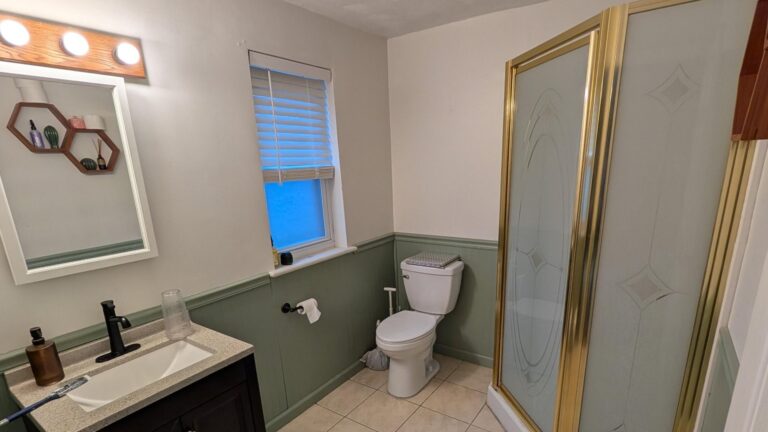
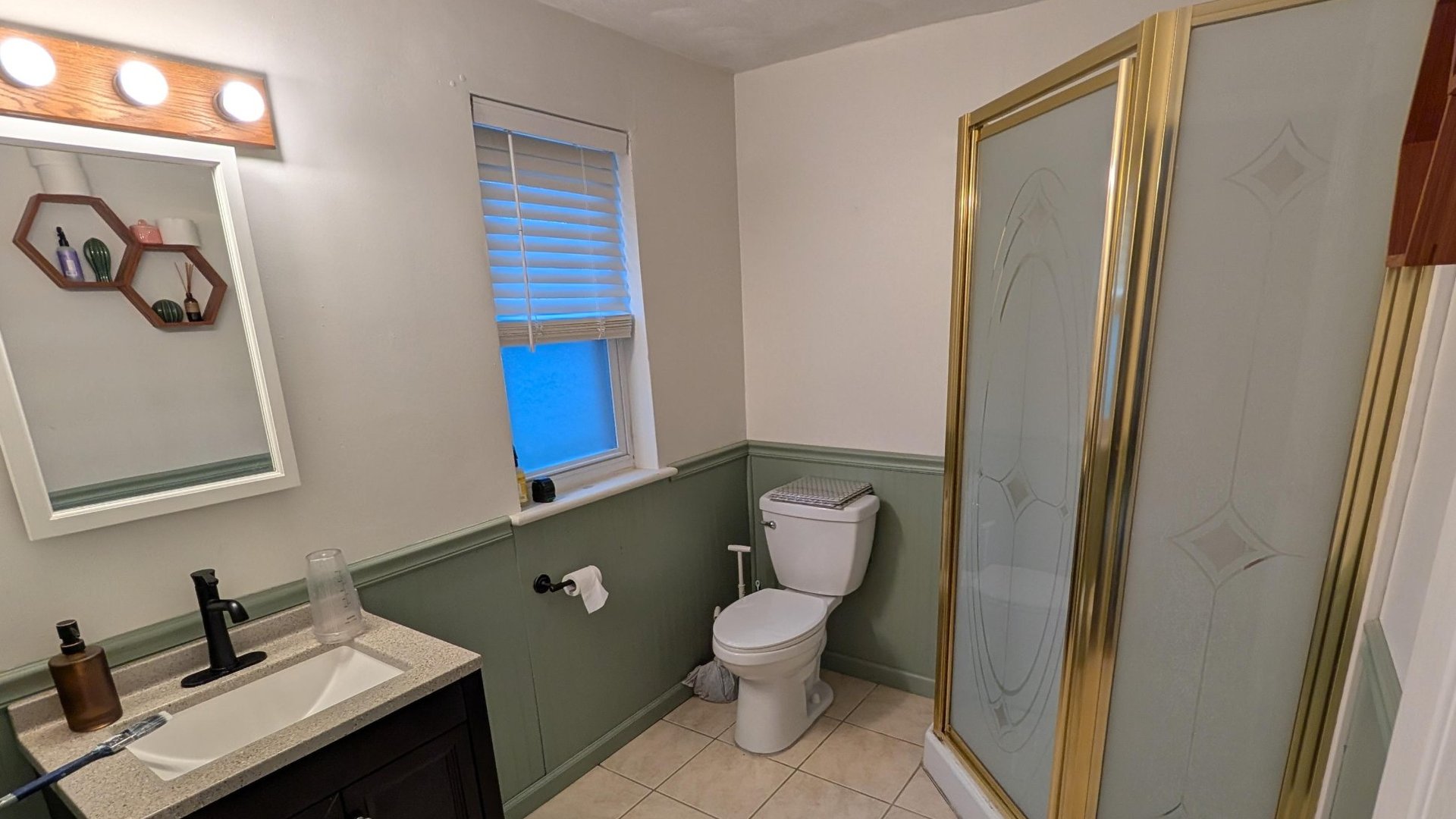
He walked into the kind of bathroom every first-time homeowner knows. Sage green wainscoting halfway up the walls. A dark vanity with a speckled stone top. A boxy gold-framed shower with etched glass doors. Nothing was broken. It was just stuck in a decade nobody wanted to live in.
Three months and $6,000 later, the same room looked like it came out of a design magazine. Deep blue vertical tile. A floating walnut vanity. A frameless glass shower with black fixtures. Big black hexagon floor tile wall to wall. The kind of bathroom contractors quote $25,000 to build.
He did it himself. And the only two things he can see when he walks in are mistakes nobody else can find.
He didn’t resurface it. He gutted it.
Most budget bathroom stories are paint, a new vanity, maybe peel-and-stick tile over the old floor. This one went further.
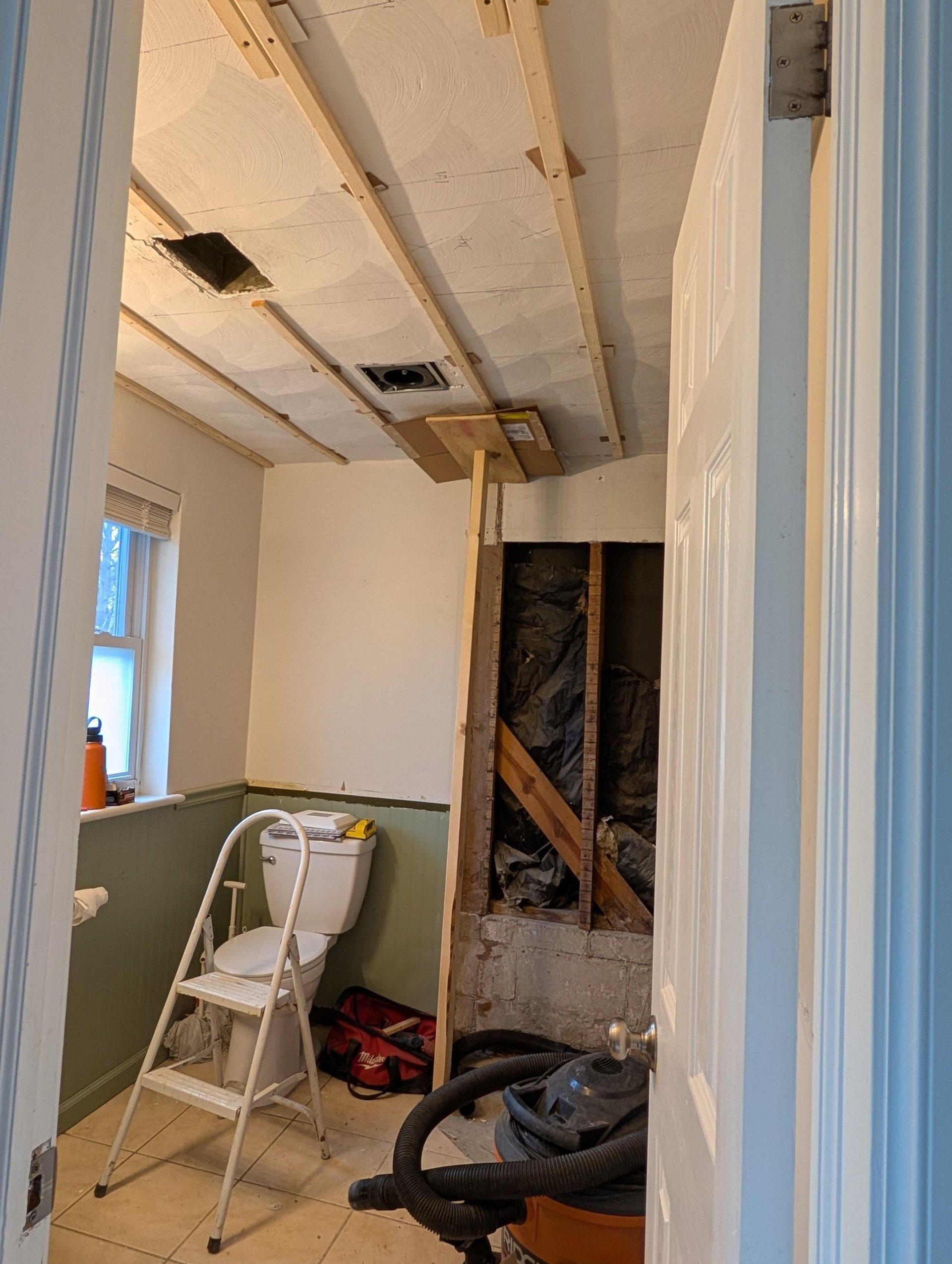
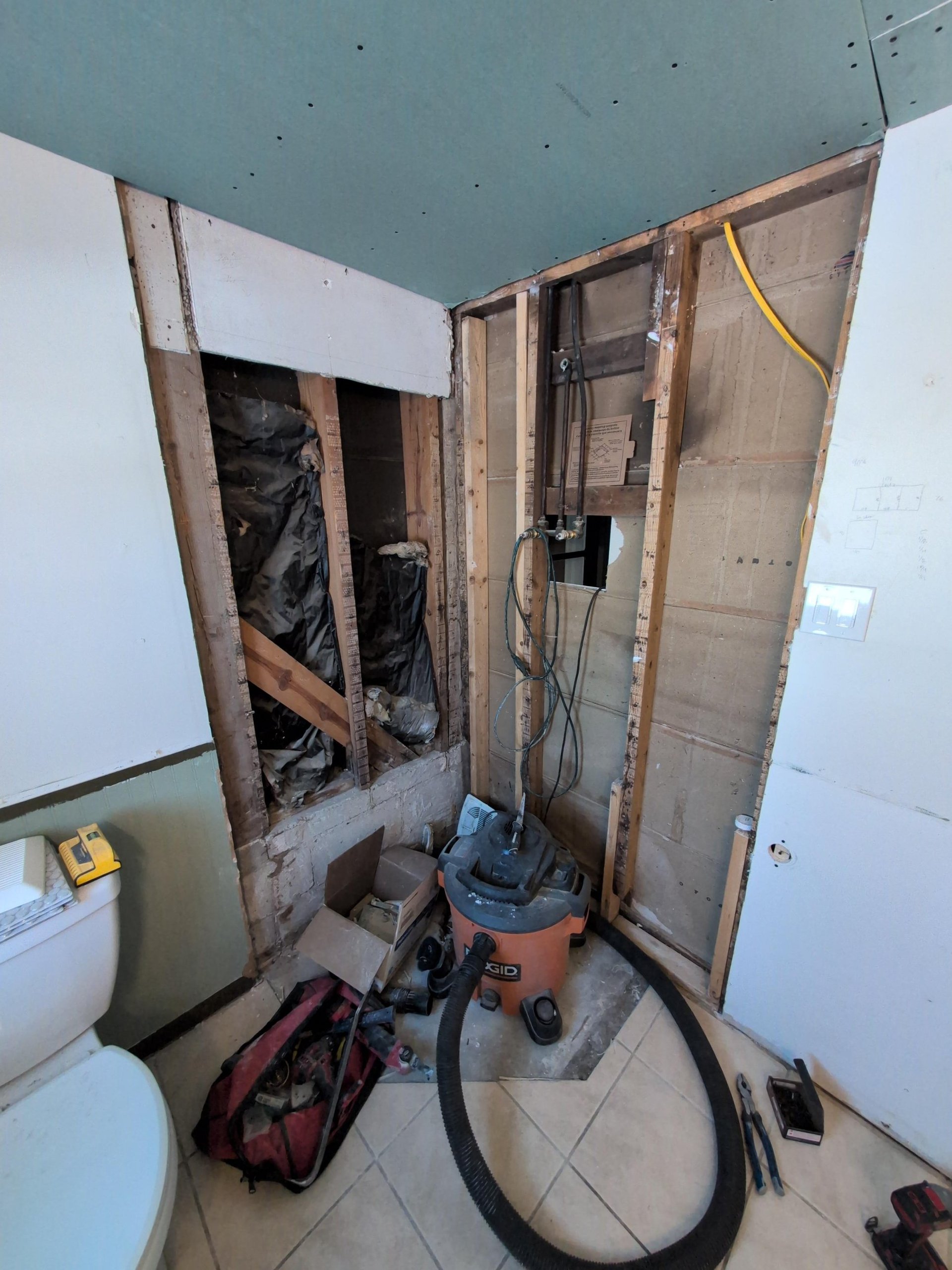
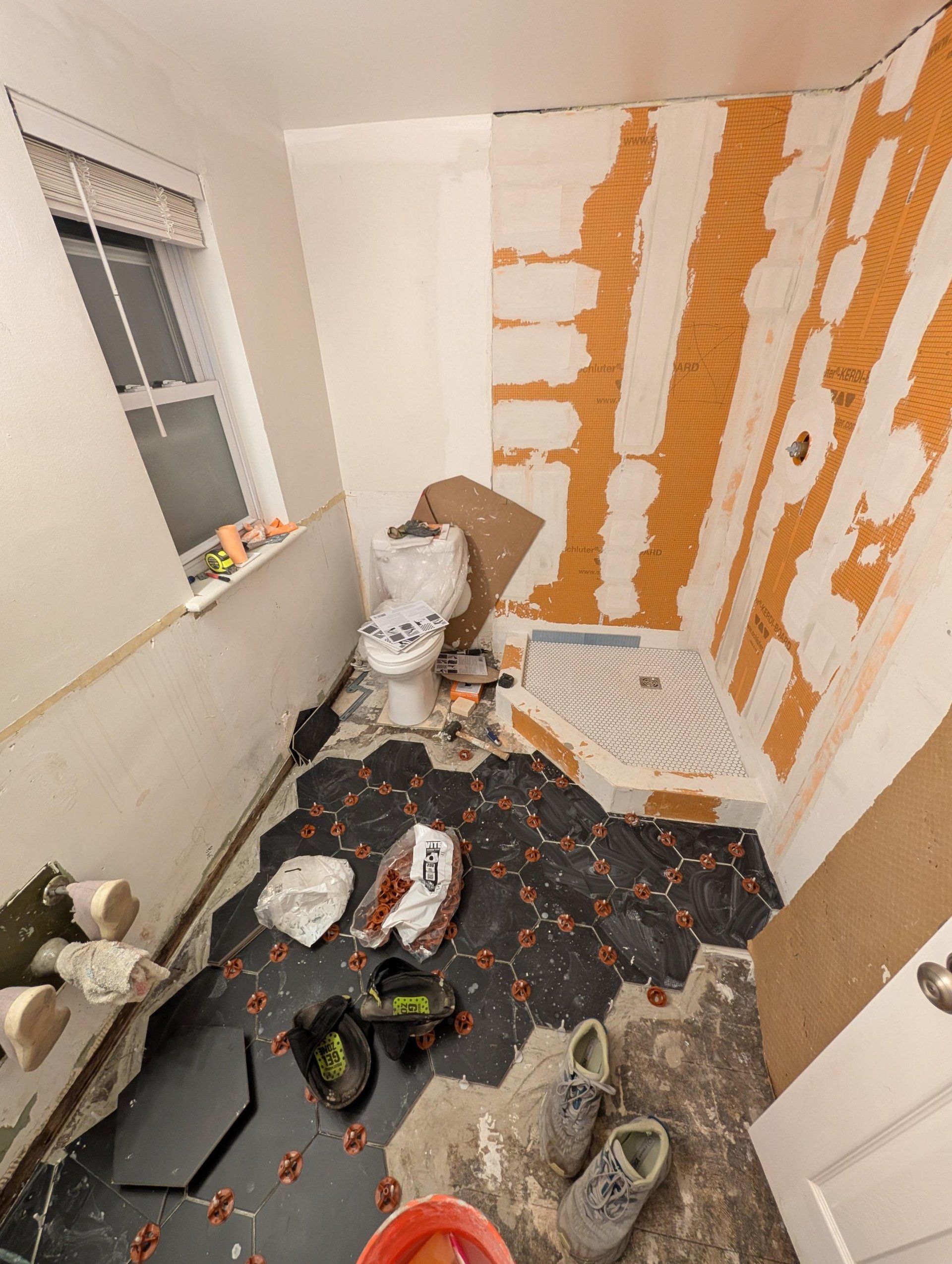
He took the shower wall down to the studs, exposing the old black vapor barrier and the loose insulation behind it. He re-did the ceiling to kill the bumpy swirl texture. He added a new bath fan and a fresh HVAC register.
That’s the part the finished photos don’t show. By the time he was ready to tile, he was basically starting with a brand new room inside the old walls.
The waterproofing is what most DIYers skip
Look at the mid-build photo and you’ll see orange panels on the shower walls. That’s Schluter Kerdi board, the modern way to waterproof a shower. Most DIYers skip it because it costs more than regular cement board.
He didn’t skip it. The whole shower got wrapped in it, including a pre-sloped shower pan with a penny tile floor. That’s the detail that separates a shower that leaks in year three from one that stays dry for twenty.
The floor shows another sign of a careful job. Those orange discs between the hex tiles are leveling clips. They force every tile edge to sit flush with the next one, so you don’t get the little lip you catch with your toe.
Where the custom-built look comes from
The finished room reads expensive, and it’s worth breaking down why.
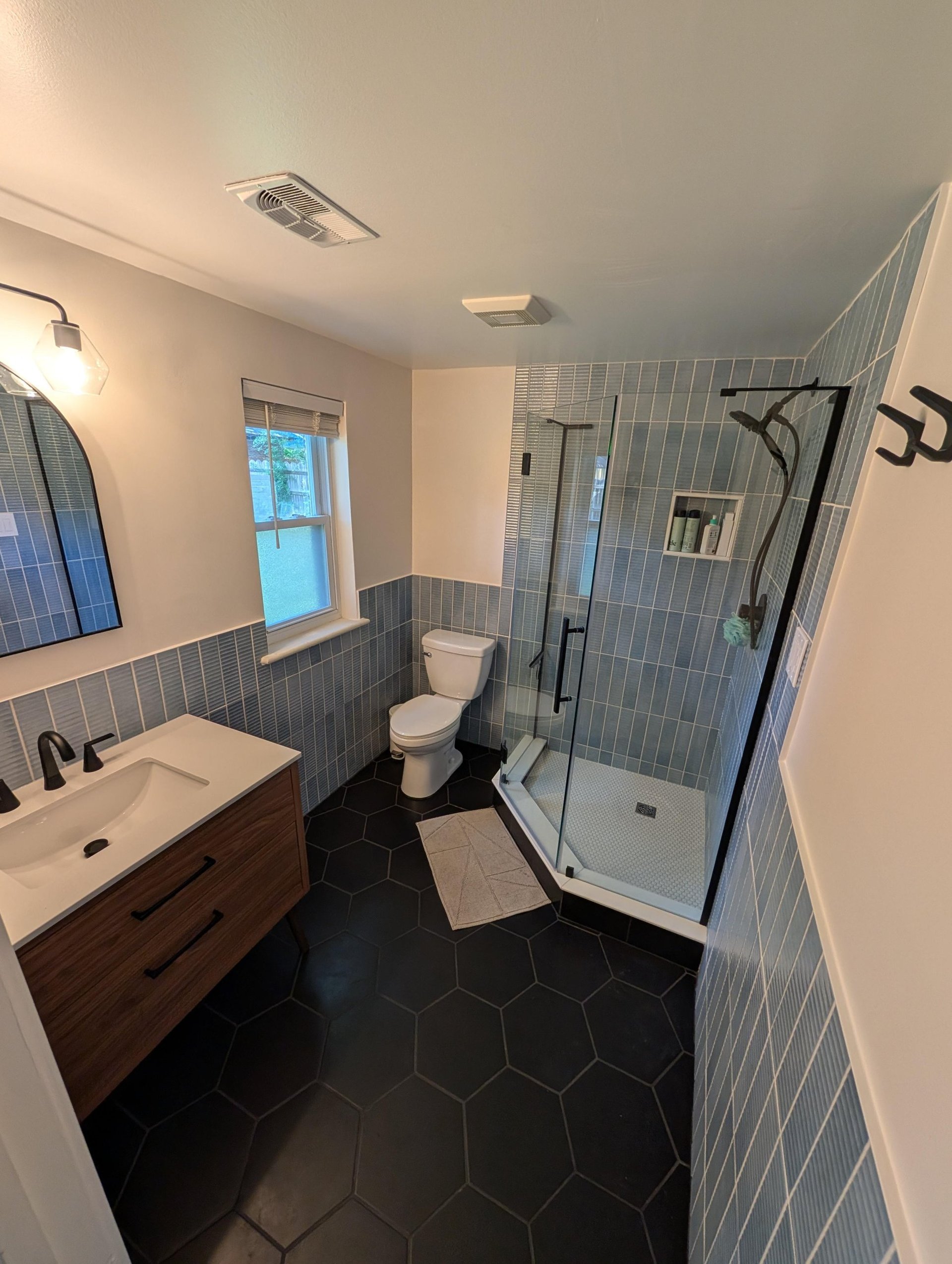
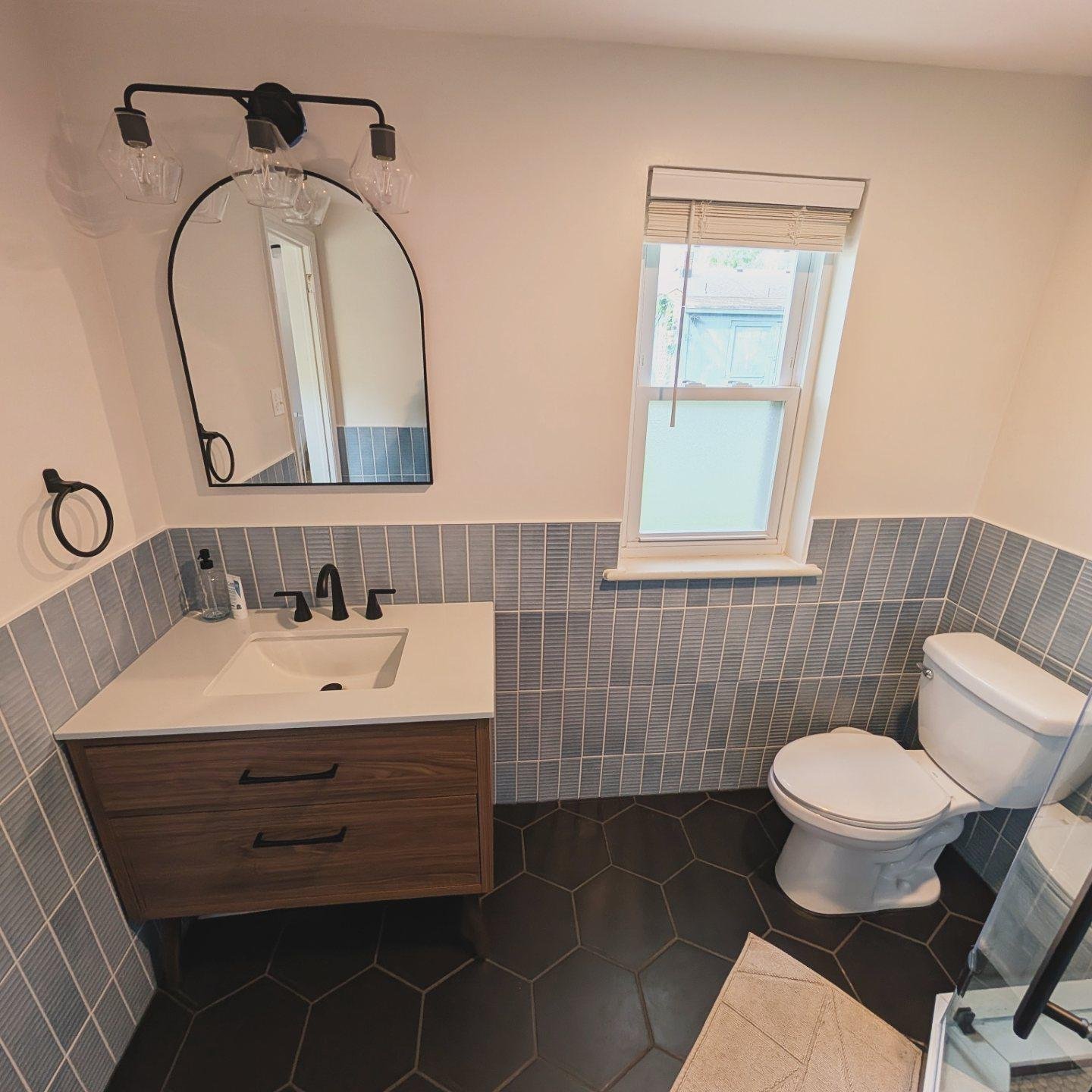
The wall tile isn’t just in the shower. He ran that same dusty blue vertical stacked tile around the whole room as a wainscoting, up to about chair-rail height. That’s a trick you see in high-end builds. It ties the shower into the rest of the room instead of leaving it floating in its own corner.
The floor tile is big and dark. Large black hexagon tile makes a small bathroom feel grounded instead of busy.
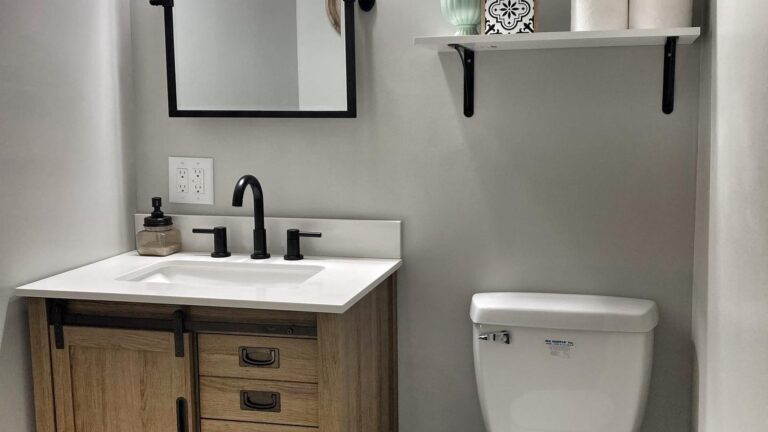
The vanity is floating. A walnut-look floating vanity with a white quartz top and matte black hardware carries the entire modern feel on its own. There’s no toe kick, no boxy cabinet sitting on the floor, so the hex tile reads uninterrupted underneath.
Every fixture is matte black. The faucet, the drawer pulls, the mirror frame, the towel ring, the sconce arms, the shower hardware. One finish, used consistently, is what makes a space look designed instead of assembled.
The two mistakes nobody can see
Here is the part he keeps coming back to.
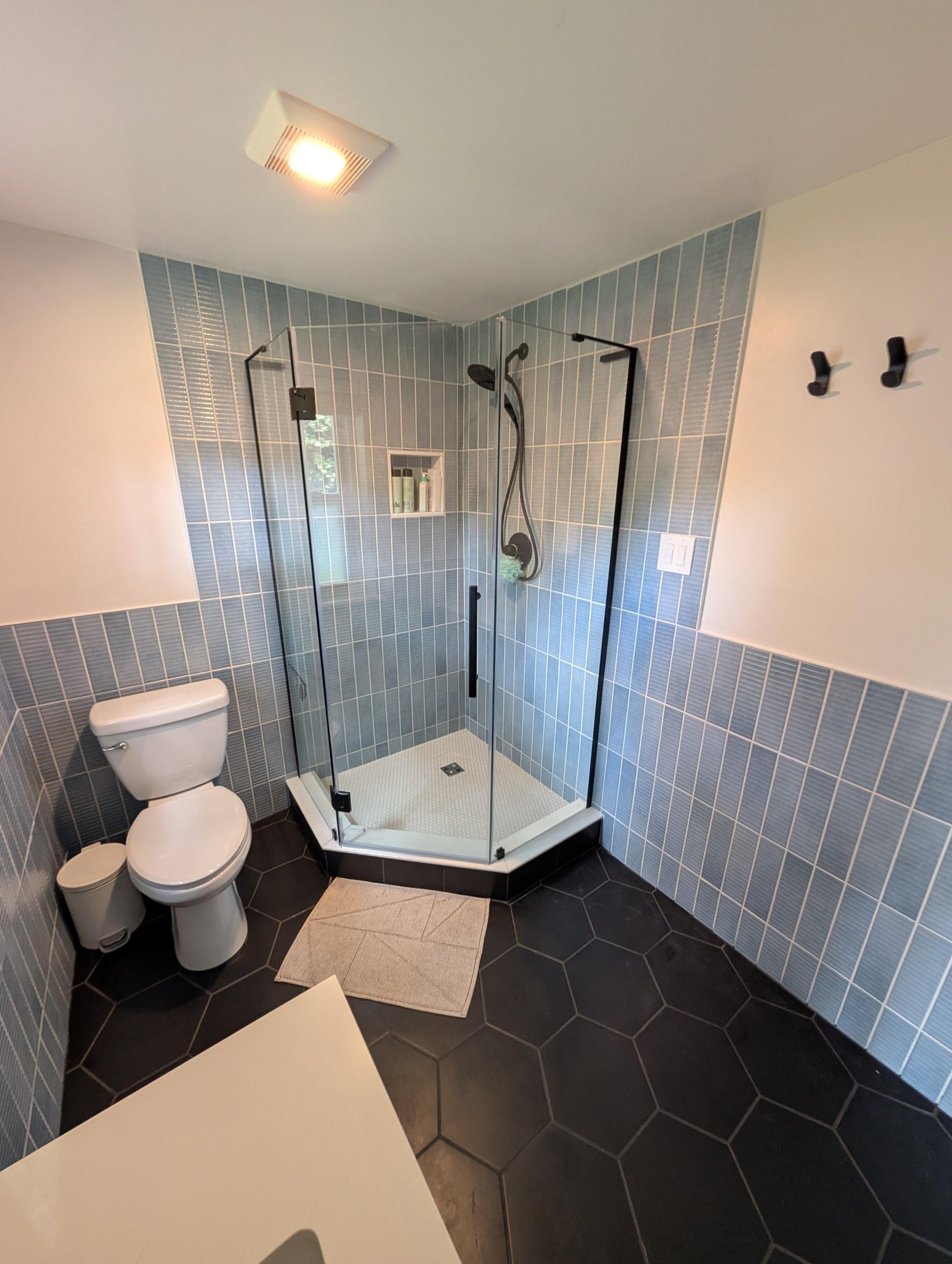
He mismeasured the shower curb. When the glass door went on, it almost missed the curb. You can’t tell from any angle in the finished photos. The door sits on the curb and swings fine. But he knows.
The second one is the shower niche, the little built-in shelf for shampoo bottles. His tile layout fell in a way that pushed the niche lower on the wall than he wanted. You’d have to be standing in the shower, looking for it, to catch it.
People in the comments kept asking him what the mistakes were because they couldn’t see them. One guy wrote, “I don’t see anything wrong with it.”
That’s the gap every DIY homeowner knows. You spend three months staring at the one grout line that’s 2mm off, and everyone else just sees a beautiful bathroom.
What $6,000 actually bought
He wasn’t a first-timer with tile. He’d done his kitchen backsplash two years earlier. But this was his first studs-out bathroom.
His advice: thinset consistency matters, straight lines matter (use a laser level), waterproofing matters. Buy a cheap box of tile and practice on a piece of plywood before you touch the real walls. He started with a manual snap cutter and tile nippers, then upgraded to a $100 Ryobi wet saw partway through.
The vanity was the quiet win. He scored a $350 floating walnut-look unit from someone who’d complained about the back legs in reviews. He just moved the legs.
Three months. Six thousand dollars. A bathroom that looks like it cost five times that. And two mistakes only he can see.