The side yard is the part of the property nobody talks about. A strip of mud between the house and the fence, ruts where you drag the trash cans every week, and a quote for a paved path that made you close the email. Pouring concrete yourself sounds worse: renting a mixer, hauling water, racing the clock before it sets.
This is not your fault. Most people assume concrete has to be mixed in a wheelbarrow first. One DIYer skipped that step entirely. Her method is cheap and simple, but it comes with trade-offs worth knowing before you buy a single bag.
How the dry-pour method works
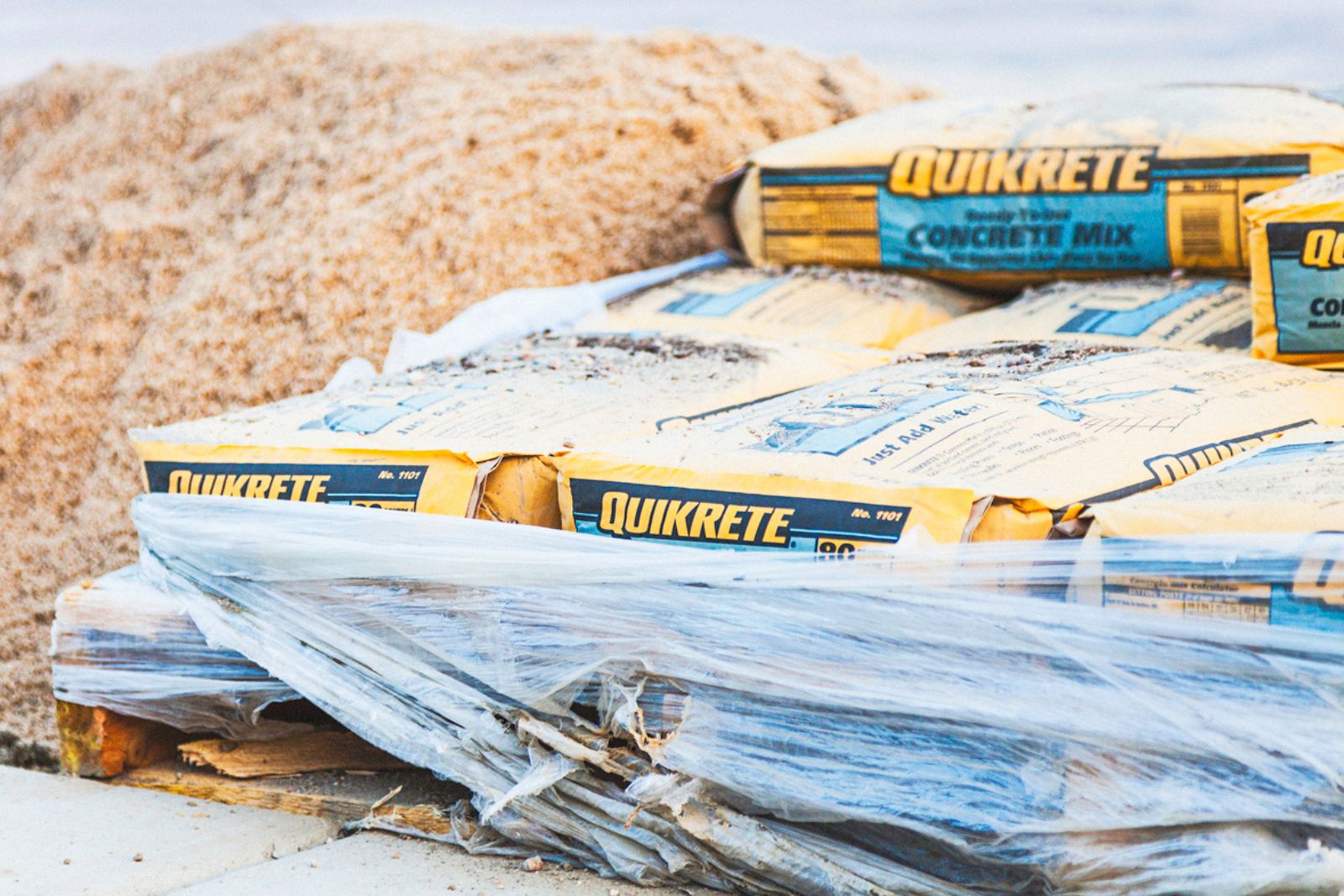
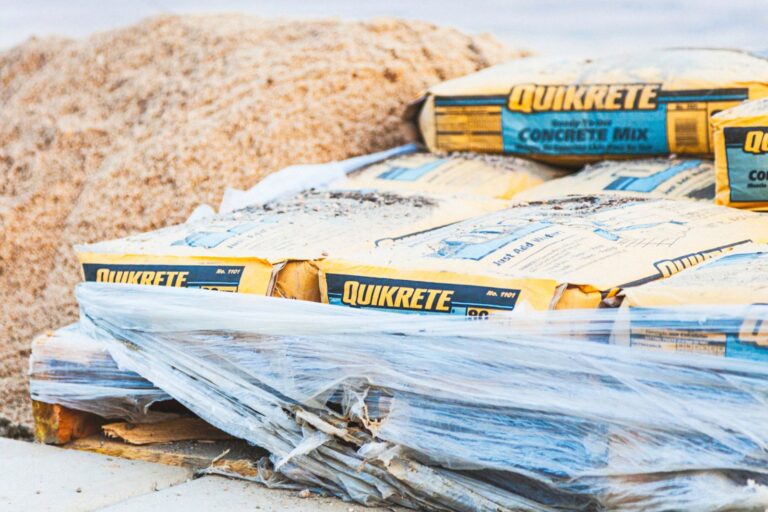
As House Digest reported, TikTok creator Alaina Kathleen Ford (@alainakathleenhome) built her side-yard pavers by pouring Quikrete High Strength Concrete Mix straight from the bag into wooden frames, then wetting it with a hose. The 80-pound bags cost $6.24 at Home Depot, and she used about five per slab.
The appeal is the price. House Digest puts the average cost of a professionally paved walkway at $15 to $40 per square foot. At $6.24 a bag and about five bags per slab, each of her slabs comes to roughly $31 in concrete mix.
The water still matters. Concrete hardens through a chemical reaction with water, so instead of mixing it in first, this method adds it from the top and lets it soak down through the dry mix.
Her steps, slab by slab
- Build the frame. Make a rectangular form for each slab from 2×4 boards, sloped slightly away from the house for drainage.
- Add the first layer. Rake two bags of dry mix evenly inside the frame.
- Reinforce it. Lay wire mesh over that first layer.
- Fill and level. Add the remaining bags, level the top with the frame, then smooth it with a screed or hand trowel.
- Soak it. Mist the slab with a garden hose until it’s fully saturated.
- Wait. Let each slab set for at least 24 hours before moving on.
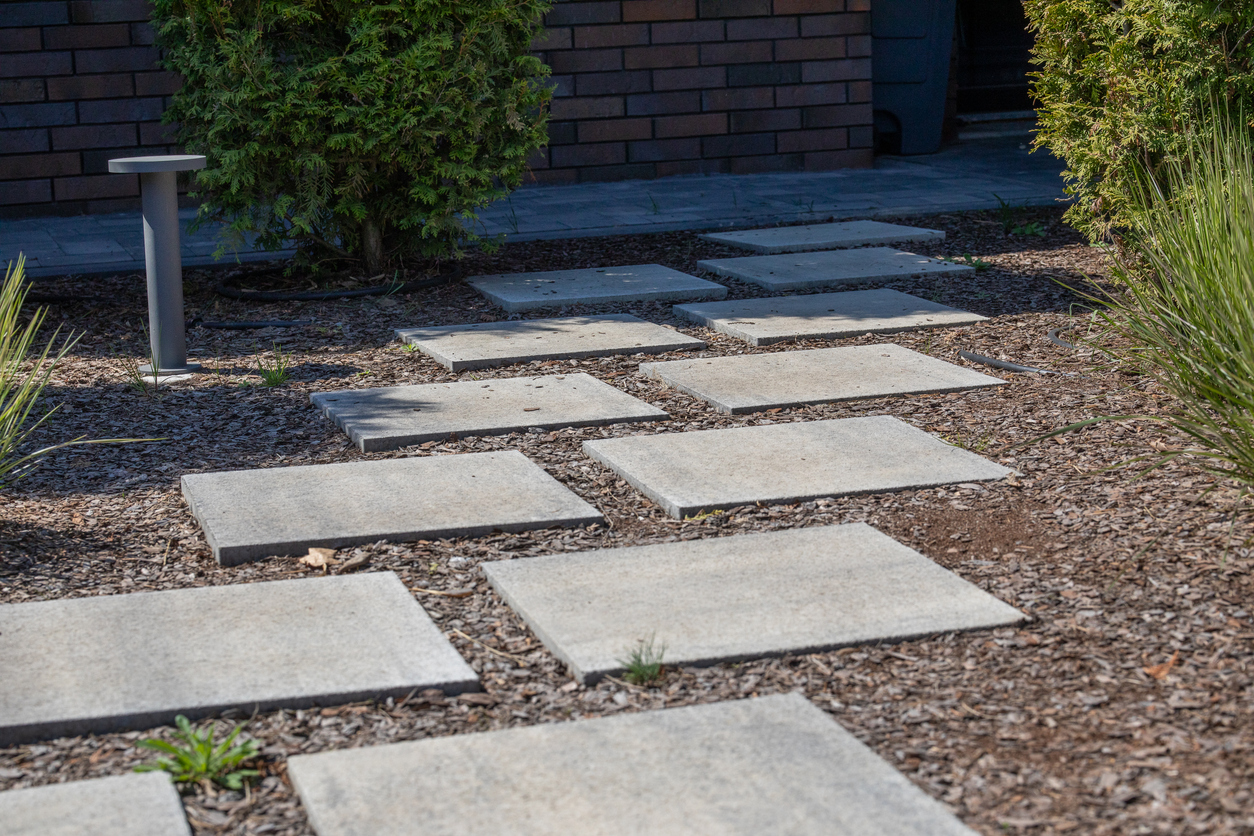
Plan B for a large area: House Digest suggests smaller pavers may be more reliable than big slabs, since large slabs may not absorb water evenly.
The trade-offs, and when to wait
Dry-poured slabs are not as tough as a mixed pour. House Digest notes that dry-pour concrete is said to have lower overall strength, especially if large slabs don’t absorb water evenly. It recommends pavers at least 2 inches thick for foot traffic, and estimates a lifespan of 10 to 15 years with regular maintenance, possibly shorter in colder climates because of cracking. Wet-poured concrete pavers, by comparison, can last 30 years or more.
Curing takes longer than the first 24 hours, too. Quikrete’s own training guide says freshly placed concrete should be water-cured for at least three to five days, using a fine mist to keep the surface damp.
Timing matters this time of year. The same guide warns that concrete can freeze before it gains strength, says never to place it on frozen ground, and says concrete temperatures must be kept above 50°F for at least three days. In much of the country, that makes a side-yard project a spring job. And for anything that carries a car, like a driveway, a professional pour is the safer choice.
If you’d rather try something smaller first, this gardener cast her own cobblestone path with milk jugs as molds, using a wet mix shaped by hand.
A frame, a few bags and a hose, plus a few extra days of patience. That’s the trick.